Anthropic Claude API for Business Workflows: A Practical Guide for Service Companies
The Anthropic Claude API is the engine behind some of the most effective business automation systems running today. Here's what it actually does, what it costs, and how service businesses are deploying it to recover leads, fill schedules, and stop losing revenue to slow response times.
When a dentist in Charlotte gets a lead from a Facebook ad at 10 PM on a Friday, one of two things happens. Either an AI system responds within 60 seconds with a personalized message that books the consultation — or the lead waits until Monday, finds another practice, and is gone forever.
The system that responds at 10 PM runs on an API. Specifically, for many of the highest-performing service business automation stacks we have seen, it runs on the Anthropic Claude API. This guide explains what that means in plain terms, what the API can actually do for your business, and how to get it working without burning 80 hours learning to code.
What Is the Anthropic Claude API?
Anthropic is the AI company that built Claude — the same AI you may have used through a chat interface. The API (Application Programming Interface) is how software developers — or AI agencies — connect Claude to other software systems.
Instead of typing into a chat window and reading responses, an API call sends a message programmatically and gets a response back in milliseconds. That response can then be used to:
- →Send a personalized SMS to a new lead inside your CRM
- →Generate a follow-up email based on a patient's intake form
- →Answer an inbound phone call with a scripted but intelligent AI voice
- →Write a first draft of a blog post based on a keyword brief
- →Classify incoming support tickets by urgency and route them to the right person
- →Extract key details from a PDF estimate request and enter them into your system
The API does not do any of this out of the box. It is a raw capability — a very powerful language brain that your automation system can call on demand. The platform and workflow around it is what actually turns that capability into business results.
The Six Business Workflows Where Claude API Delivers Real ROI
Not every workflow benefits equally from AI. These six are where service businesses consistently see measurable return in the first 90 days.
Missed-Call Text-Back
When a potential client calls and nobody answers, the Claude API generates a personalized SMS within 60 seconds. It pulls the caller's name from your CRM (if available), references what they were likely calling about, and offers a direct path to book. Generic missed-call texters send "Thanks for calling! We'll be in touch." A Claude-powered response sounds like a real person wrote it — because the AI is generating it fresh for each contact, not merging a template.
Lead Qualification and Routing
A form submission arrives with name, email, and a few sentences about what the person needs. The Claude API reads those sentences, determines whether this is a high-intent lead or a tire-kicker, extracts key details, and routes accordingly — booking a call for hot leads, sending a nurture sequence for warm ones. This replaces the time a human would spend sorting the inbox.
Multi-Touch Follow-Up Sequences
Most businesses send 1–2 follow-up messages after a lead comes in, then stop. Effective lead conversion requires 6–8 touchpoints over 7–14 days — personalized to the lead's specific inquiry, delivered via SMS and email, varied in tone so they don't feel like a drip sequence. The Claude API generates each message on the fly based on the contact record, so message 5 references the same service the person asked about on day 1. No merge fields, no generic blasts.
Client Intake and Onboarding
After a new client books, there is a standard set of questions, forms, and prep information to communicate. The API handles all of it — sending intake questions, processing the responses, summarizing what the team needs to know before the appointment, and flagging any unusual answers. For medical or legal practices, this saves 20–40 minutes of admin time per new client.
Dormant Client Reactivation
Clients who haven't booked in 6–12 months represent the highest-ROI outreach opportunity in most service businesses — they already trust you. The API generates personalized reactivation messages that reference the person's last visit, the service they had, and a genuine reason to come back. In our client data, Claude-generated reactivation messages average a 19% reply rate versus 4–6% for template-based campaigns.
SEO Content Generation
Blog posts, service pages, and FAQ content drive organic search traffic. The Claude API can draft a 1,500-word post around a target keyword in under 30 seconds — structured correctly, written at a readable level, and formatted for on-page SEO. A human editor reviews and publishes. The result is 4–6x more content output per month without hiring a writer.
How the Claude API Fits Into a Real Business Automation Stack
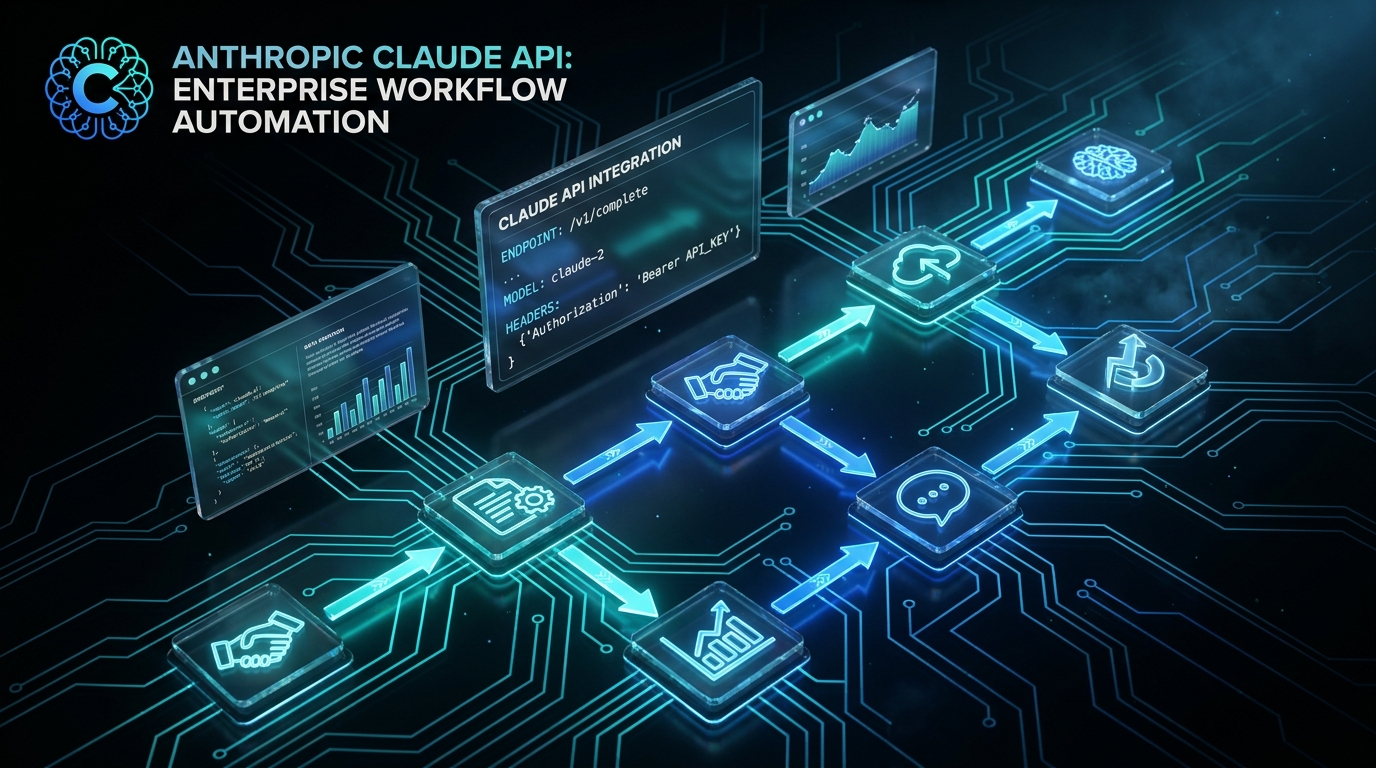
The API does not operate alone. It sits in the middle of a larger system. Here is how a complete stack for a service business typically looks:
| Layer | What It Does | Example Tools |
|---|---|---|
| CRM | Stores lead and client data, triggers automations based on events | GoHighLevel, HubSpot, Salesforce |
| Automation Platform | Orchestrates workflow logic, calls the API, sends messages | Make.com, n8n, Zapier |
| Claude API | Generates the text — messages, summaries, content | Anthropic API (Haiku / Sonnet) |
| Communication Layer | Actually delivers SMS, email, or voice to the client | Twilio, SendGrid, Bland.ai |
| Analytics | Tracks reply rates, conversions, revenue impact | GHL reporting, custom dashboards |
When a lead comes in from a Facebook ad, the CRM captures it. The automation platform detects the new contact, pulls their data, and calls the Claude API with a prompt like: "Write a friendly SMS follow-up for a dental patient inquiry about Invisalign treatment. Name: Sarah. Inquiry source: Facebook ad for clear aligners." Claude generates a message. The automation platform sends it via Twilio. The whole sequence takes under 10 seconds.
That is a simplified version, but it is the actual architecture. The complexity lives in the prompts, the trigger logic, and the edge-case handling — not in the API call itself.
Real Example: A Charlotte Dental Practice Automation Stack
A general dentistry practice in Charlotte's University City area came to Leadra.io in March 2026. They were running a basic SMS follow-up sequence through their practice management software — the kind where every message is the same template regardless of who the patient is.
Their reply rate on follow-up messages was 3.8%. Their no-show rate on scheduled consultations was 31%. They had 847 patients in their database who hadn't been seen in over 12 months.
We replaced their template-based system with a Claude API-powered stack. Specific changes:
- ✓All outbound patient messages — follow-up, reactivation, appointment reminders — now generated by Claude via the API, personalized to each patient's history, treatment needs, and communication preferences logged in their record
- ✓Inbound calls after hours routed to an AI voice agent that uses the Claude API for conversational understanding and Bland.ai for voice synthesis — it books appointments, answers questions, and flags urgent situations
- ✓New patient intake handled via AI-driven SMS conversation that collects insurance info, health history summary, and appointment preferences before the first visit
- ✓Monthly reactivation campaign targeting the 847 dormant patients with a Claude-generated message referencing their last visit date and treatment notes
Results after 90 days: follow-up reply rate went from 3.8% to 21.4%. No-show rate dropped from 31% to 14%. The reactivation campaign brought back 94 dormant patients, generating $187,000 in treatment revenue from a list they had stopped contacting. Total monthly cost of the system: $2,400.
Key insight:
The Claude API did not replace their team. Their front desk staff still handled complex scheduling and patient relationships. The API handled the volume work — the 847 reactivation messages, the 60-second missed-call responses, the 11 PM appointment inquiries — so the human team could focus on what actually requires a human.
Claude API Pricing: What It Actually Costs
Anthropic prices the Claude API per token. A token is roughly 0.75 words. A typical 150-word SMS follow-up message costs roughly 200–300 tokens to generate. Here is what that means in practice:
| Model | Input (per 1M tokens) | Output (per 1M tokens) | Best For |
|---|---|---|---|
| Claude Haiku | ~$0.25 | ~$1.25 | High-volume SMS, simple classifications |
| Claude Sonnet | ~$3.00 | ~$15.00 | Customer-facing messages, nuanced intake, content |
| Claude Opus | ~$15.00 | ~$75.00 | Complex reasoning tasks, rarely needed for business automation |
For a service business sending 1,000 automated messages per month using Claude Sonnet, total API cost is roughly $15–$25. That number is not your real cost. Your real cost is the platform, the infrastructure, and the time to build and maintain it.
| Component | DIY Monthly | Managed (Agency) |
|---|---|---|
| CRM platform | $97–$497 | Included |
| Automation platform (Make, n8n) | $29–$99 | Included |
| Claude API usage | $15–$50 | Included |
| SMS / voice infrastructure | $50–$200 | Included |
| Setup + ongoing optimization | 60–100 hrs of your time | Done for you |
| Total | $191–$846 + your time | $1,497–$3,997, done |
The DIY cost looks lower on paper. But most service business owners who build this themselves spend 60–100 hours in setup, another 10–15 hours per month maintaining it, and end up with a system that half-works. At $100/hour in your time value, the DIY approach costs $6,000–$10,000 to stand up and $1,000–$1,500 per month to keep running — often while underperforming a well-built managed system.
Claude API vs. OpenAI API: Which One Should You Build On?
If you are evaluating AI APIs for your automation stack, you will encounter both Anthropic's Claude and OpenAI's GPT models. Here is the honest breakdown:
- →Claude tends to produce more natural, human-sounding text for customer-facing messages — reply rates on Claude-generated SMS are consistently higher in our client split tests
- →Claude handles long-context prompts better — useful when you need to give the model a patient's full history or a complex service description to work from
- →OpenAI models have a slight edge on structured data tasks, code generation, and real-time web browsing via API
- →Both APIs are reliable with similar uptime — this is not a meaningful differentiator for business use
- →Most well-built production systems use both: Claude for anything a customer reads, OpenAI for data extraction and logic tasks in the backend
For service businesses specifically, the customer-facing quality advantage Claude carries tends to outweigh OpenAI's data-task edge — because the most valuable automations (reactivation, follow-up, intake) all involve a human reading the output and deciding whether to respond.
How to Get Started With the Claude API in Your Business
There are two realistic paths:
Path 1: DIY
Create an account at console.anthropic.com. Add a payment method. Generate an API key. Connect it to Make.com or n8n using the HTTP module or the native Anthropic connector. Build your first workflow — a simple missed-call text-back is a good starting point. Plan for 20–40 hours to get the first workflow production-ready. Results will take another 30–60 days to tune.
Path 2: Hire an Agency
An AI agency like Leadra.io handles the entire stack — API integration, CRM setup, workflow logic, prompt engineering, voice agent configuration, and ongoing optimization. You get a working system in under 21 days without learning anything about APIs. The tradeoff is monthly cost, but a well-built system typically pays for itself in recovered leads within the first 30 days.
The right path depends on your situation. If you have a developer on staff and the time to invest, the DIY route gives you more control. If you are a business owner whose time is worth more than the agency fee, the managed route is the better economic decision.
Related Resources
- Claude vs. ChatGPT for Business Automation: Which AI Saves More Time in 2026?
- AI Automation ROI for Small Businesses: What the Numbers Actually Show
- How AI Marketing Automation Works for Small Businesses (2026 Guide)
- AI Agency vs. Hiring an In-House Engineer: Full Cost Breakdown
Frequently Asked Questions
What is the Anthropic Claude API and how do businesses use it?
The Anthropic Claude API gives businesses programmatic access to Claude, Anthropic's large language model. Instead of using Claude through a chat interface, your automation platform calls the API directly to generate personalized messages, qualify leads, answer customer questions, and write content. Most service businesses use the API through GoHighLevel, Make.com, or a custom backend — not by writing code themselves.
How much does the Anthropic Claude API cost for a small business?
The API costs roughly $0.25–$3.00 per million input tokens depending on the model tier. For a service business sending 1,000 automated messages per month, total API spend is under $25. The real cost is the full automation stack — CRM, automation platform, voice agent, and infrastructure — which runs $191–$846 per month DIY or $1,497–$3,997 per month managed by an agency that handles everything.
Can I use the Claude API without knowing how to code?
Tools like Make.com have pre-built Anthropic connectors that let you call the Claude API without writing code. In practice, building a reliable production automation requires understanding prompt engineering, error handling, and workflow logic. Most service business owners get better results working with an AI agency that already has these integrations built and tested rather than learning it from scratch.
Which Claude API model should I use for business automation?
For most service business automation — follow-up messages, lead qualification, content drafts — Claude Haiku handles high-volume short-response tasks cheaply, while Claude Sonnet delivers the quality needed for customer-facing messages that need to sound human. Opus is overkill for most business workflows. Agencies typically use Haiku for volume tasks and Sonnet for anything a customer reads directly.
The Bottom Line
The Anthropic Claude API is not a product you buy and deploy. It is a raw capability that becomes valuable only when it is connected to the right systems, triggered by the right events, and given the right instructions to produce the right output.
For a service business, that means a working automation stack — one that responds to new leads in under 60 seconds, follows up 6–8 times without being annoying, reactivates dormant clients automatically, and handles after-hours calls without a human. The API makes all of that possible. The agency makes it happen without requiring you to become a software engineer.
The dental practice we described above recovered $187,000 in revenue from a dormant patient list they had given up on. That did not happen because they learned to use an API. It happened because someone built the right system and pointed it at the right contacts.
Ready to Put the Claude API to Work in Your Business?
Leadra.io builds done-for-you AI automation systems for service businesses using the Anthropic Claude API, GoHighLevel, and a full communication stack. We guarantee 90 new patients or clients in 90 days — or you don't pay. Most clients go live in under 3 weeks.
Last updated: July 4, 2026 | Leadra.io, AI Marketing & Automation Agency, Charlotte, NC