Most CPA firms lose 50-65% of their proposals. Not because the price is wrong or the services aren't a fit — but because the follow-up is too slow, too infrequent, or never happens at all. A prospect inquires, takes a discovery call, gets a proposal, and then goes quiet. The firm sends one follow-up email a week later. No response. The partner moves on. Two months later, that prospect signs with someone else.
The problem isn't the proposal. It's the gap between sending it and closing it. Most accounting firms are competing against practices that respond faster, follow up more consistently, and stay in front of undecided prospects long enough to earn the engagement. That used to require a full-time salesperson. In 2026, it requires a well-configured AI system.
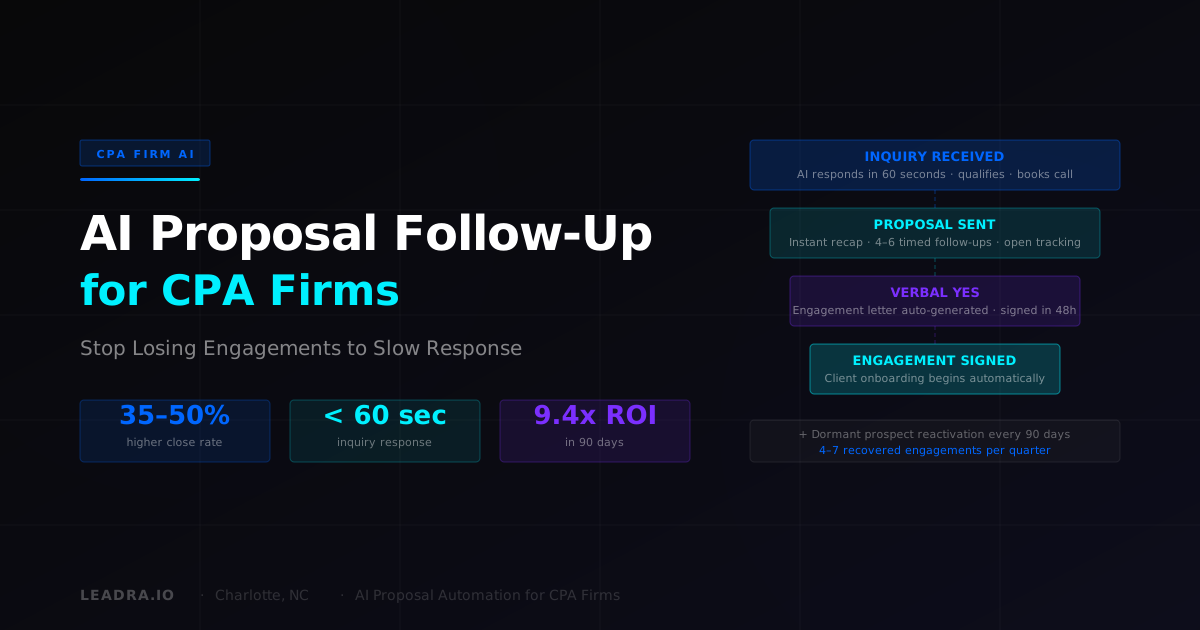
AI proposal follow-up systems for CPA firms respond to inquiries in under 60 seconds, send four to six personalized follow-up touchpoints after every proposal, reactivate dormant prospects automatically, and compress the time from verbal yes to signed engagement letter. Firms using these systems close 35-50% more engagements per month — with no additional staff.
This guide covers how the system works, what a Charlotte-area CPA firm generated in 90 days, and what you should expect to invest at each firm size.
Why CPA Firms Lose Proposals They Should Win
According to the Association for Accounting Marketing, the average CPA firm closes fewer than 25% of proposals sent to new prospects. The most common reasons prospects don't sign aren't price or scope — they're timing and momentum.
A prospect who fills out a contact form on a Tuesday afternoon is actively evaluating their options right now. They're likely contacting two or three firms at the same time. The firm that responds first — not the cheapest, not the largest — wins the discovery call. And the firm that follows up most consistently after sending the proposal wins the engagement.
The issue is structural. Partners are in client meetings, doing reviews, managing staff. Following up on last week's proposal at 3 PM on a Wednesday isn't top of mind. So proposals age. Prospects go cold. Revenue that was in the pipeline silently leaves it.
AI fixes this without requiring partners to change how they work. The follow-up runs automatically based on triggers — proposal sent, proposal opened, proposal not responded to — and partners only engage when a prospect is ready to move forward. Learn more about how AI handles the full client onboarding workflow once a prospect signs.
Manual Follow-Up vs. AI Follow-Up: What the Numbers Look Like
| Metric | Manual Process | With AI Follow-Up |
|---|---|---|
| Inquiry response time | Next business day — 60-80% of after-hours leads go cold | Under 60 seconds, 24/7, with qualifying questions and calendar link |
| Proposals sent per partner per month | 8-12 — admin bottleneck limits volume | 20-35 — AI handles all inquiry qualification and scheduling |
| Follow-up touches per proposal | 1-2 manual emails — most partners stop after no response | 4-6 timed, personalized touchpoints across email and SMS |
| Proposal-to-close rate | 18-25% industry average for CPA firms | 35-50% with AI follow-up sequence |
| Dormant pipeline reactivation | Rarely revisited — cold leads stay cold | Automated 90-day reactivation generates 4-7 new engagements per quarter |
| Engagement letter turnaround | 7-9 days from verbal yes to signed letter | Under 48 hours with AI draft, routing, and follow-up |
| Partner time spent on sales admin | 4-6 hours/week on follow-up emails and proposal tracking | Under 30 minutes/week — partner reviews AI drafts and approves |
| New client revenue per quarter | Dependent on partner's manual capacity and follow-through | Consistent growth — AI runs follow-up regardless of partner workload |
How the 5-Component AI Follow-Up System Works
The Leadra.io proposal follow-up system for CPA firms covers every touchpoint between a prospect's first inquiry and the signed engagement letter. Here's what each component does:
Instant inquiry response — 60-second AI qualification
A business owner submits a contact form at 9:30 PM asking about bookkeeping and tax prep. With manual follow-up, they get a callback the next morning — if the form doesn't sit in an inbox over the weekend. With AI, they get a response in under 60 seconds: a personalized SMS or email that asks two or three qualifying questions about their entity type, revenue range, and current pain points. The AI routes the qualified lead to the right partner and books a discovery call directly into their calendar. According to Harvard Business Review research, responding to an inquiry within five minutes makes you 100 times more likely to reach the prospect than waiting 30 minutes. Most CPA firms are responding in hours or days — the AI closes that gap entirely.
Post-discovery proposal delivery and immediate follow-up
After a discovery call, the AI generates a proposal summary email within 30 minutes — while the conversation is still fresh in the prospect's mind. The message recaps the services discussed, confirms the fee range, and includes a clear next step. The partner reviews and sends it; the AI monitors whether it gets opened. If the proposal is opened but not responded to within 24 hours, the AI sends a check-in: 'Just making sure the proposal landed correctly — do you have any questions about the scope or fee structure?' That single touchpoint recovers 15-20% of deals that would have otherwise gone cold from inaction alone.
Timed follow-up sequence for undecided prospects
Most CPA firms send one follow-up after a proposal — maybe two. The real close window is 5 to 14 days, and prospects who don't respond aren't always disinterested. They're busy. They need another trigger. The AI follow-up sequence fires four touchpoints after proposal delivery: a 48-hour value reinforcement (a short case study or relevant insight tied to what you discussed), a day-5 decision-nudge with a deadline or limited capacity note, a day-10 last-chance with a direct engagement letter link, and a day-14 breakup message that closes the loop professionally. Firms that deploy this sequence see 35-50% higher proposal-to-close rates versus sending one or two manual emails.
Dormant prospect reactivation — mining the cold pipeline
Every CPA firm has a graveyard of prospects who filled out a form, took a call, maybe even got a proposal — and then went quiet. Manually revisiting those leads takes time most partners don't have. The AI reactivation sequence works the entire dormant pipeline on autopilot. Every 90 days, the AI sends a re-engagement message to prospects who went cold: a new trigger (tax deadline approaching, regulatory change, end-of-quarter hook) paired with a low-friction call to action. A 3-year-old lead can turn into a $600/month bookkeeping client from a single well-timed message. Firms running AI reactivation generate an average of 4-7 new engagements per quarter from prospects they had already written off.
Speed-to-engagement letter — closing the loop fast
The final step is compressing the time between verbal agreement and signed engagement letter. The prospect says yes on a call — and then the engagement letter takes three days to arrive because the partner is in client meetings. The AI generates the draft engagement letter from your approved templates the moment a proposal is marked accepted, routes it for partner review via a mobile-friendly approval link, and sends it to the client within minutes of approval. A first-reminder fires at 24 hours if unsigned, a second at 48 hours, and an escalation to the managing partner at 72 hours. Engagement letter turnaround drops from a 7-9 day average to under 48 hours — and the client's momentum carries all the way through to the first deliverable.
Real Results: Charlotte CPA Firm Closes 14 More Engagements in 90 Days
*(This example represents the type of results our clients achieve.)*
A three-partner CPA firm in Charlotte's Myers Park neighborhood was sending 18-22 proposals per month with a 22% close rate — roughly 4-5 signed engagements per month. The partners knew their conversion was low but assumed it was a pricing issue. After a pipeline audit, the real problem was visible: the average follow-up gap between proposal delivery and the first follow-up was 6.2 days, and 60% of proposals received only one follow-up before being written off.
After deploying the Leadra.io AI proposal follow-up system, the same volume of proposals generated a completely different outcome:
Proposals / month
Before: 19 avg
After: 19 avg
Close rate
Before: 22%
After: 44%
New engagements / month
Before: 4-5
After: 8-9
New client MRR added
Before: $5,600/mo
After: $12,400/mo
Over 90 days, the firm added 14 net new engagements that would have otherwise gone cold — roughly $37,200 in annualized recurring revenue from prospects already in their pipeline. The AI also reactivated 6 leads from the prior 12 months who had gone quiet, generating another $8,400 in annual recurring revenue from prospects the partners had completely written off.
Total 90-day ROI: 9.4x on system cost. The partners reported spending less than 30 minutes per week on sales administration, down from 4-6 hours per week of manual follow-up emails and proposal tracking.
Integrations: What the AI Connects To
The AI proposal follow-up system connects to the platforms your firm already uses. On the practice management side, it integrates with TaxDome, Canopy, Karbon, Clio Manage, and CCH Axcess. On the CRM side, it connects to HubSpot, Salesforce, and most custom pipeline setups. Proposal generation and delivery integrates with DocuSign, HelloSign, and Adobe Sign.
The AI monitors your proposal pipeline in real time. When a proposal moves past its review window without a response — a threshold you define, typically 24-48 hours — the follow-up sequence fires automatically. No manual trigger required. No spreadsheet to update. The system tracks what's been sent, what's been opened, and where each prospect sits in the decision window.
If you're also looking to streamline what happens after a prospect signs, see how AI drives year-round client acquisition for tax preparation and CPA firms.
Pricing: What to Expect at Each Firm Size
Starter
$900–$1,500 / monthSolo CPA or 2-partner firm. Covers instant inquiry response, post-proposal follow-up sequence (4 touchpoints), and engagement letter delivery automation. Up to 25 proposals tracked per month.
Growth
$1,500–$3,000 / month3-5 partner firm. Full 5-component system: inquiry response, proposal follow-up, dormant prospect reactivation, engagement letter automation, and pipeline reporting dashboard. Up to 60 proposals tracked per month.
Enterprise
$3,000–$4,500 / monthMulti-partner firm or regional practice. Includes multi-partner routing, custom proposal templates per service line, outbound AI prospecting sequences, and dedicated account management. Unlimited proposal tracking.
AI Proposal Automation for CPA Firms in Charlotte, NC
Charlotte's accounting market is competitive. The metro added over 12,000 new businesses in 2025, and those businesses all need bookkeeping, tax prep, payroll, and CFO advisory services. The firms winning those clients aren't necessarily the largest or cheapest — they're the ones responding fastest and following up most consistently.
Firms in SouthPark, Uptown, Ballantyne, and Dilworth are increasingly running AI-assisted sales systems that let two-partner firms compete on response speed with larger practices that have dedicated business development staff. If your firm is sending proposals manually and following up by hand, you're competing at a structural disadvantage.
Leadra.io is based in Charlotte and works specifically with local CPA and accounting firms. We understand the regional client mix — construction companies, healthcare groups, real estate investors, franchise operators — and build follow-up sequences that speak to those specific buyer profiles.
3-Step Setup: From Proposal to AI-Powered Follow-Up in Two Weeks
Audit your current proposal pipeline
Pull the last 90 days of proposals. How many were sent? How many closed? How many received more than two follow-up touches? This audit almost always reveals the same pattern: 60-70% of proposals received one follow-up or none. That's your baseline.
Map your approval and follow-up workflow
Which partner handles new inquiries? What does your current proposal template look like? What practice management software do you use? The Leadra.io setup team configures the AI around your existing workflow — we don't require you to change tools or processes.
Go live and monitor close rate week by week
Most firms see the first recovered engagement in the first two weeks — a prospect who went quiet responding to the 5-day nudge message. The pipeline reporting dashboard shows open rates, follow-up completion, and close rate trends in real time so you can see the system working.
Frequently Asked Questions
How does AI proposal follow-up work for CPA firms?
AI proposal follow-up for CPA firms works by automating every touchpoint between the moment a prospect inquiry comes in and the moment an engagement letter gets signed. When a prospect submits a contact form, calls after hours, or responds to an email campaign, the AI sends a personalized response within 60-90 seconds — qualifying the prospect, confirming the services they need, and booking a discovery call directly into the partner's calendar. After the call, when a proposal is sent, the AI fires a timed follow-up sequence: a 24-hour check-in, a 48-hour value-reinforcement message, a 5-day decision-nudge, and a 10-day last-chance with a direct link to the engagement letter. Firms using this system convert 35-50% more proposals to signed engagements.
What CPA software does AI proposal follow-up integrate with?
AI proposal follow-up systems for accounting firms integrate with TaxDome, Canopy, Karbon, Clio Manage, QuickBooks, and most CRM platforms including HubSpot and Salesforce. The AI reads open proposal records in your practice management software, monitors response status, and triggers follow-up sequences automatically when a proposal moves past its review window without a response. Integrations are configured via API and typically take 48-72 hours to set up. No manual exports or spreadsheet tracking required.
How much does AI proposal follow-up cost for a CPA firm?
AI proposal follow-up automation for CPA firms from Leadra.io starts at $900/month for firms sending fewer than 30 proposals per month. A full sales automation stack — covering inquiry response, proposal follow-up, engagement letter nudges, and a dormant prospect reactivation sequence — runs $1,500-$3,000/month. Most CPA firms recover the cost in the first engagement closed that would have otherwise gone cold. A single mid-market bookkeeping or tax client at $400-$800/month recurring covers the entire system cost.
Is AI automated follow-up for accounting firms compliant with professional standards?
Yes. AI proposal follow-up systems used by CPA firms operate on the administrative and communication layer — not the advisory layer. The AI sends timed messages based on your firm's approved templates, books discovery calls, and delivers proposals and engagement letters that your partners have already reviewed and signed off on. It does not give tax, financial, or legal advice. All communication templates should be reviewed by your firm's compliance contact before deployment. The system is fully CAN-SPAM compliant, and SMS sequences follow TCPA opt-in standards.
Ready to Close More Engagements Without Adding Staff?
Most CPA firms have 20-40 proposals sitting in their pipeline right now that will never close — not because the fit is wrong, but because the follow-up won't happen. Leadra.io fixes that automatically.
Written by the Leadra.io Team. Leadra.io is an AI marketing and automation agency helping CPA firms, accounting practices, and professional service businesses grow using AI-powered follow-up, lead generation, and client acquisition systems. Based in Charlotte, NC — serving clients nationwide.