AI Quote Follow-Up Automation for Tile Installers: Stop Losing Signed Jobs to Silence
Most tile installers lose jobs the same way, over and over, without ever finding out it happened. They give a solid estimate, the homeowner says "let me think about it," and then nothing. No callback, no text, no second touch. The homeowner was not rejecting the price. They were waiting for a reason to pick someone — and whichever installer showed up in their inbox next usually won the job.
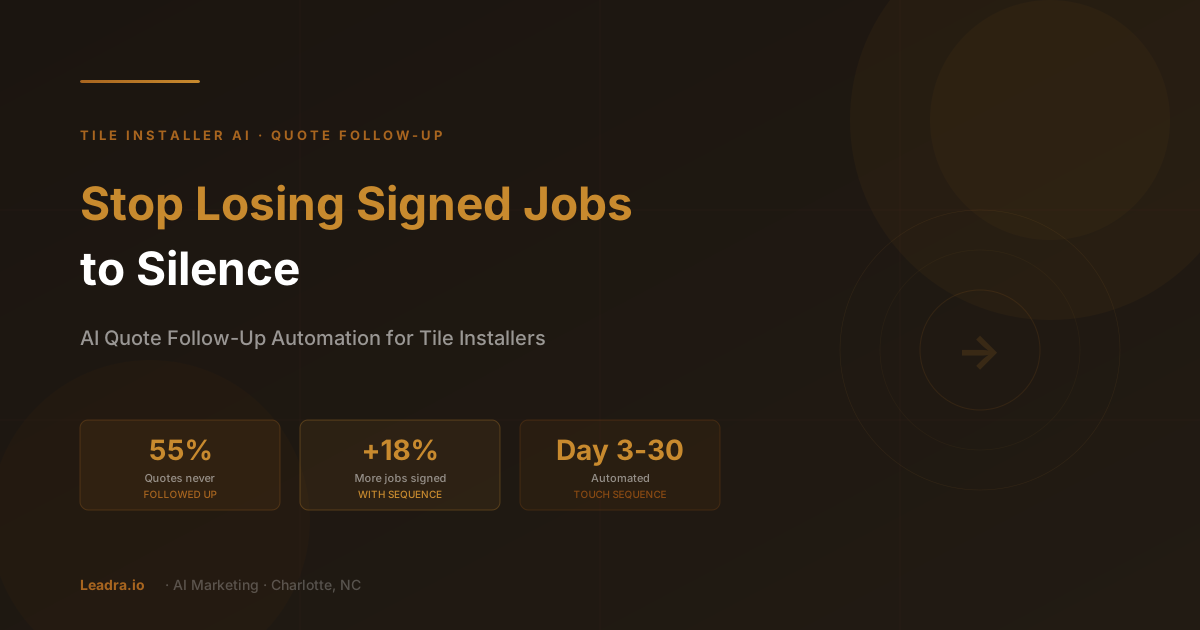
Roughly 55% of tile installer estimates never get a documented follow-up after the initial quote. That is not a guess about willingness — it is what happens when follow-up depends on a busy installer remembering to circle back between install days, material runs, and new estimate requests. The quotes do not disappear. They go quiet, and quiet quotes go to competitors who called back first.
AI quote follow-up automation fixes this by removing the memory requirement entirely. Every estimate you send gets a fixed sequence of follow-up touches — automatically, on schedule, without you lifting a finger between jobs. This guide covers why follow-up is the single biggest conversion lever most installers are ignoring, the exact sequence that recovers pending quotes, and the mistakes that quietly cap how many of your estimates ever turn into signed work. For a broader look at how AI supports the full lead pipeline, see how AI helps tile installers get more leads.
Why Quote Follow-Up Is the Most Ignored Lever in Tile Installation Sales
Tile and remodel estimates behave differently than same-day repair calls. Three things make this sales cycle uniquely leaky:
The decision window is long, and long windows favor whoever stays visible.
A kitchen backsplash or full bathroom remodel is rarely decided on the spot. Homeowners typically compare 3 to 5 bids over 2 to 4 weeks, often waiting on a spouse, a budget check, or a second contractor's quote before committing. An installer who quotes once and disappears is invisible for the entire window that actually determines who gets picked.
Silence reads as disinterest, even when the installer is just busy.
When a homeowner hears nothing after a quote, the natural read is that the installer is not that invested in the job — even if the real reason is a packed install schedule. A short, well-timed follow-up signals the opposite: that this installer is organized, responsive, and worth trusting with a five-figure project inside their home.
Every dollar spent generating the estimate is wasted the moment it goes cold.
The marketing spend, the drive to the walkthrough, and the time spent measuring and pricing the job are all sunk the second a quote goes unanswered for 30-plus days. Recovering even a fraction of those aging quotes with structured follow-up is close to pure margin — there is no new acquisition cost attached to it.
The AI Follow-Up Sequence That Converts Pending Quotes
A real quote follow-up system is not a single reminder text. It is a fixed sequence, triggered automatically the moment an estimate goes out, that touches the homeowner at the points where most installers naturally go quiet.
Estimate Delivered
Automated confirmation text or email restating scope, price, and next step — sent the moment the written quote goes out.
Goal: Anchor the homeowner's memory of the exact number and scope before they start comparing other bids.
Soft Check-In
Short, no-pressure message asking if they have any questions about the estimate or timeline — not a sales push.
Goal: Stay top of mind while other bidders have already gone silent, without sounding desperate.
Value Reminder
A message highlighting a specific differentiator — material quality, warranty, install timeline, or a recent finished job photo.
Goal: Re-anchor on why this bid is worth choosing, not just what it costs.
Scheduling Urgency
A message noting real calendar availability — for example, install slots filling for the coming weeks.
Goal: Convert 'still thinking about it' into a booked start date using a real, honest constraint.
Final Offer / Reactivation
Last structured touch — often a small incentive to book this month, or a request to reconnect when timing is better.
Goal: Close out the active sequence and route the lead into a long-term reactivation list instead of losing it entirely.
Any homeowner reply that shows real interest — a question about materials, a timeline check, a request to reschedule the walkthrough — automatically pulls the lead out of the automated sequence and flags it for the installer to handle personally. AI keeps the pipeline warm on autopilot; it never tries to close the job for you.
Common Follow-Up Mistakes That Cap Conversion
Even installers who do follow up manually often undercut their own results with a handful of repeatable mistakes:
| Mistake | The Fix |
|---|---|
| Sending one quote and waiting for a callback | Automate a fixed-day sequence so no estimate depends on the installer remembering to follow up between jobs |
| Following up with generic 'just checking in' messages | Reference the specific scope and price from the actual quote so the homeowner knows it is not a mass blast |
| Giving up after one unanswered follow-up | Run the full day 3–30 sequence — most converted quotes take 3 to 5 touches, not one |
| Treating every open quote the same regardless of job size | Prioritize AI follow-up intensity and installer alerts by job value so the $8,000 remodel gets attention, not just volume |
| Losing quotes older than 30 days entirely | Route aged quotes into a quarterly reactivation campaign instead of deleting them from the pipeline |
What Recovery Actually Looks Like on the Numbers
Take an installer sending 20 written estimates a month at a $3,800 average job value. If 55% of those quotes currently get no structured follow-up, that is 11 estimates a month going quiet by default. A properly run day 3–30 sequence typically converts 12 to 18% of previously unfollowed quotes into signed jobs — which on this volume works out to roughly 1 to 2 additional signed jobs per month, or $3,800 to $7,600 in recovered revenue, from estimates the installer had already paid to generate.
These are realistic ranges based on observed follow-up performance across home improvement and remodeling trades. Individual results vary by market, average job value, and how many quotes are currently going unfollowed.
That math compounds with the rest of an installer's lead system. Follow-up automation converts quotes you already have; missed-call capture and after-hours coverage bring in quotes you would have lost entirely — see how an AI receptionist stops tile installers from losing jobs to voicemail for that side of the pipeline. For the full pricing picture across a complete AI stack, see the tile installer AI cost and ROI breakdown.
Quote Follow-Up for Charlotte, NC Tile Installers
Charlotte's kitchen and bath remodel market across South End, Ballantyne, Matthews, and Huntersville has grown fast alongside the metro's population, which means homeowners have more installers to choose from than ever — and more bids to compare before deciding. In a crowded local market, the installer who follows up fastest and most consistently wins a disproportionate share of close calls, even when their price is not the lowest bid on the table.
Leadra.io builds AI quote follow-up systems for tile installers and remodeling contractors in Charlotte and nationwide, alongside the broader lead capture and review automation stack covered in our Charlotte tile installer marketing guide. Book a free strategy call or call +1 (864) 721-8384 to see how many of your open quotes are sitting unfollowed right now.
Your Next Steps — What to Do This Week
Pull every open estimate from the last 60 days.
Count how many got a documented second touch after the initial quote. Most installers are surprised how few did.
Multiply the gap by your close rate and average job value.
That number is your monthly quote follow-up leak — the revenue sitting in your own pipeline, unconverted.
Set a fixed follow-up schedule even before automating.
Day 3, day 7, day 14, day 30 — write it on a calendar if nothing else. Consistency matters more than sophistication at first.
Automate it once volume makes manual tracking unreliable.
Once you are sending more than 10 to 15 quotes a month, manual follow-up starts slipping. That is the point to move to an automated sequence.
Frequently Asked Questions
Why do tile installer quotes go unanswered even when the homeowner is interested?
Most homeowners are not rejecting the price when a quote goes quiet — they are comparing 3 to 5 bids, waiting on a spouse's input, or simply distracted, and whichever installer follows up first with a specific, low-pressure reminder is the one who stays top of mind. Installers who send one quote and wait lose the majority of those jobs by default, not because the price was wrong, but because nobody followed up before the homeowner signed with a competitor who did.
How many follow-up touches does it take to convert a pending tile quote?
Data across home improvement trades shows most converted quotes need 3 to 5 follow-up touches before a homeowner books. A single follow-up email or call converts a small share of pending estimates. A structured sequence — a day 3 check-in, a day 7 value reminder, a day 14 urgency touch, and a day 30 final offer — recovers 12 to 18% more signed jobs from the same quote volume, without adding a single new lead.
Can AI quote follow-up replace a tile installer's personal touch?
No, and it should not try to. AI handles the mechanical part — remembering every open quote and sending the right message on the right day, which no busy installer reliably does by hand. The system flags any homeowner reply that shows real interest or a question, and hands that conversation to the installer directly. AI keeps the pipeline warm; the installer still closes the job.
What does AI quote follow-up automation cost for a tile installer?
A dedicated quote follow-up sequence typically runs $250 to $650 per month as part of a broader AI lead system, and pays for itself with a single recovered job in most markets. Installers running higher quote volume or adding voice follow-up alongside SMS and email should expect $650 to $1,400 per month for the full stack.
Stop Losing Signed Jobs to Silence
Leadra.io builds AI quote follow-up and lead capture systems for tile installers and remodeling contractors. We will show you exactly how many open estimates are sitting unfollowed in your pipeline right now — free, no obligation.
Written by the Leadra.io Team. Leadra.io is an AI marketing agency helping tile installers, remodeling contractors, and local businesses grow using AI-powered automation, lead capture, and quote follow-up systems. Based in Charlotte, NC — serving clients nationwide.