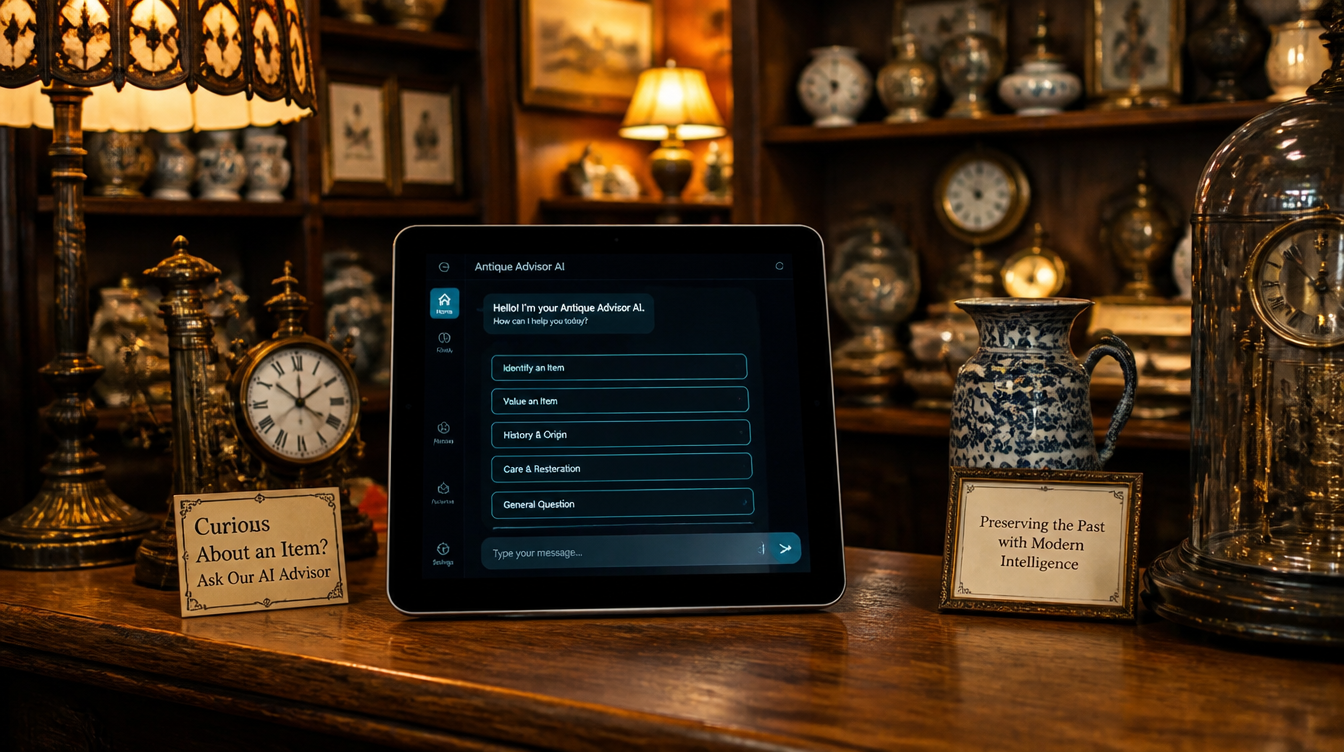
AI Receptionist for Antique Shops: Answer Every Call, Capture Every Lead, Sell More Inventory
By Leadra.io Team · June 21, 2026 · 8 min read
An AI receptionist for an antique shop is a 24/7 automated voice and chat system that answers questions about inventory, hours, and pricing, qualifies serious buyers, schedules appointments and appraisals, and follows up with leads automatically. Most antique shops see measurable increases in captured inquiries and booked visits within the first 30 days.
A buyer looking for a specific mid-century dresser calls your shop at 6:45 PM on a Saturday. You are locking up. They leave a voicemail. By Monday morning, they have already found the piece at another dealer who had a live chat on their website and responded that evening.
That is not a rare situation. It is the daily operating reality for most antique shops — and it is costing them sales they never even knew they lost. Every unanswered call, every voicemail that sits until Monday, every contact form that goes unread for 48 hours is a potential buyer walking straight to your competitor.
An AI receptionist for antique shops fixes this. It picks up every call, answers every chat, qualifies the buyer, and books the appointment — all without you or your staff lifting a finger. This guide explains exactly how it works, what it costs, and how to get one running in your shop.
Why Antique Shops Lose Buyers They Never Knew About
Most antique shops operate on lean staffing. One or two people run the floor, manage inventory, attend estate sales, and handle social media. Answering every call and following up on every inquiry is simply not realistic with that bandwidth.
The result: a consistent leak of potential sales. According to a 2025 small business communications study, 62% of small retail businesses miss at least 30% of their inbound calls during peak hours or after close. For antique shops — where buyers are often passionate, ready to purchase, and easily redirected — that number is likely higher.
The other problem is follow-up speed. Research from the Harvard Business Review found that companies responding to leads within one hour are seven times more likely to close a sale than those responding even two hours later. Antique shop buyers who find a piece they want are often in an emotional buying state. Delay kills that momentum.
An AI receptionist closes both gaps. It answers immediately — day or night — and triggers follow-up sequences without any manual effort. Your shop keeps running even when you are at an estate sale or closed for the evening.
See how Leadra.io's client acquisition system captures and converts leads for specialty retail and service businesses.
What an AI Receptionist Does for an Antique Shop
A well-configured AI receptionist handles far more than just answering the phone. Here is what it manages end to end for antique dealers:
1. Answering Inbound Calls 24/7
When someone calls your shop after hours, the AI picks up immediately. It greets them in your shop's voice, answers questions about your hours, location, and general inventory categories, and offers to book an appointment or send a follow-up text with more details. No voicemail. No "press 1 for this, press 2 for that." A real conversation that keeps the buyer engaged.
2. Answering Inventory and Pricing Questions
You can train an AI receptionist on your current inventory — furniture styles you carry, eras you specialize in, price ranges, whether you buy as well as sell, and whether you offer delivery or shipping. When a buyer asks "Do you have any Victorian-era pieces under $800?" the AI gives an accurate, useful answer in seconds rather than sending them to voicemail.
3. Qualifying Serious Buyers
Not every caller is ready to buy. Some are just browsing or price-checking. An AI receptionist can be configured to ask a few light qualifying questions — what era or style they are looking for, whether they have a budget in mind, whether they are decorating a specific space — and flag serious buyers for priority follow-up. This means your time goes to the people most likely to purchase.
4. Booking Appointments and Appraisals
Many antique shop buyers want to visit in person, especially for large furniture pieces or high-value items. The AI can book an appointment directly into your calendar — including appraisal appointments for sellers — without any back-and-forth. It confirms the booking, sends a reminder the day before, and follows up afterward to ask about their experience.
5. Handling Web Chat and Text Inquiries
Buyers who find you on Google, Instagram, or Facebook often reach out via chat or DM rather than calling. An AI receptionist covers these channels too. A buyer who messages "Do you have any farmhouse dining tables in stock?" gets an instant, personalized response — and an offer to book a visit or get a callback from you.
6. Running Automated Follow-Up Sequences
When someone inquires but does not book or buy, the AI does not let them go cold. It sends a follow-up text or email at a configured interval — "Still looking for that Eastlake dresser? We just got new inventory in. Want to take a look?" This kind of consistent, automated follow-up converts a meaningful percentage of leads that would otherwise vanish.
| Situation | Without AI Receptionist | With AI Receptionist |
|---|---|---|
| Call at 7 PM Saturday | Voicemail, maybe returned Monday | Answered instantly, appointment offered |
| Inventory question via web chat | No one online, message sits unread | Instant answer, buyer stays engaged |
| Appraisal booking request | Call back during busy floor hours | Booked on the spot, calendar updated |
| Lead goes cold after initial contact | No follow-up, deal is lost | Automated follow-up sequence activated |
| Owner at estate sale all day | No coverage, buyers go elsewhere | All calls and chats handled automatically |
Real-World Example: A Charlotte Antique Dealer Adds $14,000 in 45 Days
(This example represents the type of results our clients achieve.)
A single-location antique dealer in the Southeast ran a shop with two staff members. The owner spent two days a week at estate sales and auctions. During those days, the shop was either short-staffed or covered by one person juggling floor sales, calls, and social media simultaneously.
After implementing an AI receptionist, three things changed immediately:
- Calls that previously went to voicemail on estate sale days were now answered and logged. In the first 30 days, 11 of those calls turned into booked visits.
- A follow-up sequence for web inquiries went out to 23 leads who had contacted the shop in the previous 60 days but never heard back. Four of them responded and visited the shop. Two made purchases.
- Saturday evening calls — previously all going to voicemail — were now answered. Three buyers booked Sunday appointments from Saturday evening calls in the first month.
Combined additional revenue in 45 days: approximately $14,000. Monthly cost of the AI system: $320.
The system did not change how the shop ran. It just made sure buyers who wanted to spend money could actually get through.
How to Set Up an AI Receptionist for Your Antique Shop
Most shops can be fully operational in under two weeks. Here is the actual process from start to live:
Step 1: Document your most common questions. Write down the 15–20 questions your shop fields most often. Store hours, location and parking, what eras or categories you specialize in, whether you buy estate pieces, price ranges, delivery options, and whether you do appraisals. This becomes the AI's core knowledge base.
Step 2: Define your inventory scope. You do not need to catalog every item. Give the AI a clear picture of your specialties — Victorian furniture, mid-century modern, folk art, militaria, jewelry — so it can answer category-level questions accurately and set the right expectations for callers.
Step 3: Set your routing rules. Decide which calls the AI handles end-to-end (hours, directions, appraisal bookings, general inventory questions) and which it routes to a human in real time (serious buyers asking about a specific high-value piece, press inquiries, dealer partnerships). Most antique shops start with a simple rule: the AI handles everything, routes to you only when a buyer is ready to discuss a piece over $2,000.
Step 4: Connect your calendar. Link Google Calendar or Calendly so the AI can book appraisal appointments and shop visits directly without creating scheduling conflicts. Set available slots per day based on your actual hours.
Step 5: Build your follow-up sequences. Create automated follow-up messages for three scenarios: (1) buyers who inquired but did not book, (2) buyers who booked but did not show, and (3) past buyers you want to re-engage when new inventory arrives. These sequences run automatically and require no manual work after setup.
Step 6: Train the AI on your shop's voice. An antique shop has personality. The AI should sound like you — knowledgeable, warm, a little bit enthusiastic about the pieces. Not robotic, not corporate. This takes about 30 minutes of configuration and sample conversation review with your implementation team.
Leadra.io handles all six steps as part of our AI implementation service. Most antique shop clients are live within 10 business days.
What It Costs — And What the ROI Looks Like
AI receptionist systems for small specialty retail typically run $200–$500 per month depending on call volume, the number of channels covered (voice only, or voice plus chat and SMS), and the complexity of follow-up sequences.
The ROI math is simple. If your shop averages $1,200 per sale, and the AI captures just two additional sales per month that would have otherwise been missed calls, you are at 5x–10x ROI before counting staff time saved.
Most antique shop owners see full payback within the first 30–45 days. The fastest returns come from shops that already have inbound interest — social media followers, Google traffic, or a reputation in the local collector community — but no reliable system for converting that interest into appointments and sales.
For shops that buy as well as sell, there is an additional revenue angle: the AI can capture inbound calls from people looking to sell estate pieces, qualify them, and book appraisal appointments — a pipeline that most shops currently miss almost entirely because those calls often come at inconvenient times.
Frequently Asked Questions
What is an AI receptionist for an antique shop?
An AI receptionist for an antique shop is a 24/7 automated voice and chat system that answers buyer and seller inquiries, provides information about your inventory and specialties, qualifies leads, books appointments and appraisals, and sends automated follow-up messages — all without requiring you or your staff to be available. It is trained on your shop's specific inventory categories, hours, pricing structure, and brand voice.
Will buyers be put off by talking to an AI?
Modern AI voice agents sound natural and conversational. When trained on your shop's voice and personality, they do not feel generic or robotic. The key distinction: buyers are far more put off by going to voicemail and never hearing back than they are by speaking with a well-configured AI. The system's job is to make sure serious buyers feel heard and get a fast, useful response — and that is exactly what it does.
Can the AI handle calls about specific items in my inventory?
Yes, at the category and specialty level. You can train the AI on what eras, styles, and categories your shop carries, your typical price ranges, and what you are actively buying. For calls about a very specific piece — "I saw a walnut secretary desk in your window last week, is it still there?" — the AI can take a message and route it to you with full context, so you can follow up with accuracy. More advanced setups can integrate with a live inventory spreadsheet or Airtable base for real-time availability answers.
How long does it take to set up an AI receptionist for my antique shop?
Most shops go live in 7–14 days. The setup process involves documenting your most common inquiries, training the AI on your inventory and voice, connecting your calendar, and building follow-up sequences. When working with a specialist like Leadra.io, the technical work is handled for you. You provide the information about your shop — we configure everything and test it before going live.
- Most antique shops miss 30% or more of inbound calls — an AI receptionist captures all of them instantly, including evenings, weekends, and estate sale days.
- The AI answers inventory questions, qualifies serious buyers, and books appointments directly into your calendar with no staff involvement.
- Automated follow-up sequences re-engage cold leads and past buyers without any manual work — turning missed conversations into booked visits.
- Most antique shops see full ROI within 30–45 days. Setup takes under two weeks with a specialist handling the technical configuration.
What to Do Next
If your shop gets more than 10 inquiries a week — by phone, chat, Instagram DM, or contact form — an AI receptionist will pay for itself. The only question is how many sales you want to keep losing before putting a system in place.
Start by pulling your last 30 days of voicemails and unread contact form submissions. That number is what you are currently missing. An AI receptionist closes that gap on day one.
At Leadra.io, we build and manage AI receptionist systems for antique shops, specialty retail, and small businesses across the country. Call us at +1 (864) 721-8384 or visit our contact page to schedule a free 30-minute strategy call.
Ready to stop missing sales?
Let Leadra.io build your AI receptionist system.
Free 30-minute strategy call — we audit your current inquiry process and show you exactly what you are missing. No obligation. You leave with a written plan whether or not you hire us.
Charlotte NC · serving antique shops and specialty retail nationwide
Written by the Leadra.io Team. Leadra.io is an AI marketing and automation agency helping antique shops, specialty retailers, and small businesses grow with AI-powered systems. Based in Charlotte, NC — serving clients nationwide.