AI Receptionist for Photographers: Never Miss a Booking Call Again (2026 Guide)
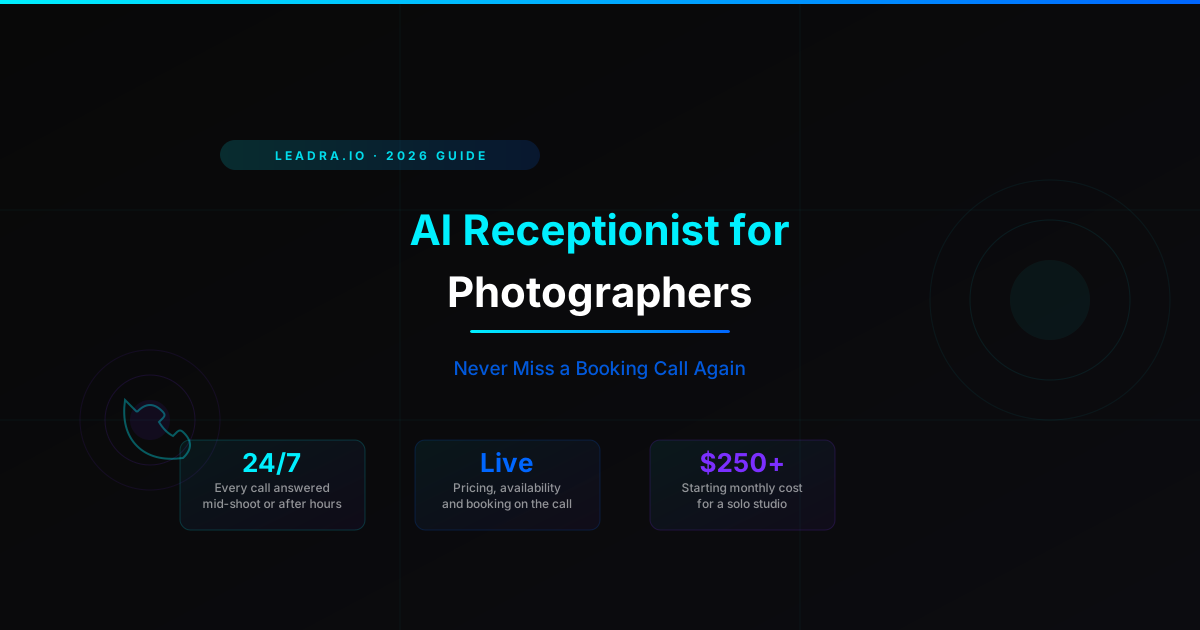
A photographer is mid-shoot, camera up, light fading fast. The phone buzzes in a bag across the room. It is a bride-to-be calling about next spring's wedding date. It rings four times and goes to voicemail. She does not leave a message — she calls the next studio on her list.
That call never shows up in any report. There is no missed-lead notification, no dashboard metric, no way to know it happened at all. It just quietly becomes a booking someone else got. For a business that spends most working hours physically unable to answer a phone, missed calls are the single most invisible revenue leak there is.
An AI receptionist fixes this by picking up every call the moment it comes in — whether the photographer is behind a lens, elbow-deep in Lightroom, or asleep. This guide covers exactly what that system does, what it costs, and what it looks like in practice for a working photography business.
Why Photographers Miss So Many Calls
Most service businesses have someone at a desk during business hours. Photographers do not work that way. A typical week is split between shoots where the phone is physically out of reach, editing blocks where notifications are muted on purpose, and evenings and weekends — exactly when engaged couples, expecting parents, and event planners are most likely to call around comparing studios.
Text-based lead systems help with form fills and Instagram DMs, but they do not solve the phone problem. A meaningful share of inquiries — especially from older clients, corporate contacts booking headshots, and people who want a quick answer before they keep browsing — still come in as a live phone call. When that call is not answered, most callers do not leave a voicemail. They just call the next name on their list.
Voicemail vs. AI Receptionist: What Actually Happens on the Call
The difference is not just whether the phone gets answered. It is what happens once it does.
| Factor | Voicemail | AI Receptionist |
|---|---|---|
| Answers calls during a shoot | No — goes to voicemail | Yes — every call, every time |
| Answers pricing questions live | No — caller must wait for callback | Yes — instantly, based on real pricing |
| Checks calendar availability | No | Yes — live calendar sync |
| Books the session on the call | No — requires a callback later | Yes — direct booking or same-day confirm |
| Coverage hours | Business hours, when reachable | 24/7, including weekends and holidays |
| Monthly cost | Free, but loses bookings silently | $250–$1,200/mo depending on scope |
What an AI Receptionist Actually Handles
A properly configured system does more than answer the phone. Here is the full scope of what it can cover.
24/7 phone answering
Every incoming call gets answered within two rings — mid-shoot, during golden hour, in the editing cave at midnight, or on a Sunday. No hold music, no voicemail box, no missed-call text sent an hour later.
Real-time pricing and package questions
The AI is trained on the photographer's actual packages, add-ons, and starting prices, so it can answer "how much for a wedding" or "do you do mini sessions" on the spot instead of promising a callback.
Date availability checks
Connected to the photographer's calendar, the AI can confirm whether a requested date is open and offer the nearest available alternatives if it is booked, instead of leaving the caller guessing.
Session booking
For qualified callers ready to commit, the AI collects shoot type, date, location, and contact details and books the session directly — or sends a structured summary to the photographer for same-day confirmation.
Reminder calls
Automated confirmation calls go out 48 hours and 24 hours before a booked session, cutting down on last-minute no-shows and reschedules that eat into a photographer's calendar.
After-hours emergency routing
If an existing client calls about a shoot-day issue — wrong address, running late, weather concern — the AI can route the call directly to the photographer's cell instead of letting it sit in a queue.
AI Receptionist Pricing for Photographers: 3 Tiers
Cost scales with how much of the call flow gets automated. Here is how the tiers typically break down for a photography business.
The AI answers every call, states pricing ranges and availability windows, and collects the caller's name, number, shoot type, and preferred date. It sends a structured summary by text and email within seconds, so the photographer can follow up same-day instead of losing the lead entirely.
Best for: Solo photographers who just need to stop losing calls that go to voicemail. Setup time: under a week. No new phone number required.
Everything in Tier 1 plus live calendar sync, direct session booking on qualified calls, automated 48-hour and 24-hour reminder calls, and after-hours emergency routing for existing clients. The AI can hold a full conversation about packages, add-ons, and travel fees before confirming a date.
Best for: Full-time photographers booking 8+ sessions a month, or studios with a wedding and portrait split that need different pricing logic per shoot type.
Custom call routing across multiple shooters and shoot categories, storefront line handling for walk-in inquiries, and dedicated reporting on call volume, booking rate, and revenue recovered by call type.
Best for: Studios with 2+ photographers, a physical storefront, or corporate/event volume where call complexity justifies a custom build.
How It Connects to the Tools You Already Use
Most photographers already run their business on a handful of tools — a booking calendar like Calendly or Google Calendar, a client management platform like HoneyBook or Táve, and a business phone number through a carrier or a VoIP provider. An AI receptionist does not replace any of that. It sits on top of the existing phone line and reads live availability from the calendar already in use, so a booked session appears exactly where it would if the photographer had answered the call personally.
Setup typically does not require a new phone number. Calls can be forwarded to the AI system only when a call goes unanswered after a set number of rings, so the photographer's existing number stays exactly the same and the AI only picks up the calls that would otherwise be lost. For photographers who want every call handled by the AI first — with a live transfer option for VIP or existing clients — that routing can be configured instead.
Every booked session, quote given, and message taken gets logged automatically, so nothing depends on the photographer remembering to check a separate inbox. Most systems sync new bookings directly into the calendar and send a same-day recap by text and email, keeping the photographer in the loop without adding another app to check.
Case Study: A Wedding Photographer's Missed-Call Problem
A solo wedding and portrait photographer booking roughly 20 weddings a season had no idea how many calls she was losing until she checked her phone's call log against her booking calendar. Over a single month, she counted 19 missed calls during shoot hours and evenings — none of which had left a voicemail.
After putting a Tier 2 AI receptionist in place, every one of those calls started getting answered live. The AI quoted her wedding package pricing, checked her calendar for the caller's date, and either booked a consultation call directly or sent her a same-day summary for follow-up.
Over the next 60 days, the AI answered 34 calls that previously would have gone to voicemail, converting 11 into booked consultation calls and 4 directly into signed wedding contracts — each worth several thousand dollars. The reminder-call feature also cut her consultation no-show rate roughly in half.
4 Things to Confirm Before You Sign Up
The AI is trained on your actual pricing, not a generic script.
Generic answering services quote nothing and just take a message. Ask to see how the AI is configured with your specific packages, add-ons, and travel fees before it goes live.
Calendar sync is real, not a manual list you have to update.
The AI should read live availability from the calendar you already use — Calendly, Google Calendar, or your booking software — not a static list that goes stale the moment you book a session elsewhere.
You can review call recordings.
Every call should be recorded and accessible in a dashboard so you can hear exactly how the AI is quoting pricing and describing your work. If a vendor will not give you access to recordings, that is a dealbreaker.
Existing clients can reach you directly for shoot-day issues.
Make sure the system has a clear path for current clients calling about a real-time problem — wrong address, running late — to reach you or get routed appropriately, not stuck in a generic new-inquiry flow.
Related Reading
Frequently Asked Questions
What does an AI receptionist for a photographer actually do?
An AI receptionist for a photographer answers every incoming phone call — during shoots, editing sessions, evenings, and weekends — and handles session pricing questions, date availability, package details, and appointment booking. It collects the caller's shoot type, preferred date, and budget, then either books the session directly on the photographer's calendar or sends a structured summary for follow-up. Unlike voicemail, it holds a real conversation instead of just recording a message that may never get returned.
How much does an AI receptionist cost for a photography business?
An AI receptionist for a photographer typically costs $250 to $600 per month for call answering and basic booking only, or $600 to $1,200 per month for a full system that includes calendar sync, quote-by-phone, and automated reminder calls. Studios running multiple shooters or a storefront location run $1,200 to $2,000 per month. Most solo photographers recover the entire monthly cost from a single booked session that would have otherwise gone to voicemail.
Will callers know they are talking to an AI receptionist?
A well-configured AI receptionist is trained on the photographer's actual pricing, packages, and availability, so it answers naturally instead of reading a script. Most callers do not realize the first response is automated — they just notice the phone got answered instead of going to voicemail. The photographer still handles the real sales conversation and closes the booking once a lead is qualified; the AI removes the risk of losing the call entirely.
Is an AI receptionist different from a regular answering service?
Yes. A traditional answering service uses a human operator reading from a script who takes a message and passes it along — the photographer still has to call the client back. An AI receptionist can answer detailed pricing and availability questions in real time, check the photographer's actual calendar, and book the session on the spot without a callback. It also costs a fraction of a live answering service, since there is no per-minute human labor cost.
Stop Losing Bookings to a Ringing Phone
Leadra.io builds AI receptionist systems for photographers and creative businesses. We will show you exactly what it looks like for your studio, free, no obligation.
Written by the Leadra.io Team. Leadra.io is an AI marketing agency helping photographers and creative businesses grow using AI-powered automation, call answering, and lead generation systems. Based in Charlotte, NC — serving clients nationwide.