Best AI for RV Dealers in 2026: Tools That Sell More Units and Win Local Search
Most RV dealerships lose their best leads overnight. A buyer submits an inquiry at 9 PM about a $95,000 Class A motorhome, waits until morning, and buys from the dealer who called first. Meanwhile, the service department runs a 6-week backlog because scheduling still goes through one phone line and a paper calendar. This is the AI toolset that fixes both.
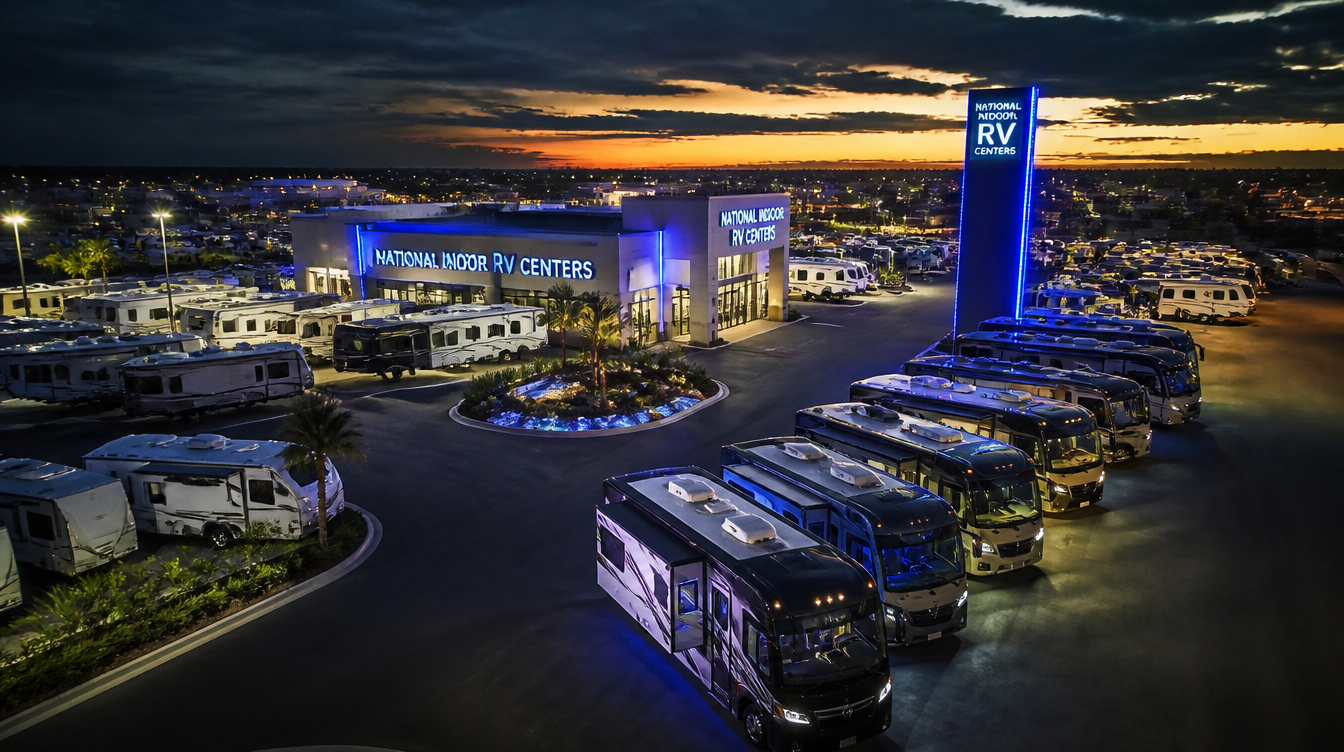
The RV Dealer Revenue Leak Nobody Talks About
RV dealerships sell a high-consideration, high-ticket product. The average new travel trailer runs $30,000–$65,000. A Class C motorhome runs $80,000–$130,000. A Class A diesel pusher runs $150,000–$400,000. These are purchases buyers research for months — visiting multiple lots, comparing floor plans, watching YouTube walkthroughs, reading reviews, and checking financing calculators before ever contacting a dealer.
When a buyer finally reaches out, they're close to a decision. Research from the RV Industry Association shows that 74% of RV buyers visit two or fewer dealerships before purchasing — and the majority buy from the first dealership that gives them a fast, helpful, personalized response to their initial inquiry.
The problem: 61% of RV dealer inquiries come in outside business hours. Evening browsing, weekend research, late-night floor plan comparisons. A buyer who submits a form at 8:45 PM on a Saturday and gets a generic auto-reply is calling a different dealer Sunday morning. By Monday, when the sales manager checks the CRM, the buyer has already made a deposit somewhere else.
AI fixes this — not by replacing salespeople, but by ensuring every inquiry gets a qualified, personalized response within 60 seconds regardless of when it arrives. Here are the six AI tools that move the needle most for RV dealers in 2026.
The 6 Best AI Tools for RV Dealers in 2026
Each tool below addresses a specific revenue leak. Most dealerships find two or three of these apply directly to their biggest constraint. The highest-performing RV dealerships run all six as an integrated system.
Lead Conversion
AI Lead Response Agent — Answer Every Inquiry in Under 60 Seconds
A buyer submits a form about a $105,000 Class A motorhome at 9:15 PM on a Sunday. Without AI, that lead sits in a sales manager's inbox until Monday morning — at which point 60–70% of high-ticket buyers have already called a competing dealership or driven to a different lot. An AI lead response agent changes that entirely. It reads the inquiry, identifies the specific unit the buyer is interested in, asks qualifying questions about travel frequency, party size, towing needs, and budget, and books a showroom walkthrough or virtual tour — all within 60 seconds of the initial submission, around the clock. RV dealerships using AI lead response see a 35–55% improvement in lead-to-appointment conversion rates. On an average deal size of $75,000, capturing two additional buyers per month from overnight leads alone adds over $1.8 million in annual gross revenue.
Local SEO
AI Local SEO Content Engine — Dominate 'RV Dealer Near Me' Searches
Most RV dealerships rely on manufacturer co-op ads and walk-in traffic from their highway location. Meanwhile, 76% of RV buyers start their search on Google — and the dealership ranking in the top three local results for 'Class C motorhomes for sale [city]', 'used travel trailers near me', and 'RV financing [city]' captures the majority of those buyers before a competitor's ad even loads. An AI content engine publishes three to five pieces of optimized content per week: RV buying guides, model-specific comparisons (Class A vs. Class C, fifth wheel vs. travel trailer), campground destination posts, service guides, and financing explainers. Within 60–90 days, dealerships consistently rank on page one for 20–40 local RV search terms. That organic traffic converts to leads without ad spend — and compounds every month as content accumulates.
Service Revenue
AI Service Scheduling Agent — Capture Winterization and Dewinterization at Scale
Service is the most consistent margin in an RV dealership — and the most undersold. Most service departments manage scheduling through a phone line staffed during business hours, a service advisor already handling ten other things, and a whiteboard calendar that fills up in February for April appointments. An AI service scheduling agent handles all inbound service requests across web, phone, and SMS: triaging urgency, confirming availability, booking the appointment, sending pre-service checklists, and triggering automated reminders that reduce no-show rates by 35–50%. For the two highest-demand service windows — spring dewinterization in March/April and fall winterization in October/November — the AI agent opens the booking calendar six weeks early and distributes demand across more service days, eliminating the backlog that sends customers to independent RV repair shops.
Customer Reactivation
AI Reactivation Campaigns — Turn Past Buyers Into Trade-Up Customers
The average RV owner upgrades within 4–7 years of their initial purchase. Most dealerships have hundreds or thousands of past buyers in their CRM — and do nothing with that data between transactions. An AI customer reactivation system automatically identifies past buyers based on purchase date, unit class, and typical upgrade cycle, then deploys personalized trade-up sequences via email and SMS. The messaging references the customer's existing unit, current inventory matching their likely upgrade, and financing options that make the transition straightforward. RV dealerships running AI reactivation campaigns see 18–28% of targeted past buyers respond within 90 days — converting a dormant database into a predictable pipeline of pre-qualified upgrade buyers at near-zero acquisition cost.
Review Generation
AI Review Automation — Build the Google Presence That Closes Buyers Before They Visit
RV buyers research obsessively before stepping foot on a lot. A dealership with 22 Google reviews and a 4.0 rating loses to a dealership with 210 reviews and a 4.8 rating — even if the inventory is comparable. AI review automation sends a personalized review request after every sale, service appointment, and positive interaction. It follows up automatically if the first request goes unopened. Dealerships using AI review automation average 20–40 new Google reviews per month. Within 90 days, most see a full map pack ranking shift — moving from page two or page three into the top three positions that capture 68% of all local map pack clicks. That visibility alone typically generates three to six incremental leads per month without additional ad spend.
Seasonal Campaigns
AI Seasonal Promotion Engine — Maximize Revenue During Spring and Summer Selling Windows
RV sales are seasonal. The dealerships that maximize peak-season revenue don't wait until spring to start marketing — they begin warming their database in January, run pre-season trade-in events in February, and push spring buying campaigns in March while competitors are still planning. An AI seasonal promotion engine runs multi-touch campaigns to segmented contact lists timed precisely around each selling window: spring RV season, summer accessories and upgrades, fall winterization, and RV show promotions. Each campaign adapts based on engagement — following up with non-openers, deepening the sequence for interested prospects, and routing hot leads directly to the sales floor. Dealerships using AI seasonal campaigns report 30–45% higher event attendance and 20–35% more revenue during peak selling windows.
Manual RV Dealer Marketing vs. AI: The Numbers
Here's what RV dealer marketing looks like with a traditional owner-operated approach versus a fully deployed AI system — based on real benchmarks from dealerships:
| Factor | Manual Approach | AI System |
|---|---|---|
| Overnight lead response time | 8–16 hours (next business day) | Under 60 seconds, 24/7 |
| Lead-to-appointment conversion | 20–32% | 52–72% |
| Google reviews per month | 1–3 (customers volunteer them) | 20–40 (automated post-transaction) |
| Local search rankings | Page 2–3 for most RV terms | Page 1 for 20–40 terms in 90 days |
| Past buyer reactivation | Ad hoc, owner-driven | Automated sequences, 18–28% response rate |
| Service scheduling capacity | Limited to business hours + phone | 24/7 online booking, 35–50% fewer no-shows |
| Owner time on marketing | 8–15 hours/week | Under 2 hours/week (oversight only) |
The overnight lead response row has the most immediate revenue impact. A dealer that responds to a $90,000 motorhome inquiry within 60 seconds converts at 55–72%. A dealer that responds 12 hours later converts at 18–28% — because the buyer has already moved on. For a dealership receiving 35 inquiries per month with an average deal size of $68,000, improving lead-to-appointment conversion from 25% to 60% means roughly 12 additional sales per month within reach. At $68,000 average transaction value, a single recovered overnight lead that closes represents $68,000 in revenue the dealership earned the right to — and almost lost to slow follow-up.
Case Study: Southeast RV Dealer Adds $520K in Annual Revenue in 90 Days
Client Story — Charlotte, NC Region
A mid-size RV dealership in the Charlotte, NC region came to Leadra.io in early 2026. The dealership carried a mix of new travel trailers, fifth wheels, and Class C motorhomes alongside a strong used inventory — averaging $3.8M in annual sales across 10–14 units per month. The service department was booked 5–7 weeks out during spring dewinterization, turning away customers who couldn't wait. The dealership had 28 Google reviews, ranked on page one only for its own name, and had no structured follow-up system for past buyers. Website inquiries were being called back the next business day — sometimes two days later.
Leadra.io deployed the six-component AI system over a 72-hour window. The AI lead response agent went live on the dealership website and Facebook page, handling all incoming inquiries 24/7. The local SEO content engine began publishing RV buying guides, model comparisons, campground destination posts, and financing guides three times per week. An AI service scheduling system opened online booking for all service categories. Customer reactivation sequences were built from the dealership's existing 3,100-contact CRM. AI review automation activated for all completed transactions and service visits. And the spring season campaign launched six weeks early — opening the booking calendar in February with targeted outreach to all customers who had purchased in the prior five years.
Lead-to-appt conversion
Before: 24%
After: 61%
Monthly organic leads
Before: 9
After: 44
Past buyers reactivated
Before: n/a
After: 21% in 60 days
Google reviews
Before: 28
After: 134 in 90 days
Service bookings (spring)
Before: 5-week backlog
After: Spread 9 weeks out
Monthly gross revenue
Before: $312K avg
After: $355K avg
The reactivation campaign reached 720 past buyers who had purchased more than 30 months prior. Of those, 151 responded to the trade-up sequence within 60 days — a 21% response rate. Of the responders, 22 came in for a trade evaluation and 13 converted into new purchases within the 90-day window. At an average deal size of $64,000, those 13 reactivated buyers generated over $832,000 in sales from a list the dealership had never systematically contacted before.
The AI review system added 106 new Google reviews in 90 days, moving the dealership from position 9 to position 2 in the local map pack for 'RV dealer Charlotte NC'. Organic website traffic grew from 190 to 860 monthly visitors. Monthly gross revenue increased from a $312,000 average to $355,000 — an increase of $520,000 in annualized revenue from a $2,000/month AI system.
How to Get Started: The First 90 Days for an RV Dealership
Deploying AI for an RV dealership doesn't require replacing your CRM or rebuilding your website. Here's what the first 90 days look like with Leadra.io:
Setup and integration
Leadra.io connects to your existing CRM (DealerSocket, IDS, CDK, or a CSV export), your website inquiry forms and chat widget, and your service scheduling system. The AI lead response agent is configured with your inventory categories (travel trailers, fifth wheels, Class A/B/C motorhomes, toy haulers), financing options, and geographic service area. The customer database is segmented by purchase date, unit class, and estimated upgrade window. The service booking agent is configured with your service categories and current lead times.
Lead agent live and review automation running
The AI lead response agent goes live on your website, handling all incoming inquiries around the clock. Google review automation activates for all completed sales and service visits. Within the first two weeks you see the most immediate impact: inquiry response time drops from hours to under 60 seconds, and the first wave of new Google reviews starts appearing. Sales floor teams notice leads arriving already pre-qualified with unit type preference, travel frequency, budget range, and preferred appointment time — so floor time is spent on closing, not on basic qualification.
Reactivation sequences and SEO content compounding
The first customer reactivation sequence runs across your past-buyer database. Early trade-up inquiries start arriving within 10–20 days of the first outreach. The SEO content engine has published 15–25 posts and first keyword rankings appear for long-tail RV searches like 'best travel trailers under 30 feet' and 'Class C motorhomes for sale near Charlotte NC'. If a seasonal selling window — spring RV show, summer trade-in event, or fall winterization — falls in this period, the AI promotion campaign launches four weeks before the date.
Compounding organic traffic and a self-sustaining pipeline
Organic search traffic from AI content is converting buyers who found the dealership on Google for the first time. The dealership ranks on page one for 15–30 local RV search terms. The review count has shifted the local map pack ranking. Service scheduling runs largely on autopilot — customers booking online after hours and receiving automated confirmation and reminder sequences. The sales team is spending more time on walkthroughs and less time chasing cold leads and leaving unreturned voicemails.
Frequently Asked Questions
What is the best AI for RV dealers in 2026?
The best AI for RV dealers in 2026 depends on your primary bottleneck. For dealerships losing high-value leads overnight, an AI lead response agent delivers the fastest ROI — qualifying buyers and booking showroom appointments within 60 seconds of inquiry, 24/7. For dealerships with strong foot traffic but minimal online visibility, an AI local SEO content engine that ranks for 'RV dealer near me' and model-specific searches drives consistent organic leads without ongoing ad spend. Most dealerships benefit from deploying the full system: lead automation, local SEO content, service scheduling, customer reactivation, review generation, and seasonal promotion campaigns — all working together as a single revenue engine.
How can AI help an RV dealership get more leads?
AI helps RV dealerships generate more leads in four proven ways. First, AI local SEO content drives organic Google traffic from high-intent searches like 'travel trailers for sale near me' and 'used Class C motorhomes [city]'. Second, an AI lead response agent captures every website and form inquiry within 60 seconds — at 9 PM on a Saturday — converting buyers before they contact a competitor. Third, AI customer reactivation campaigns target past buyers with personalized upgrade sequences, generating repeat sales from the existing database. Fourth, AI review automation builds consistent Google review volume, pushing the dealership into the top three local map pack positions where most RV purchase decisions begin.
How much does AI marketing cost for an RV dealer?
AI marketing for an RV dealership typically costs $800–$2,500 per month. A starter package covering AI lead response and local SEO content runs $800–$1,200/mo. A full system with service scheduling automation, customer reactivation, seasonal campaigns, and review automation runs $1,800–$2,500/mo. For a dealership with an average deal size of $60,000–$120,000, the system pays for itself with one additional sale per quarter — which most RV dealers see within the first 30 days from improved overnight lead conversion alone.
Can AI handle RV service scheduling automatically?
Yes. An AI service scheduling agent handles the full intake flow for RV service requests: slide-out repairs, roof inspections, winterization, dewinterization, generator maintenance, AC service, and warranty work. It confirms availability in real time, sends pre-appointment checklists, and triggers reminder sequences that reduce no-show rates by 35–50%. For high-demand service windows like spring dewinterization and fall winterization, the AI scheduling agent opens the booking calendar six weeks early and spreads demand across more available service days — eliminating the backlog that sends customers to independent repair shops.
Related Guides
Final Thoughts
The best AI for RV dealers in 2026 isn't about technology for its own sake. It's about plugging the specific revenue leaks every RV dealership has: the $90,000 motorhome inquiry that sat unanswered until Monday morning, the 500 past buyers overdue for a trade-up that nobody has contacted, the spring dewinterization backlog that turns profitable service customers away, the 28 Google reviews keeping the dealership buried on page two.
RV dealers running AI systems in 2026 are not working more hours than their competitors. They're capturing more of the revenue they already earned the right to — responding faster, following up consistently, and staying visible on Google while competitors spend the same co-op budget chasing the same shoppers on manufacturer portals. The dealerships still doing everything manually are working just as hard and leaving 25–40% of potential annual revenue on the table.
Ready to Grow Your Dealership?
See what AI does for your RV dealership in 90 days
Leadra.io deploys AI marketing systems for RV dealers, powersports businesses, and local dealerships across Charlotte, NC and nationwide. Setup takes 72 hours. Most dealerships see positive ROI within 30 days — often from a single recovered overnight lead in the first week.