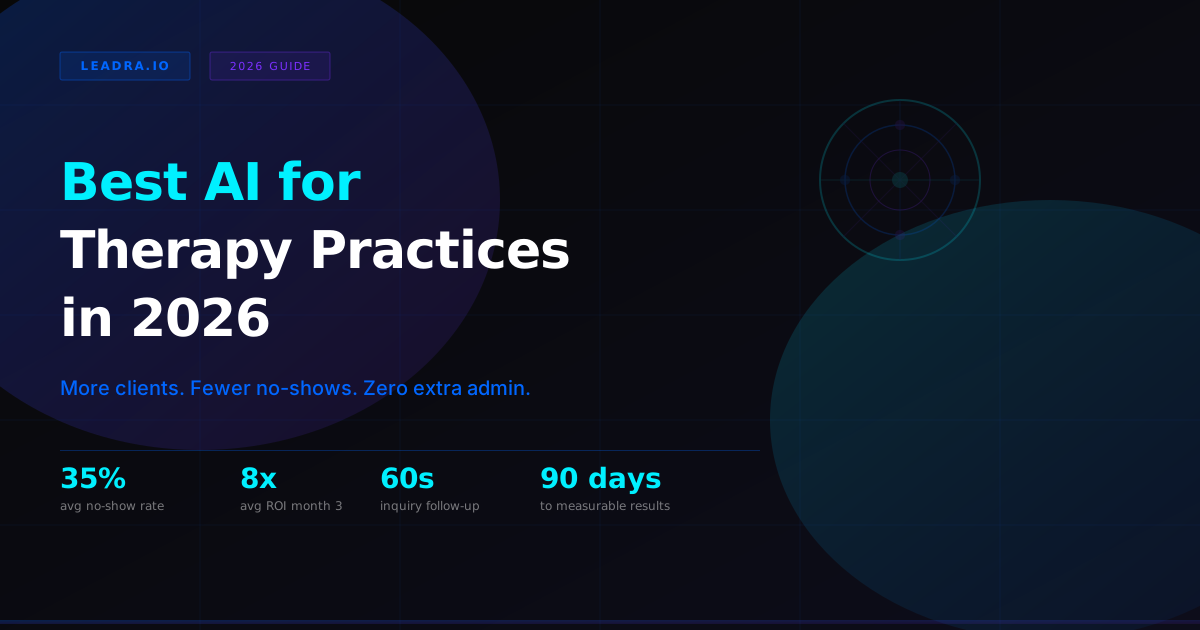
Right now, your therapy practice is probably losing 30-40% of the clients who try to reach you. Not because you're not good at what you do — but because the phone rings during a session, the voicemail goes unheard until tomorrow, and by then the person has either booked elsewhere or talked themselves out of starting therapy entirely.
Mental health practices have a specific intake problem that doesn't affect most other healthcare providers: the therapist literally cannot pick up the phone for 50 minutes at a stretch, all day long. According to a 2024 analysis by the Therapy Business Journal, the average private practice misses 44% of inbound new client calls during business hours — and only 18% of people who reach voicemail ever call back. That's not a staffing problem. That's a system problem.
Add a 25-35% new client no-show rate, a web inquiry that doesn't get a response for 24 hours, and a lapsed client database that nobody touches — and most therapy practices are running at 50-60% of their actual revenue capacity while their waitlist fills with inquiries that never convert.
The best AI for therapy practices in 2026 doesn't replace the therapeutic relationship — it protects the front end of it. This guide covers what the system looks like, what a Charlotte NC group practice produced running it, and what HIPAA compliance actually requires when you introduce AI into your practice.
Why Therapy Practices Lose Clients Before the First Session
The intake funnel for a therapy practice has four specific failure points. Each one loses prospective clients who were already motivated enough to reach out — the highest-intent leads you'll ever have.
Missed calls during sessions
A therapist running back-to-back 50-minute sessions can't pick up the phone. A front desk coordinator at a solo or small practice handles scheduling, paperwork, billing, and client check-in simultaneously. Calls during busy windows go to voicemail. Research from Software Advice found that 60-70% of healthcare callers who reach voicemail hang up without leaving a message. In mental health, that number is likely higher — reaching out for therapy often requires working up significant courage, and hitting a machine breaks the momentum.
Slow web inquiry response
Prospective clients increasingly find therapists through Psychology Today, Google, and practice websites — often late at night or on weekends when the decision to start therapy feels most pressing. A contact form submitted at 10 PM that gets an email reply at 9:30 AM the next business day faces a contact rate below 20%. That same inquiry responded to via SMS within 60 seconds converts at over 65%. The gap between those two numbers represents real clients who booked with whoever responded first.
New client no-shows
Mental health first appointments have some of the highest no-show rates in healthcare — 25-35% on average, compared to 10-15% in primary care. The dynamic is unique to therapy: clients book during a crisis or a moment of real motivation, the acute feeling passes as days go by, and showing up for a first session — with a stranger, to talk about difficult things — starts to feel optional. Without a proactive, personalized reminder that reconnects them to their original motivation, 1 in 3 first appointments becomes a wasted 50-minute slot.
Lapsed client abandonment
Every established therapy practice has dozens of former clients who attended regularly, made meaningful progress, hit a good stretch, and gradually stopped scheduling. They didn't terminate — they just drifted. These aren't strangers. They know you, they trust you, and their work isn't finished. Most practices never reach out to them because nobody has time for that outreach. The result: the practice pays $200-$400 to acquire new clients for slots that former clients — at near-zero reactivation cost — would fill.
None of these problems require more staff. They require systems that run continuously, respond instantly, and follow up consistently — so therapists can stay in the room with their clients instead of chasing administrative gaps.
The 5-Component AI System for Therapy Practices
Here's the full stack Leadra.io deploys for therapy and counseling practices. Each component targets a specific failure point in the intake and retention funnel — built for the operational reality of a mental health practice, including HIPAA-compliant infrastructure and crisis language routing.
24/7 AI intake agent for new client inquiries
Most therapy practices miss 40-60% of new client calls because therapists are in session. When a potential client calls during a 50-minute therapy hour and gets voicemail, the majority don't call back — they call the next practice. A 24/7 AI intake agent answers every call your front desk and therapists miss, collects the client's presenting concern, preferred schedule, and insurance information, and routes urgent or crisis language to emergency resources. Non-urgent inquiries are scheduled directly or queued for a callbacks within 2 hours. The system runs evenings, weekends, and during back-to-back session blocks — the exact windows where most practices currently lose clients.
60-second web-to-SMS follow-up
A prospective client fills out your 'Request an Appointment' form at 10 PM. Someone on your team emails them back the next morning. By then, they've already booked elsewhere — or talked themselves out of starting therapy. The 24-48 hour lag is the single biggest conversion killer for therapy practices with an online presence. An AI web-to-SMS system monitors your contact forms and Psychology Today profile inquiries in real time, sending a personalized SMS within 60 seconds: acknowledging receipt, asking about their schedule, and offering to book a free 15-minute consultation directly from the text thread. Practices using this system see contact rates jump from under 20% to over 65% on web-submitted inquiries.
No-show prevention reminder sequence
Therapy no-show rates average 25-35% for new clients — higher than almost any other healthcare specialty. The pattern is consistent: someone makes the call to start therapy during a low moment, books an appointment, then talks themselves out of going as that moment passes. Generic calendar reminders don't move the needle. A personalized AI reminder sequence does: an SMS confirmation 48 hours before referencing why they reached out (anxiety, relationships, grief, stress), a specific touchpoint 24 hours out, and a final reminder 2 hours before with the telehealth link or directions. Practices running this sequence drop new client no-shows from 30%+ to under 10%.
Lapsed client reactivation
Every established therapy practice has clients who attended 6-12 sessions, made real progress, and then faded — not because they resolved everything, but because life got busy or they hit a good stretch and deprioritized sessions. These are warm contacts. They already know the therapist, trust the practice, and have unfinished work. An AI reactivation system reaches lapsed clients at 60, 90, and 180 days of inactivity with a personalized check-in message — not a sales pitch, a genuine outreach referencing their progress and asking how things are going. Typical reactivation rates for therapy practices run 18-28% over a 90-day campaign. Each reactivated client represents 6-12 sessions of revenue at a fraction of the acquisition cost of a new client.
Local SEO and AI search visibility
Therapy clients search for help in moments of acute need — 'therapist near me for anxiety,' 'couples counselor Charlotte NC,' 'EMDR therapist.' These searches happen at all hours and they produce bookings from whoever ranks in the top 3 results. The best AI for therapy practices includes a local SEO content engine that publishes 4-8 targeted blog posts per month, automates Google Business Profile posts targeting your specialty keywords, and feeds your practice's approach and outcomes into the AI Overview layer — ChatGPT, Perplexity, and Google SGE. Practices that implement this layer consistently see 35-65% growth in organic inquiry volume within 90 days.
HIPAA Compliance Note
Every AI component Leadra.io deploys for therapy practices operates under a signed Business Associate Agreement (BAA), uses end-to-end encrypted communication channels, and keeps the AI layer limited to scheduling logistics and intake coordination — never clinical content. Crisis language detection routes to emergency resources automatically. No session content or clinical notes pass through the AI layer. Setup requires your intake forms and scheduling platform credentials — typical compliance review takes 1-2 business days.
Manual vs AI: What Actually Changes in Your Practice
This comparison reflects actual operational differences between a therapy practice running on standard processes versus one with a full AI intake and retention system active.
| Metric | Manual / Current | With AI |
|---|---|---|
| New client call handling (during sessions) | Voicemail — 60%+ don't leave a message | 100% answered, intake collected live |
| Web inquiry follow-up speed | Next business day (12-24 hrs) | Under 60 seconds, 24/7 |
| New client no-show rate | 25-35% | 8-14% |
| Lapsed client outreach | Manual — rarely done consistently | 60/90/180-day automated sequences |
| Intake form completion | PDF via email, 40-60% completion rate | Conversational SMS, 85%+ completion |
| Crisis language routing | Depends on staff noticing the message | Automatic detection and emergency routing |
| Local search visibility | Static website, occasional GBP posts | Weekly SEO content + GBP automation |
| New clients per month (avg group practice) | 12-18 | 22-35 |
Charlotte NC Group Practice: 14 to 29 New Clients Per Month in 84 Days
A 4-therapist group practice in Charlotte's South End neighborhood came to Leadra.io in early 2026 with a consistent problem: they had 4-6 weeks of waitlist inquiries sitting in their contact form and voicemail, but only 14-16 of those inquiries were converting to actual first appointments each month. The practice couldn't figure out where clients were going — they had good reviews, a clean website, and strong referrals from local psychiatrists.
A 2-week audit traced the loss to three places: 47% of new client calls went unanswered during therapist session blocks, web inquiries were getting a follow-up email 18-22 hours later, and new client no-shows were running at 31%. Of the clients who did start, 22% had lapsed in the past 90-180 days with no outreach from the practice.
Case Study Results — 84 Days
New clients/month
Before: 14-16
28-31
New client no-show rate
Before: 31%
9%
Web inquiry contact rate
Before: 19%
68%
Lapsed clients reactivated
Before: 0/mo
6-8/mo
Monthly practice revenue
Before: $28,400
$54,200
Month-3 ROI
Before: —
11.2x
The 24/7 intake agent and 60-second web follow-up drove the majority of new client gain. The lapsed client reactivation — reaching 94 former clients who had been inactive 60-180 days — produced 7 returning clients in the first 30 days, each worth an average of 8 additional sessions. The practice added no staff. The 4 therapists reported spending significantly less time on intake coordination and more time in sessions.
What AI Costs for a Therapy Practice (2026 Pricing)
AI system pricing for therapy practices scales with practice size and which components you activate. Here's what the tiers look like in 2026:
Foundational — $700-$1,400/mo
- →24/7 AI intake voice agent (answers calls during sessions)
- →60-second web-to-SMS follow-up for contact form submissions
- →3-touch no-show prevention reminder sequence
- →HIPAA-compliant infrastructure + BAA
Solo practitioners and 2-person practices. Targets the highest-ROI gaps: missed calls and no-shows.
Growth — $1,500-$2,500/mo
- →Everything in Foundational
- →Lapsed client reactivation sequences (60/90/180 days)
- →Automated intake form delivery and completion tracking
- →Google Business Profile post automation
- →Review generation after session milestones
3-6 therapist group practices. Full intake-to-retention loop, including lapsed client revenue recovery.
Full System — $2,600-$4,000/mo
- →Everything in Growth
- →Local SEO content engine (4-8 specialty-targeted posts/month)
- →AI Overview and ChatGPT citation optimization
- →Specialty keyword targeting (anxiety, depression, EMDR, couples, etc.)
- →Monthly performance reporting with client acquisition cost tracking
Established group practices (6+ therapists) and multi-location practices targeting dominant local search visibility.
How Fast Does AI for a Therapy Practice Go Live?
Most therapy practices are live and handling real inquiries within 7-10 days. Here's the typical setup sequence:
Intake audit and BAA execution. Leadra.io maps your current call flow, form submissions, and scheduling platform. BAA is signed and infrastructure is confirmed compliant.
AI intake agent training. The agent is trained on your practice specialties, therapist availability windows, intake screening questions, and crisis routing protocols.
Web-to-SMS integration. Your contact forms and Psychology Today profile (if applicable) are connected to the 60-second follow-up system. Test inquiries are run end-to-end.
No-show sequence configuration. Reminder timing and personalization variables are set. The sequence is tested against a sample of upcoming first appointments.
Lapsed client reactivation list build. The first reactivation campaign is drafted, reviewed, and scheduled. The practice is fully live on all active components.
3 Things to Check Before Choosing an AI Vendor for Your Therapy Practice
Do they offer a signed BAA before you share any client data?
Any vendor that handles scheduling information, contact data, or intake responses for a therapy practice is a Business Associate under HIPAA. They must provide a signed BAA before you connect any system to client information. If a vendor can't produce a BAA or treats it as optional, walk away.
Does their AI handle crisis language correctly?
A prospective client calling at 2 AM may be in distress. Any AI agent handling intake for a mental health practice must detect crisis language — mentions of self-harm, harm to others, or acute psychiatric episodes — and route those calls to emergency resources immediately, not to a scheduling queue. Ask any vendor exactly how their system handles this before signing.
Can they show you results from another therapy or healthcare practice?
AI systems built for e-commerce or real estate don't automatically translate to mental health. The intake sensitivities, HIPAA requirements, and client communication norms are different. Ask for at least one case study or reference from a therapy, counseling, or healthcare practice before you commit. A vendor who can't produce one isn't the right fit for a mental health practice.
Frequently Asked Questions
What is the best AI tool for therapy practice client intake?
The best AI for therapy practice intake combines a 24/7 voice agent that handles new client inquiries after hours, a web-to-SMS follow-up that contacts form submissions within 60 seconds, and an automated intake form sequence that collects presenting concerns, insurance information, and scheduling preferences before the first session. Unlike generic AI phone tools, systems built for mental health practices are trained to handle sensitive disclosures, route crisis language to emergency resources, and keep all communications within a HIPAA-compliant infrastructure. Leadra.io deploys this full intake stack for therapy and counseling practices, with setup in 5-7 days.
How does AI reduce no-shows for therapy appointments?
AI reduces therapy no-shows through a three-touch personalized reminder sequence: an SMS confirmation 48 hours before the session, a personalized message 24 hours out referencing the client's focus area (anxiety, relationships, grief — whatever they noted in intake), and a final reminder 2 hours before the appointment with location or telehealth link. Therapy practices using this sequence consistently drop no-show rates from 25-35% to 8-14%. The 24-hour personalized touch is the highest-impact step — clients who receive a message that references their specific reason for attending are 3x less likely to no-show than those who get a generic reminder.
Is AI for therapy practices HIPAA compliant?
AI communication systems for therapy practices can be HIPAA compliant when built correctly. Compliance requires a signed Business Associate Agreement (BAA) with every vendor handling protected health information (PHI), end-to-end encryption for all SMS and voice communications, no storage of session content or clinical notes in the AI layer, and audit logging of all client-data interactions. Leadra.io operates under a BAA, uses encrypted communication channels, and keeps the AI layer limited to scheduling, intake logistics, and appointment reminders — never clinical content. When evaluating any AI vendor for a therapy practice, ask for their BAA, encryption standards, and a description of what data is stored and where.
How much does AI for a therapy practice cost?
AI systems for therapy and counseling practices typically run $700-$3,500 per month depending on practice size and which components are active. A foundational stack — 24/7 intake voice agent, 60-second web-to-SMS follow-up, and no-show prevention reminders — runs $700-$1,500/month and covers the highest-ROI functions. Adding lapsed client reactivation, local SEO content automation, and Google Business Profile management brings the full system to $2,000-$3,500/month. Solo practitioners typically start at the foundational tier. Group practices with 4+ therapists typically need the mid or full tier to handle volume. Most practices see ROI within 45-60 days. Leadra.io offers a free 30-minute audit to calculate your specific revenue recovery opportunity before you commit.
Related Reading
Find Out How Many Clients Your Practice Is Losing Each Month
Leadra.io runs a free 30-minute audit for therapy and counseling practices — tracing exactly where inquiries drop out and calculating the revenue recovery opportunity before you commit to anything. No sales pressure. Just the numbers.