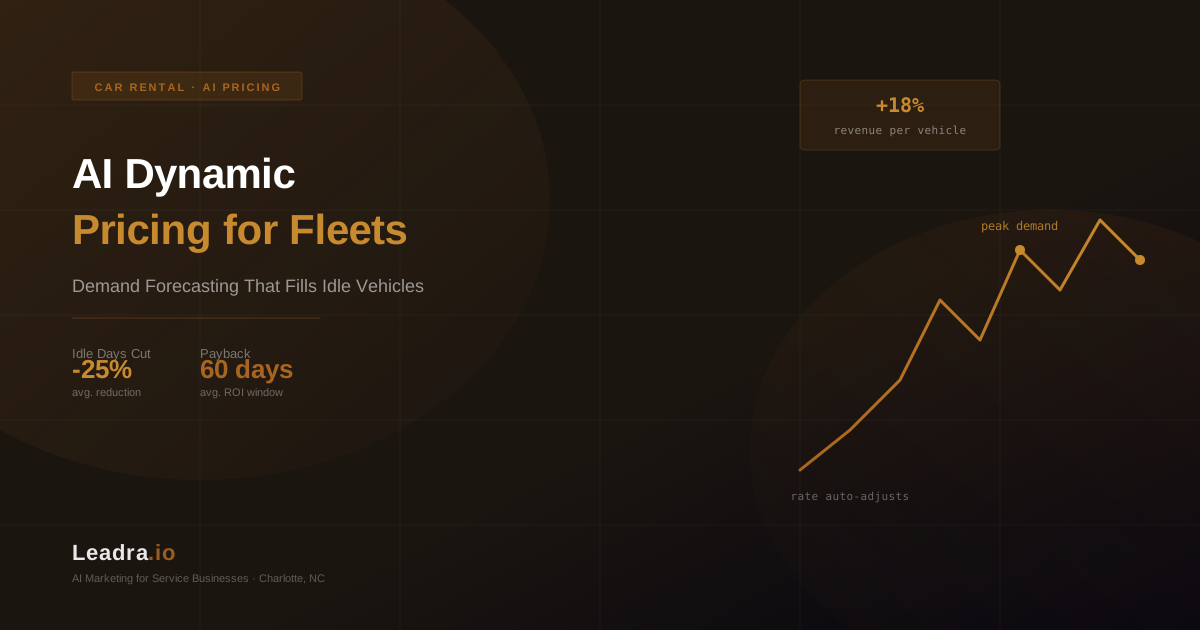
Most car rental fleet operators price every vehicle the same way they did five years ago: a flat rate card, maybe a manual bump for holiday weekends, reviewed once a quarter if it's reviewed at all. Meanwhile demand for the exact same vehicle swings 3-4x week to week based on local events, weather, and competitor availability.
That mismatch is expensive. A fleet charging one static rate is either overpriced on slow days — losing bookings to competitors — or underpriced on high-demand days, leaving revenue on the table that renters would have gladly paid. AI dynamic pricing fixes both problems at once by adjusting rates automatically based on real demand signals instead of a rate card nobody has touched since last spring.
This guide breaks down how AI-driven dynamic pricing and demand forecasting actually work for car rental fleets, what it costs, and how operators are using it to raise revenue per vehicle without hiring a revenue management team.
Why Static Rate Cards Are Quietly Costing You Revenue
A flat rate card feels safe. It's also the single biggest reason independent and regional fleets leave money on the table compared to airlines, hotels, and national rental chains that have used demand-based pricing for decades.
You're underpriced during high-demand windows.
Local conventions, concerts, festivals, and sports events spike rental demand for days at a time. A fleet running a flat rate captures the same $65/day it always charges — even when every other operator in the market is sold out and renters would pay $95-110 without hesitation.
You're overpriced during slow windows, so cars sit idle.
A vehicle earning $0 because it's parked is a worse outcome than the same vehicle earning $40 at a discounted rate. Most operators never discount proactively — they discover the low-demand week after it's already lost, when it's too late to fill it.
Rate reviews happen too infrequently to matter.
Manually checking competitor rates and adjusting your own is a full-time job. Most independent operators do it monthly at best. By the time a manual review catches a demand shift, the booking window for that period has often already closed.
None of this requires more marketing spend to fix. It requires pricing your existing fleet correctly for the demand that already exists — which is exactly what AI dynamic pricing and demand forecasting are built to do.
The 4 AI Systems Behind Smarter Fleet Pricing
These are the specific components Leadra.io deploys when building an AI pricing and demand forecasting system for a car rental fleet.
01. Real-Time Demand Forecasting
The forecasting model pulls historical booking data, local event calendars, school and holiday schedules, and weather forecasts to predict demand 7-30 days out for each vehicle class in your fleet. It flags high-demand windows before they arrive and low-demand gaps while there's still time to fill them.
This is the foundation everything else runs on. Without accurate demand forecasting, dynamic pricing is just guessing with extra steps.
02. Automated Rate Adjustment
Based on the forecast, the system adjusts your published rates automatically within limits you set — a floor rate you'll never go below and a ceiling you're comfortable charging. Rates update daily, sometimes multiple times a day during fast-moving demand windows like a last-minute event announcement.
Operators using automated rate adjustment typically see a 3-6% lift in revenue per available vehicle day within the first 60 days, without changing anything else about how they operate.
03. Idle-Window Promotion Triggers
When the forecast flags a low-demand gap 10-14 days out, the system doesn't just lower the rate — it can automatically trigger a targeted promotion: a discount code sent to past renters in that vehicle class, a short paid ad push, or a highlighted deal on your direct booking page.
Catching the gap two weeks out instead of the day it happens is the difference between filling the vehicle at a modest discount and losing the revenue entirely.
04. Competitor Rate Monitoring
The system tracks published rates from nearby competitors and OTA listings for comparable vehicle classes, feeding that data into your pricing model so you stay positioned correctly — competitive enough to win the booking, without underpricing yourself when demand is genuinely high across the whole market.
Case Study: Fleet Operator Lifts Revenue Per Vehicle by 18% in 90 Days
Client Story
A regional operator running a 32-vehicle fleet had used the same rate card for nearly two years, with manual bumps only for major holidays. They suspected they were leaving money on the table but had no way to quantify it or act on it consistently.
We deployed a demand forecasting model against 18 months of their booking history, connected automated rate adjustment to their reservation system, and set up idle-window promotion triggers for gaps flagged 10+ days out. The system ran fully automated within rate floors and ceilings the operator approved upfront.
Revenue/vehicle/mo
$1,180
$1,392
Fleet utilization
71%
84%
Idle vehicle days/mo
94
63
Avg. daily rate
$62
$68
Results at 90 days. Leadra.io investment: $1,400/month — the added revenue per vehicle produced a 4.7x return in the first quarter.
How to Roll Out AI Dynamic Pricing Without Disrupting Bookings
Fleet operators are understandably cautious about handing pricing decisions to an automated system. The rollout should happen in stages, with guardrails you control at every step.
Days 1-14: Build the forecasting model on your historical data
The system ingests 12-24 months of your booking history plus local event and seasonal data to build an initial demand forecast. No rates change yet — this phase is purely about calibrating the model to your specific market.
Days 15-30: Set rate floors, ceilings, and launch in shadow mode
You define the minimum and maximum rate for each vehicle class. The system runs in shadow mode, showing you what it would have charged versus your actual rates, so you can validate its recommendations before it touches a live price.
Days 31-45: Go live with automated rate adjustment
Once you're comfortable with the shadow mode results, the system starts adjusting live rates within your approved bounds. You retain override control at all times — nothing is fully hands-off unless you choose that.
Days 46-90: Layer in idle-window promotions and competitor monitoring
With rate adjustment proven out, add the promotion triggers for low-demand gaps and ongoing competitor rate tracking. By day 90 you have a full closed-loop pricing system running with minimal manual input.
Why This Matters More for Independent Fleets Than National Chains
National chains have run revenue management teams for years. Independent and regional operators have been priced out of that capability — until now. AI dynamic pricing closes the gap without requiring a dedicated analyst on payroll.
Smaller fleets feel every idle day more
A 300-vehicle fleet can absorb a few idle cars without noticing. A 25-40 vehicle fleet feels every one of them directly in monthly revenue. Demand forecasting matters more, not less, at smaller scale.
You can react faster than a national chain
A large chain adjusts pricing across thousands of locations through corporate systems. An independent operator with AI pricing can react to a local event announced this week, not last quarter's planning cycle.
No revenue management headcount required
National chains pay full-time revenue management analysts. An AI system delivers the same function at a fraction of the cost, sized appropriately for a fleet your size.
Local demand knowledge compounds
The model learns your specific market — your local events, your seasonal patterns, your competitor set. That local specificity is something a national chain's centralized system can't replicate at the neighborhood level.
The fleets that adopt AI dynamic pricing now will be running a materially more efficient business than competitors still working off a rate card printed at the start of the year.
What AI Dynamic Pricing Costs (and What It Returns)
The math on this is straightforward because the return shows up directly in revenue per vehicle — a number every fleet operator already tracks.
Monthly Investment Breakdown
For a fleet averaging $275/rental across 30-40 vehicles, a 3-5% lift in revenue per vehicle from smarter pricing alone typically covers the system's cost several times over within the first two billing cycles — before accounting for the additional bookings recovered from idle-window promotions.
Unlike marketing spend that stops producing the moment you stop paying for it, demand forecasting keeps improving as it accumulates more of your booking history — the model gets more accurate every month it runs.
Frequently Asked Questions
What is AI dynamic pricing for car rental fleets?
AI dynamic pricing is a system that adjusts your daily rental rates automatically based on real-time demand signals — local event calendars, weather, competitor rates, fleet utilization, and booking pace. Instead of a fixed rate card, the system raises rates when demand is high and lowers them when vehicles are sitting idle, so every car earns closer to its maximum possible revenue.
How does demand forecasting reduce idle vehicle days for a rental fleet?
Demand forecasting models predict booking volume 7-30 days out using historical rental patterns, seasonal trends, and local event data. When the model flags a low-demand window, it automatically triggers targeted promotions, lower rates, or ad spend to fill those vehicles before the dates arrive. Fleet operators using demand forecasting typically cut idle vehicle days by 15-25%.
Will dynamic pricing scare away price-sensitive renters?
No — dynamic pricing works in both directions. It lowers rates during low-demand periods to attract price-sensitive renters who would otherwise book elsewhere, and raises rates only during high-demand windows when renters have fewer options. Airlines and hotels have used this model for decades. The goal is matching price to demand, not raising prices across the board.
What does an AI dynamic pricing system cost for a car rental fleet?
A dynamic pricing and demand forecasting system typically runs $800-1,800 per month depending on fleet size, plus setup and integration with your existing reservation software. For a fleet averaging $275/rental, a 3-5% lift in revenue per vehicle covers the cost several times over — most operators see positive ROI within the first two billing cycles.
Your Rate Card Shouldn't Be the Same in January and July
Demand for your fleet already fluctuates constantly. The only question is whether your pricing fluctuates with it. AI dynamic pricing and demand forecasting turn that gap into recovered revenue — without adding a single vehicle to your fleet or a single person to your payroll.
Every idle vehicle day and every underpriced high-demand booking is money your fleet already earned and didn't collect. The operators who fix that in 2026 will be running a meaningfully more profitable fleet than competitors still working off a static rate card.
Leadra.io builds AI demand forecasting and dynamic pricing systems for car rental fleet operators, starting with a free analysis of your booking history to show exactly how much revenue is currently sitting on the table.
Pricing is only half the equation — if you're also losing bookings to competitors outranking you locally, read our guide on car rental fleet AI marketing.
Free Pricing Analysis
See How Much Revenue Your Fleet Is Leaving on the Table
30-minute analysis. We review your booking history and utilization data, then show you exactly where dynamic pricing would have earned more per vehicle.
Leadra.io
AI marketing agency — Charlotte, NC · Published August 28, 2026