Which Dormant Patients Should You Reactivate First? An AI Priority Scoring Framework
August 27, 2026 · 9 min read
Most dental practices that attempt dormant patient reactivation make the same mistake: they treat every name on the list the same way. A patient who left 19 months ago with a $4,200 crown sitting unscheduled gets the exact same generic "we miss you" text as a patient who left four years ago and moved to a different insurance network entirely. Both get one shot, one message, and the practice wonders why the response rate lands at 3%.
The fix isn't sending more messages. It's deciding who gets messaged first, and how hard, before a single text goes out. That's what priority scoring does — it takes a dormant list of 300, 500, or 1,000 patients and ranks it by who is actually worth chasing right now, based on data your practice management system already has.
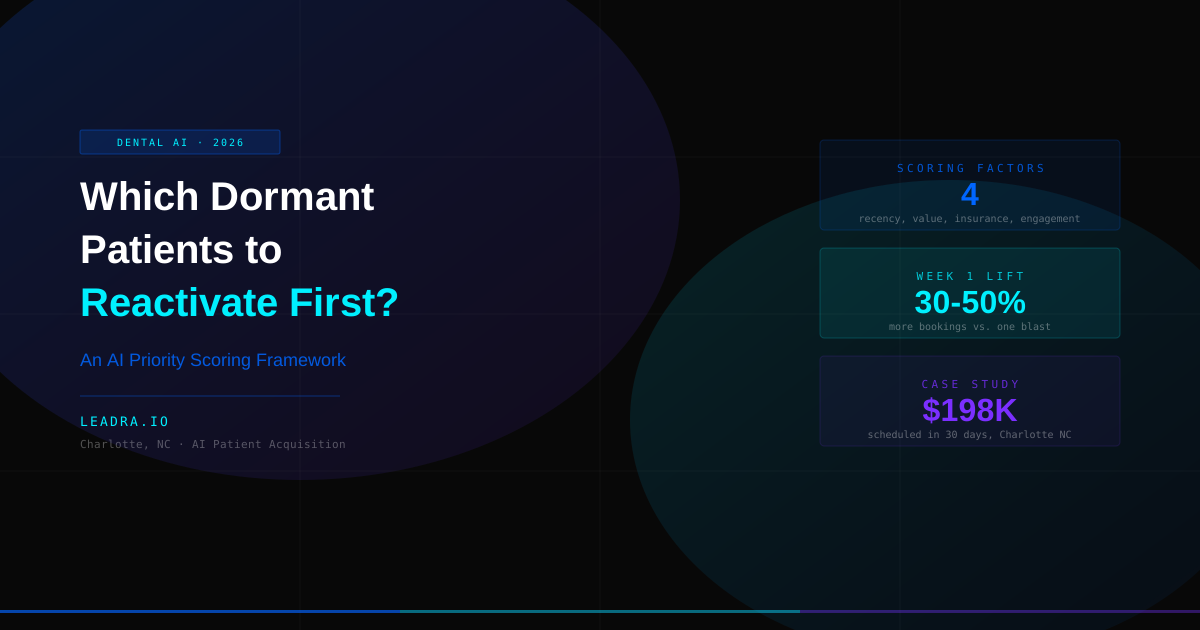
This guide breaks down the exact 4-factor scoring model Leadra.io uses to rank dormant dental patients before launching an AI reactivation sequence, why the order you contact people in changes your results as much as the messages themselves, and a Charlotte, NC case study showing what happens when a practice scores its list instead of blasting it all at once.
Why Contacting Everyone at Once Underperforms
When a practice pulls a full dormant list and sends identical outreach to all 500 patients on the same day, three things go wrong. First, the front desk gets flooded with responses across every patient type at once — high-value treatment cases mixed in with simple cleanings mixed in with people who just want to be removed from the list — and nobody triages by revenue potential. Second, patients with dead contact information get the exact same three follow-up attempts as patients with valid numbers, wasting outreach capacity. Third, and most costly, the practice never learns which segment of its list is actually driving bookings, because everyone got the same message on the same day and the data is impossible to separate.
Scoring solves all three. It filters out unreachable contacts before spending a single touchpoint on them, it tells the AI system which patients to message with which urgency level, and it gives the practice a clear read on where the real revenue in the list is sitting.
The 4-Factor Priority Scoring Model
Every dormant patient gets scored across four factors. Each factor is weighted, and the weighted total becomes the patient's priority rank.
| Factor | What It Measures | Weight | Why It Matters |
|---|---|---|---|
| Recency | Months since last visit | 30% | Recently lapsed patients respond at 2-3x the rate of patients gone 3+ years |
| Treatment Value | Dollar value of unscheduled treatment plan items | 35% | A booked crown patient is worth 5-10x a booked cleaning patient |
| Insurance Status | Active coverage, benefit reset timing | 20% | Patients with expiring or resetting benefits book faster under urgency |
| Engagement History | Past reminder opens, reliable attendance, prior responsiveness | 15% | A patient who always confirmed appointments is easier to win back than a chronic no-show |
Before any of these four factors get calculated, every patient passes through a gating filter: is the phone number or email still valid? Patients who fail contact verification are pulled out of the active list entirely, regardless of how high they'd otherwise score. There's no priority high enough to fix a disconnected phone number — those records get flagged for a separate, lower-effort mail or long-form email attempt instead of the primary AI sequence.
How the Score Translates Into Outreach Order
Once every reachable patient has a weighted score, the list splits into three outreach waves instead of one blast:
- Wave 1 (top 20-25% of scores) — Launches Day 1. These are recently lapsed patients with real treatment value and active insurance. Outreach leads with the specific treatment or recall item and moves fast toward a booking link.
- Wave 2 (middle 40-50% of scores) — Launches Day 4-5, once Wave 1 responses are being handled. Messaging is similar but slightly less urgent, since these patients are a notch further out or have lower treatment value attached.
- Wave 3 (bottom 25-30% of scores) — Launches Day 8-10. These patients are farther out, have no pending treatment on file, or show weak past engagement. The message is a simpler re-introduction rather than a treatment-urgency pitch, since the data suggests they need to be warmed up, not pushed.
Staggering the waves this way means the front desk deals with a manageable trickle of high-intent responses first instead of an unsorted flood, and the AI system can adjust Wave 2 and Wave 3 messaging based on what actually worked in Wave 1 — something that's impossible when every message goes out on the same day.
Where the Scoring Data Actually Comes From
Everything in the model already exists inside the practice's PMS — Dentrix, OpenDental, or Eaglesoft all track last visit date, treatment plan status, and insurance information natively. The reason most practices never use it is that pulling and cross-referencing four data points per patient across 500 records by hand is a multi-day project nobody has time for. AI systems connect directly to the PMS export, calculate all four factors automatically, and produce a ranked list in minutes rather than days.
Engagement history is the one factor that sometimes needs a secondary source — email open and click data from a prior email platform, or SMS delivery logs from a past campaign. When that data isn't available, the model simply reweights the other three factors slightly higher rather than guessing, since a missing engagement signal shouldn't drag a high-value patient's score down artificially.
Case Study: A Charlotte, NC Practice Reorders 640 Dormant Patients
A 3-dentist general practice in Charlotte's NoDa neighborhood had tried dormant patient outreach twice before working with Leadra.io — both times sending a single email blast to their full list of 640 lapsed patients and getting under 3% response. When we ran their PMS export through the scoring model, the results reshuffled the priority order dramatically: 38 patients with unscheduled crown, bridge, or periodontal treatment plans worth a combined $164,000 had been sitting in the middle of the practice's prior alphabetical mail-merge list, getting no more attention than a routine cleaning patient.
Wave 1 launched with the top 140 scored patients — the group carrying most of that $164,000 in treatment value plus the most recently lapsed hygiene patients. Within 10 days, Wave 1 alone produced 34 booked appointments, including 9 of the high-value treatment cases. Wave 2 launched Day 5 and added another 28 bookings by Day 20. Wave 3, the lowest-scored group, added 14 more bookings by Day 30 — lower volume, as expected, but still net-positive.
Total after 30 days: 76 booked appointments, $198,000 in scheduled production including the treatment plan cases, and a front desk that reported the response volume felt manageable throughout instead of overwhelming in week one and silent by week three, which is what happened with their previous single-blast attempts.
Common Mistakes Practices Make Without a Scoring Model
The most expensive mistake is prioritizing by recency alone. A patient who left 14 months ago with no treatment plan is not automatically more valuable than a patient who left 22 months ago with $6,000 in accepted-but-unscheduled work. Recency matters, but treatment value carries more weight in a well-built model because it directly determines what a booked appointment is worth.
The second mistake is skipping contact verification and letting stale records absorb outreach attempts meant for reachable patients. A phone number that bounces after one attempt wastes a touchpoint that could have gone to a live prospect. The third mistake is scoring once and never adjusting — a good system reweights or reorders remaining patients based on which segments are actually converting once the first wave results come in, rather than running a static list top to bottom regardless of performance.
A related mistake is scoring the list once at campaign launch and never touching it again. Dormant lists aren't static — patients respond, treatment plans get updated, insurance benefits reset each January, and new patients fall into dormant status every month as their 18-month recall window quietly passes. A practice that scores once in March and runs the same static ranking through December is working with stale priority data by the second quarter. The highest-performing setups re-score on a rolling basis, typically monthly, so newly lapsed high-value patients get pulled into an active wave instead of sitting untouched until the next full campaign.
Getting Started With Priority Scoring
Building this requires three things: a full PMS export including last visit dates, treatment plan status, and insurance information; a contact verification pass to remove dead numbers and emails before scoring; and a weighting model tuned to your practice's actual case mix — a practice heavy in orthodontic referrals will weight treatment value differently than a practice that's mostly hygiene and general dentistry.
Leadra.io builds and runs this scoring pass automatically as the first step of any dormant patient reactivation engagement, before a single message goes out. Practices that score first consistently outperform practices that blast their full list at once, and they do it with less strain on front-desk staff during the campaign's busiest early days.
Frequently Asked Questions
What is priority scoring in dormant dental patient reactivation?
Priority scoring ranks every patient on a dormant list by how likely they are to book and how much revenue they represent, before any outreach goes out. Instead of messaging patients in the order they appear in a PMS export, AI scores each one on recency, pending treatment value, insurance status, and past engagement, then ranks the list from highest to lowest priority. Practices that score their list before launching a campaign consistently see 30-50% higher reactivation rates in the first two weeks.
What factors should go into a dormant patient priority score?
The four factors that matter most are recency, treatment value, insurance status, and engagement history. Contact data quality is a fifth gating factor — a patient with a dead phone number should be filtered out of scoring entirely rather than ranked low, since no amount of priority matters if the message can't be delivered.
Can a small dental practice build a priority scoring system without AI?
A practice with under 100 dormant patients can build a rough version manually in a spreadsheet. The math gets impractical past a few hundred patients because each one requires cross-referencing multiple PMS screens by hand. AI systems pull all four data points automatically during the PMS export and calculate scores for the entire list in minutes, which is why most practices with 300+ dormant patients use an automated system instead of a manual spreadsheet.
How much does priority scoring improve results compared to messaging the full list at once?
Practices that score and sequence their outreach by priority typically see 30-50% more bookings in the first two weeks compared to blasting the entire list simultaneously. High-priority patients respond faster when they're not competing with hundreds of other messages, and front-desk staff can handle a smaller wave of early responders without the campaign overwhelming daily operations.
Ready to Score and Reactivate Your Dormant Patient List?
Leadra.io runs a full priority scoring pass on your PMS export before launching any outreach — ranking every dormant patient by recency, treatment value, insurance status, and engagement history, then sequencing AI-driven waves to maximize bookings without overwhelming your front desk.