Most drywall contractors run marketing the same way they've always run it: a few referrals, a Google Business Profile nobody checks, and whoever happens to pick up the phone. That works fine when the schedule is full. It falls apart the moment a crew gets busy, a call goes to voicemail, and the homeowner books the next contractor on the list instead.
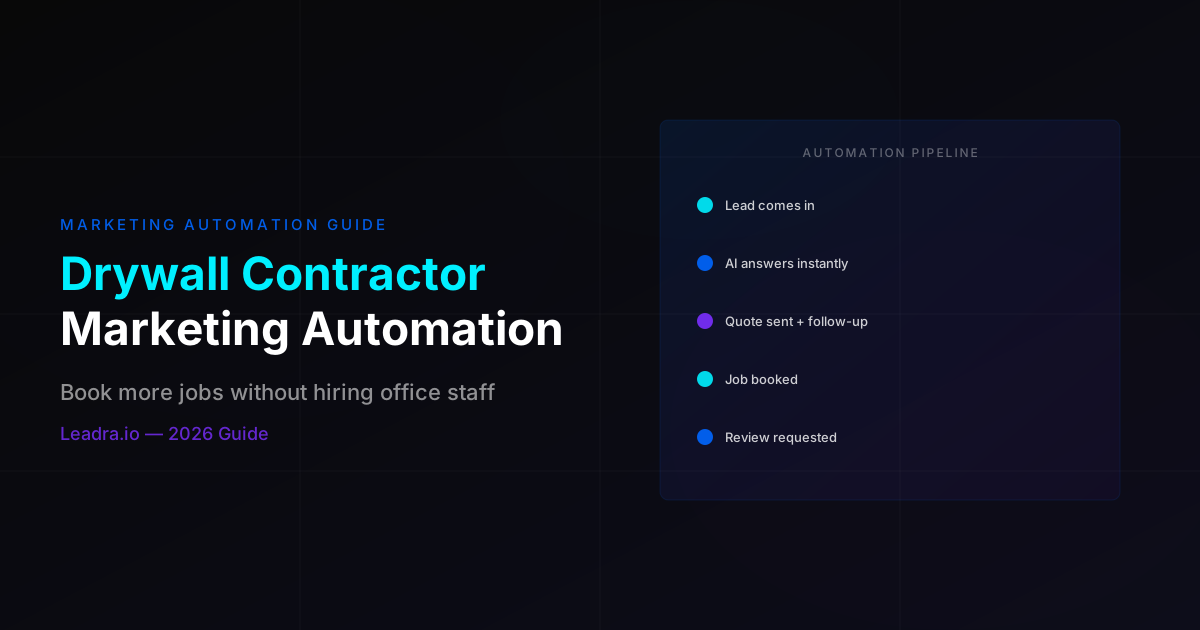
This drywall contractor marketing automation guide walks through the exact stack we build for trades and home service businesses — the systems that capture a lead the moment it comes in, respond before a competitor does, follow up on quotes without anyone remembering to, and turn finished jobs into new customers automatically. None of it requires hiring an office manager.
We'll cover why this matters, the five-part automation stack in the order you should build it, a real example of how it plays out, and what it costs to run.
Why Drywall Contractors Need Marketing Automation, Not Just More Leads
Most drywall contractors don't actually have a lead problem. Referrals, repeat property managers, and a decent Google presence usually generate enough inbound interest. The real problem is what happens after the phone rings: research on home service call handling shows 25-35% of inbound calls to trade businesses go unanswered, and the majority of those callers never leave a voicemail — they just call the next name on their list.
The same gap shows up after the quote goes out. A homeowner collects three or four bids for a drywall repair or a full room re-hang, and whoever follows up first usually wins the job, even if their price isn't the lowest. If nobody on your team is tracking which quotes went cold and when to check back in, you're losing jobs you already did the work to bid.
Marketing automation closes both gaps. It doesn't replace the relationships and reputation that already bring in work — it makes sure none of that effort gets wasted by a missed call or a forgotten follow-up.
The Complete Drywall Marketing Automation Stack
Build these five systems in order. Each one closes a specific leak, and each pays for itself before you move to the next.
AI voice answering for every inbound call.
An AI voice employee answers calls day and night, collects the damage description, address, and timeline, then books the walkthrough directly or texts your estimator a summary. This is the single highest-impact system because it stops leads from reaching a competitor in the first place. Contractors who deploy this typically cut missed-call rates from 25-35% down to under 5%.
Speed-to-lead response for web and form leads.
Any lead that comes through your website, a Google Business Profile message, or a directory listing gets an automated text or call back within minutes, not hours. Response speed matters more than most contractors realize — data on lead response across service industries shows a 5-minute response makes a lead up to 21 times more likely to convert than a 30-minute response.
Automated quote follow-up sequences.
Once an estimate goes out, an automated SMS and email sequence checks in at 24 hours, 3 days, and 10 days if the homeowner hasn't responded. This closes bids that are already sitting in your pipeline, without anyone on your team having to remember who to call back and when.
Review generation after every completed job.
A text goes out automatically once a job wraps, asking the homeowner for a Google review while the work is still fresh in their mind. This generates 4-8x more reviews than asking manually, which directly improves how you rank for local searches like "drywall repair near me."
Dormant customer reactivation campaigns.
Past customers, property managers, and real estate agents who used you once are the cheapest lead source you have. A quarterly reactivation campaign — a simple text or email checking in — regularly turns up rebooked work from a list that would otherwise sit untouched.
How This Plays Out for a Real Drywall Crew
A two-crew drywall contractor we worked with was losing roughly a third of inbound calls to voicemail during install days, and their quote-to-close rate sat under 20% because follow-up depended on whoever had a free minute between jobs. After deploying the automation stack above, the AI voice system started catching after-hours and mid-install calls that used to go unanswered entirely.
Within the first 60 days, the missed-call rate dropped from around 30% to under 5%, and the automated quote follow-up sequence recovered several bids that had gone quiet for over a week. Combined, the two systems added the equivalent of 4-6 extra booked jobs a month, without adding a single hour of office work for the owner or crew leads.
The review generation system ran quietly in the background the whole time, and by month three the contractor's Google Business Profile had nearly doubled its review count, which started pulling in additional calls from organic search with zero added ad spend.
Marketing Automation vs. Hiring Someone to Handle It Manually
When calls and follow-up start slipping, most drywall contractors weigh two options: hire an office manager or part-time dispatcher, or put an automated system in place. The math usually favors automation, but the comparison is worth walking through instead of assuming.
A part-time office hire to answer calls and chase quotes typically costs $2,000-$3,500 a month once payroll taxes, training, and turnover are factored in, and still only covers business hours. Drywall emergencies don't stick to a 9-to-5 schedule — a burst pipe or a move-out deadline can come in at 8pm on a Sunday, and a human hire simply isn't there to catch it. An automated system costs a fraction of that, runs 24/7 with no sick days, and applies the same follow-up sequence to every quote without ever forgetting one.
That doesn't mean automation replaces every person in the office. Pricing negotiations, scope disputes, and judgment calls on unusual jobs still need a human. The right setup uses automation to catch every call, qualify the lead, and keep quotes moving forward, then routes anything that needs real judgment straight to you or your estimator — so the people on your team spend their time closing jobs instead of chasing down missed calls and cold quotes.
Rolling This Out for Your Business
You don't need to launch all five systems at once. Start with AI voice answering, since it has the fastest payback and stops the biggest leak immediately — most contractors see it pay for itself within the first 1-2 recovered jobs, usually inside 30 days. Add speed-to-lead response and quote follow-up in the second and third weeks once call handling is stable. Review generation and reactivation campaigns can layer in after that — they compound over months rather than producing an instant spike, but they become a steady source of organic leads over time.
Keep a close eye on the handoff points between automation and your team during the first few weeks. Every automated sequence should have a clear exit ramp to a real person — a way for a homeowner to reach an estimator directly if the situation falls outside the standard script. Contractors who skip this step sometimes end up with frustrated customers stuck in a loop; contractors who build it in from day one rarely see that complaint at all.
For contractors running multiple crews across a metro area, it's worth adding a dispatch layer on top of voice answering that routes new jobs by zip code or crew availability. That keeps the automation useful as the business scales past a single truck, rather than needing to be rebuilt later.
What This Costs to Run
A full marketing automation stack for a drywall contractor typically runs $700-$1,500 per month, scaling with call volume and how many of the five systems above are running at once. Setup is usually a one-time fee covering script configuration, calendar integration, and connecting whatever estimating or CRM software you already use.
With average drywall project values between $1,200 and $8,000, most contractors recover the entire monthly cost from the first two or three jobs the system books that would have otherwise gone to a faster-responding competitor. Everything after that is added revenue that didn't require more ad spend or another hire.
Frequently Asked Questions
What is marketing automation for a drywall contractor?
Marketing automation for a drywall contractor is a set of connected systems that capture leads, respond to them instantly, follow up on quotes, and request reviews without a person manually doing each step. It typically includes an AI voice or chat system to answer calls, automated SMS and email sequences for quote follow-up, and scheduled review requests after each job — all running in the background while the crew works.
How much does a marketing automation system cost for a drywall business?
A complete marketing automation stack for a drywall contractor typically runs $700-$1,500 per month, covering voice answering, SMS follow-up, review generation, and reactivation campaigns. Setup fees are usually a one-time cost separate from the monthly rate. Most contractors recover the investment within the first 2-3 jobs the system books that would have otherwise gone to a faster-responding competitor.
How fast do I need to respond to a drywall lead before I lose it?
Studies on lead response time across home service industries show that responding within 5 minutes makes a lead up to 21 times more likely to convert than responding after 30 minutes. Homeowners requesting drywall repair quotes are usually calling multiple contractors at once, so the first business to respond with a clear next step, not necessarily the lowest price, wins the job most of the time.
Can I automate marketing without losing the personal touch with customers?
Yes. The goal of automation is to remove delay and inconsistency, not to remove people from the relationship. Automated systems handle the repetitive first steps — answering the call, sending a quote reminder, asking for a review — and hand off anything requiring judgment, negotiation, or a personal conversation to you or your estimator. Customers still talk to a real person for the parts of the job that matter.
The Bottom Line
A drywall contractor marketing automationsystem doesn't need to be complicated to work. Answer every call, respond to every lead within minutes, follow up on every quote, and ask for a review after every job. Do those four things automatically and consistently, and you'll book more work from the exact same call volume you're already getting.
At Leadra.io, we build this stack specifically for trades and home service businesses, with a 90-client guarantee for qualifying businesses or you don't pay. Start with a free audit where we map exactly how many calls and quotes you're currently losing.
Stop losing jobs to missed calls
Get Your Free AI Automation Audit
We'll show you exactly how many calls and quotes are slipping through the cracks — and what it would take to recover them. 30 minutes, no obligation.
Last updated: July 13, 2026 | Leadra.io — Drywall Contractor Marketing Automation Guide