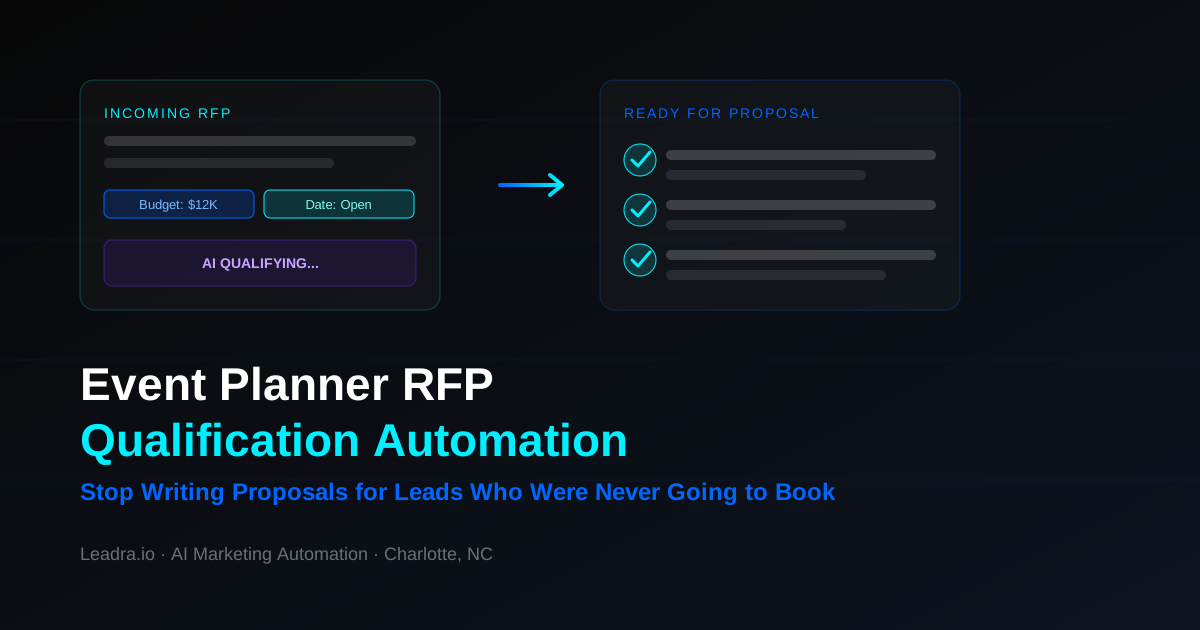
Event Planner RFP Qualification Automation: Stop Writing Proposals for Leads Who Were Never Going to Book
By Leadra.io Team · August 8, 2026 · 8 min read
Event planner RFP qualification automation uses an AI chat or voice agent to screen every inbound inquiry for budget range, event date, guest count, and venue status before it reaches your inbox as a proposal request. Only inquiries that clear your minimum criteria get a full custom proposal. Everyone else gets a fast, polite reply with next steps. This alone can cut proposal-writing time by half without losing a single qualified lead.
Every event planner has written a beautiful, detailed proposal for an inquiry that was never going to book. A budget of $3,000 for a 150-guest wedding. A corporate RFP for a date you were already fully committed on. A “just checking prices” message from someone six months from even picking a venue. Each one takes 45 minutes to an hour of custom proposal work, and each one is time you did not spend on the three RFPs that were actually ready to sign.
The planners protecting their time best in 2026 are not writing fewer proposals out of caution. They are writing proposals only for leads that have already cleared a fast, automated qualification step first. That is the difference between RFP qualification automation and general lead response automation, and it is the single change that gives planners back the most hours per week.
This event planner RFP qualification automation guide covers exactly what to screen for, how to build the qualification flow, and how it fits alongside your existing proposal and follow-up systems.
Why Unqualified RFPs Are the Biggest Time Drain in Event Planning
Event inquiries look identical at first glance. A form submission or an email does not tell you whether the sender has a realistic budget, a confirmed date, or is three planners deep in a comparison-shopping spree. Without a qualification step, every inquiry gets the same treatment: a full proposal.
That treats a $50,000 corporate gala inquiry the same as a $2,000 backyard party inquiry that used your wedding-planner contact form by mistake. Both take roughly the same amount of proposal-writing time, but only one is worth it.
- A planner spends an hour building a custom proposal deck for a couple who never respond, because the budget conversation never happened before the proposal went out.
- A corporate RFP requests a full 40-page response for an event date the planner was already booked solid on, wasting both sides' time.
- Three inquiries in one week all want the same Saturday in October, and the planner writes three full proposals before realizing only one can actually be booked.
- A lead who was “just gathering quotes” for a wedding eighteen months out gets the same detailed proposal as a couple ready to sign next week.
None of this is a proposal-writing problem. It is a qualification problem — the proposal step is happening before the fit-check step, not after it.
For the full follow-up and onboarding picture once a lead clears qualification, see our event planner marketing automation guide, which covers proposal follow-up sequences and client onboarding in depth.
The 4 Criteria Every Event Planner Should Screen For Automatically
You do not need a complex scoring model. Most planners only need to screen four things before deciding whether an inquiry is worth a custom proposal.
1. Budget Range
This is the single highest-leverage question. An AI chat or voice agent can ask for a budget range conversationally, before a form ever loads, and instantly flag inquiries that fall well below your minimum. You are not being rude by asking early — you are saving both sides from a mismatched conversation three weeks later.
2. Event Date and Your Current Availability
An automated qualification flow checks the requested date against your live calendar the moment the inquiry comes in. If the date is already booked, the lead gets an immediate, honest answer and an offer for alternate dates — instead of a full proposal for a date that was never available.
3. Guest Count and Event Type
Guest count and event type (wedding, corporate conference, gala, private party) determine whether the inquiry matches your actual specialty and capacity. A planner who specializes in intimate 50-guest events does not need a full proposal workflow triggered by a 400-person corporate inquiry that is genuinely a better fit for a different planner.
4. Timeline to Decision
A lead six or more months from making a decision needs a different sequence than one ready to sign in two weeks. Automated qualification tags timeline early, so far-out leads go into a lighter-touch nurture track instead of consuming a full proposal cycle immediately.
| Qualification Signal | Automated Action if Clear | Automated Action if Not a Fit |
|---|---|---|
| Budget above minimum | Route to full proposal queue | Polite reply + referral list or lighter package |
| Date is open | Route to full proposal queue | Offer alternate dates automatically |
| Guest count / type match | Route to full proposal queue | Refer to a better-fit planner or package tier |
| Decision timeline under 90 days | Priority proposal, fast follow-up | Lighter nurture track, quarterly check-ins |
Real Example: A Wedding and Corporate Event Firm Cutting Proposal Hours by 60%
(This example represents the type of results our clients achieve.)
A mid-size event planning firm handling both weddings and corporate events was fielding around 40 inquiries a month but only converting a fraction into signed contracts. The planner estimated she spent 15-20 hours a week writing custom proposals, many for inquiries that turned out to be far below budget or already conflicting with a booked date.
We built an automated qualification flow using an AI chat agent embedded in her website and Instagram DMs:
- Every new inquiry was greeted with a short conversational screen asking budget range, date, guest count, and event type
- Inquiries clearing all four criteria were routed instantly to her proposal queue with the qualification data pre-filled
- Inquiries below budget received an automated reply with a lighter package option instead of a full custom proposal
- Inquiries for already-booked dates received an instant honest answer plus three alternate open dates
- Far-out leads (6+ months from deciding) were routed into a quarterly nurture sequence instead of an immediate proposal
Results after 90 days: proposal-writing hours dropped by roughly 60%, while signed contracts from proposals actually written increased, because every proposal now went to a pre-qualified lead. The planner reported getting her weekends back for the first time in two years of running the business solo.
I was writing beautiful proposals for people who were never going to book. Once the qualification step ran automatically before the proposal step, I got hours of my week back and every proposal I wrote actually had a shot.
How to Build Your Event Planner RFP Qualification Flow in 5 Steps
Step 1: Define your minimum criteria in writing. Set a hard floor for budget, and decide which guest counts and event types you actually want. Write these down once — they become the rules your automation screens against.
Step 2: Deploy an AI chat or voice agent on your inquiry channels. Add a conversational qualification agent to your website form, Instagram and Facebook DMs, and phone line. It should ask for budget, date, guest count, and event type before a human proposal ever gets triggered. See how Leadra.io's client acquisition system handles this across every channel.
Step 3: Connect your live calendar to the qualification flow. Sync your booking calendar so date-checking happens automatically and instantly, rather than requiring you to manually check availability for every inquiry.
Step 4: Build your two outcome paths. Write one template for qualified leads (routes straight to your proposal queue with pre-filled details) and one for unqualified leads (a polite reply with a lighter package, referral, or nurture opt-in). Both fire automatically based on the screening results.
Step 5: Review your qualification data monthly. Track how many inquiries clear each criterion. If a large share of leads are failing on budget specifically, that is a signal to adjust your pricing page or ad targeting upstream — not just your automation downstream.
If you want the full qualification and proposal stack built and managed for you, Leadra.io handles implementation end to end. Call +1 (864) 721-8384 or visit our contact page to book a free strategy session.
Tools for Event Planner RFP Qualification Automation
The right setup depends on your inquiry volume and how many channels you field leads from. Here is a practical breakdown by function:
- AI qualification chat/voice agents: Leadra.io's AI voice and chat agent (built specifically to screen budget, date, and fit across phone, web form, and DMs), Tidio or Intercom for simpler website-only chat screening
- CRM and calendar sync: HoneyBook or Dubsado connected to Google Calendar or your booking calendar for real-time date checks
- Instagram and Facebook DM automation: ManyChat or native Meta automation rules for qualifying inquiries that come through social channels
- Lead routing: Zapier or Make to route qualified leads into your proposal queue with pre-filled qualification data, and unqualified leads into a separate nurture list
A complete qualification automation setup for a solo or small-team event planning business runs $100–$350 per month in software on top of any existing CRM. The return shows up immediately in hours saved, not just in future bookings.
Frequently Asked Questions
What is event planner RFP qualification automation?
Event planner RFP qualification automation is the use of an AI chat or voice agent to screen every inbound inquiry for budget range, event date, guest count, and event type before a custom proposal is written. Inquiries that clear your minimum criteria route straight to your proposal queue. Inquiries that do not receive an automated, polite reply with alternate options instead of consuming proposal-writing time.
Will asking about budget upfront scare away good leads?
No — when the question is asked conversationally and paired with a fast, helpful response either way, most leads appreciate the transparency. Leads with a realistic budget move forward faster because they know you are a fit immediately. Leads without a realistic budget get redirected to options that actually work for them instead of waiting on a proposal that was never going to close.
How is qualification automation different from proposal follow-up automation?
Qualification automation happens before you write a proposal, screening whether an inquiry deserves one. Proposal follow-up automation happens after a proposal is sent, keeping it alive through the decision process. Both matter, but qualification comes first — it is what determines how many proposals you write in the first place.
How much time does RFP qualification automation actually save?
Planners typically report a 40-60% reduction in proposal-writing hours within the first two months, since custom proposals go only to pre-qualified inquiries. The exact figure depends on how much of your current inquiry volume is below-budget or date-conflicted before qualification is added.
- Screen every inquiry for budget, date, guest count, and event type before writing a custom proposal — not after.
- Planners running qualification automation report 40-60% less proposal-writing time within two months.
- Qualified leads route straight to your proposal queue; unqualified leads get an automated, honest reply instead of consuming hours of your time.
- A full qualification automation setup runs $100–$350 per month and pays back in hours saved immediately.
What to Do Next
The biggest mistake event planners make is treating every inquiry as equally worth a full proposal. It is not — some inquiries are a strong fit ready to move fast, and some never had a realistic shot from the first message. Qualification automation is what separates the two before you spend an hour on either one.
Start with Step 1 from the guide above: write down your actual minimum criteria for budget, guest count, and event type. That single step makes every automation decision after it obvious, and it is the foundation the rest of your qualification flow gets built on.
At Leadra.io, we build and manage the full event planner qualification and proposal automation stack. Call +1 (864) 721-8384 or visit our contact page to schedule a free 30-minute strategy call. We review your current inquiry-to-proposal process, show you where hours are leaking, and give you a written implementation plan — no obligation.
Ready to stop writing proposals for the wrong leads?
Get a free RFP qualification audit from Leadra.io.
30-minute strategy call — we review your current inquiry-to-proposal process, identify where you are losing hours to unqualified RFPs, and show you exactly what to automate first. No obligation. You leave with a written plan.
Charlotte NC · serving event planners and small businesses nationwide
Written by the Leadra.io Team. Leadra.io is an AI marketing and automation agency helping event planners, dental practices, and small businesses grow with AI-powered systems. Based in Charlotte, NC — serving clients nationwide.