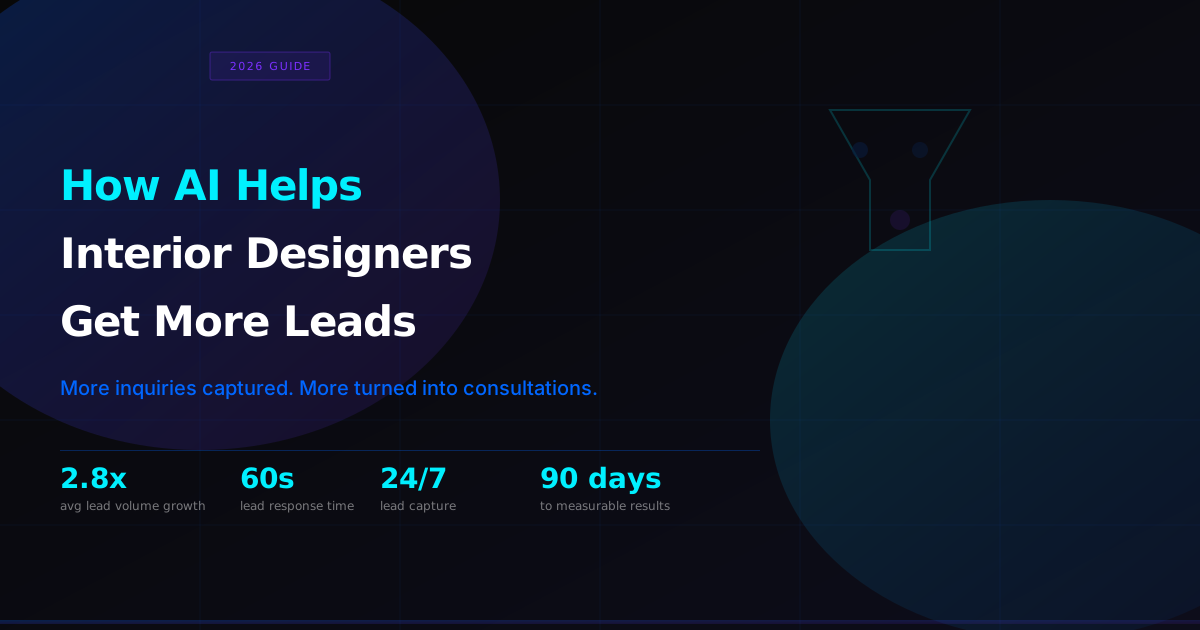
Most interior design studios don't have a demand problem. They have a capture problem. People are already finding your portfolio, scrolling your Instagram, and reading your Houzz reviews — the leads are showing up. The question is whether your studio actually catches them, or whether they quietly leave and message the next name on their list.
A static contact form, a DM that sits unread for two days, and a website with no way to engage a visitor in the moment are the three biggest reasons design studios generate less lead volume than their traffic and reputation should support. None of these are marketing problems. They're capture and response problems — and they're exactly what AI is built to fix.
This guide breaks down the specific AI system that turns more of your existing traffic and inquiries into contactable, qualified leads — plus what a Charlotte NC studio's lead volume looked like before and after putting it in place, what it costs, and how fast it goes live.
None of this replaces your design work, your portfolio, or your referral network. It sits underneath all of that, making sure every person who shows interest in your studio actually becomes a lead you can follow up with.
Why Interior Designers Lose Leads Before They Ever See Them
Lead loss for a design studio happens quietly, in four specific places — and most studios never see it happening because a lost lead doesn't show up anywhere. It just doesn't become a lead at all.
Website visitors who leave without a way to reach you
A prospective client browsing your portfolio at night has a question — do you take on smaller projects, what's your minimum budget, do you work outside your home city — and no easy way to ask it. Without a way to engage that visitor in the moment, most simply close the tab. A static "Contact Us" form at the bottom of the page catches only the most determined visitors, and everyone else never becomes a lead at all.
DMs and Houzz messages that sit unread
A growing share of interior design inquiries now arrive through Instagram DMs and Houzz messages instead of a contact form — and those channels are easy to lose track of during a busy week of site visits and client meetings. A message that sits unread for two or three days is a lead that's already contacted someone else, even though it technically still exists in your inbox.
Slow or generic follow-up on the leads you do capture
Capturing a lead is only half the job. A contact form submission that gets a generic email reply two business days later loses most of its momentum before you've said a word. Prospective clients researching multiple designers convert with whoever responds first, with specifics, not whoever eventually gets around to a form-letter email.
No system for leads who aren't ready yet
A meaningful share of the people who reach out to a design studio are genuinely interested but not ready to commit — saving budget, waiting on a closing date, still comparing options. Without an ongoing, light-touch follow-up, these leads go cold and are effectively lost, even though they were real interest at the time they reached out.
Fixing all four doesn't require more traffic, more ad spend, or a bigger team. It requires a system that captures interest the moment it happens, responds instantly, and keeps following up until a lead is either qualified or genuinely not a fit.
The 5-Part AI Lead Generation System for Interior Designers
Here's the full lead generation stack Leadra.io deploys for interior design studios. Each piece is built to close one of the four leak points above.
24/7 website and social lead capture
Most design studio websites have a static contact form and nothing else — a visitor who's browsing your portfolio at 10 PM has no way to get a quick answer, so they leave and never come back. An AI chat widget on your site engages that visitor in real time, answers basic questions about your services and process, and collects their name, project type, and contact details before they click away. The same capture logic runs across Instagram DMs and Houzz messages, so an inquiry sent through any channel becomes a tracked, contactable lead instead of a message that gets buried in your inbox.
Instant multi-channel follow-up
A lead who submits a form or sends a DM is at peak interest in that exact moment — and that interest decays fast. If your reply comes a day or two later, by email, that prospect has often already reached out to two or three other designers and booked with whoever answered first. An AI follow-up system responds within 60 seconds by text message, acknowledges the inquiry, asks a qualifying question or two, and offers to book a consultation directly from the conversation. Speed alone is usually the single biggest lever for increasing how many inquiries turn into real, contactable leads.
Lead scoring and qualification
Not every lead is worth the same amount of your time. An AI qualification flow asks each new inquiry a short set of questions — project type, rough budget, timeline, property location — and scores the answer against your minimum project size. Leads that clear the bar get routed straight to your calendar for a consultation. Leads that don't get a lighter-touch response, like a design guide or a referral to a smaller-scope service, instead of eating a 60-90 minute discovery call. This raises total lead volume while protecting your time for the leads most likely to become signed projects.
Automated nurture for not-yet-ready leads
A large share of design inquiries come from people who are genuinely interested but not ready to commit — they're still saving budget, waiting on a home purchase to close, or comparing three designers before deciding. Most studios capture that lead once, reply, and never follow up again after the first exchange. An AI nurture sequence keeps a light, useful touch going over weeks or months — sharing a relevant project photo, a seasonal design tip, or a simple check-in — so when the prospect is finally ready to move, your studio is the one they remember and reach back out to first.
Local SEO content for top-of-funnel volume
Every lead system above only works on the inquiries you already receive. The fifth component grows the number of people finding you in the first place — monthly blog content and portfolio pages targeting searches like "interior designer near me" or "kitchen remodel designer Charlotte NC," structured so Google's AI Overview, ChatGPT, and Perplexity can surface your studio when someone asks for a design recommendation in your area. Studios that add this layer typically see steady, compounding growth in raw lead volume on top of whatever the capture and follow-up systems recover from existing traffic.
Lead Volume Note
Most studios see the biggest jump in lead volume from components 1 and 2 — capture and instant follow-up — because those fix leaks in traffic you already have. Lead scoring, nurture, and SEO content compound that gain over the following 60-90 days.
Manual vs AI: The Lead Volume Difference
This comparison reflects the actual difference in lead capture and follow-up between a studio running standard processes and one with the full AI system active.
| Metric | Manual / Current | With AI |
|---|---|---|
| Website visitor engagement | Static contact form only | 24/7 chat capture on every visit |
| Lead response time | 1-3 business days | Under 60 seconds, 24/7 |
| Instagram/Houzz DM tracking | Manual, easy to miss | Captured and logged automatically |
| Lead qualification | Discovery call filters fit | Budget and scope filtered before booking |
| Follow-up on "not ready yet" leads | Rarely happens after first reply | Ongoing automated nurture |
| New inquiry sources | Referrals + existing traffic only | + monthly local SEO content |
| Contactable leads per month (avg studio) | 12-18 | 30-45 |
Ballantyne Charlotte NC Studio: 15 to 42 Leads Per Month in 90 Days
A 2-designer studio in Charlotte's Ballantyne area came to Leadra.io with a solid Instagram following and a steady trickle of referrals, but only 15-18 trackable leads a month — far below what their site traffic and social following suggested they should be generating.
A lead-flow audit found the gaps: the website had no way to engage a visitor beyond a basic contact form, Instagram DMs were checked once or twice a day at best, and website form replies were going out an average of 38 hours after submission. A meaningful number of people who showed interest simply weren't becoming leads at all.
Case Study Results — 90 Days
Contactable leads/month
Before: 15-18
38-42
Avg. response time
Before: 38 hours
under 1 min
DM/form contact rate
Before: 26%
68%
Lead-to-consultation rate
Before: 19%
34%
Nurtured leads re-engaged
Before: 0/mo
7-9/mo
Month-3 signed project value
Before: $29,000
$71,000
The website chat widget and instant SMS follow-up drove most of the early lead increase, since they recovered interest from traffic the studio already had. The nurture sequence added a smaller but steady stream of leads who came back weeks after their first inquiry — several of whom converted into signed projects once their timeline or budget lined up. The studio didn't add staff or increase ad spend to get there.
What an AI Lead Generation System Costs for a Design Studio (2026 Pricing)
Pricing scales with studio size and which components you activate. Here's what the tiers look like in 2026:
Foundational — $600-$1,300/mo
- →24/7 website chat capture widget
- →Instant SMS follow-up on all form and DM inquiries
- →Basic budget and project-scope qualification
Solo designers and 2-person studios. Fixes the biggest lead leaks fastest.
Growth — $1,400-$2,200/mo
- →Everything in Foundational
- →Lead scoring and calendar routing
- →Automated nurture sequences for not-yet-ready leads
- →Instagram and Houzz DM capture integration
3-6 person studios ready to convert more of their existing traffic.
Full System — $2,200-$3,000/mo
- →Everything in Growth
- →Monthly local SEO content for new lead sources
- →AI Overview and ChatGPT citation optimization
- →Monthly reporting with cost-per-lead tracking
Established studios targeting compounding lead volume growth, not just capture.
How Fast Does an AI Lead System Go Live for a Design Studio?
Most studios are capturing and responding to leads with AI within a week. Here's the typical setup sequence:
Lead-flow audit. Leadra.io maps every channel a prospect can currently reach you through — website, forms, DMs, Houzz — and identifies where inquiries are being lost or delayed.
Chat widget and SMS follow-up deployed. Your website gets a 24/7 capture widget, and every new form submission triggers an instant SMS response.
DM and Houzz integration. Instagram and Houzz message channels are connected so no inquiry sits unread.
Qualification and scoring configured. Qualifying questions and your minimum project size are set so high-fit leads route straight to your calendar.
Nurture sequence goes live for leads who aren't ready yet, and the studio is fully live across all active components.
3 Things to Check Before Choosing an AI Lead Generation Vendor
Do they capture leads across every channel you use, not just the website?
If a vendor only covers your contact form and ignores Instagram DMs and Houzz messages, you're still losing a meaningful share of inquiries. Ask specifically which channels are covered before you sign.
Is the follow-up personalized, or a generic auto-reply?
A canned "thanks for reaching out, we'll be in touch" text doesn't convert the way a response referencing the prospect's actual project does. Ask to see a sample follow-up sequence before committing.
Can they show real lead-volume numbers from another design or home services business?
Lead systems built for restaurants or gyms don't automatically translate to a design studio's longer sales cycle and higher project values. Ask for a case study or reference from a design or home services business specifically.
Frequently Asked Questions
How does AI actually generate leads for an interior designer?
AI generates leads for interior designers by capturing inquiries that currently fall through the cracks — a chat widget that engages website visitors who would otherwise leave without contacting you, instant SMS follow-up on every contact form and Instagram DM, and local SEO content that puts your studio in front of people actively searching for a designer. It doesn't replace referrals or your portfolio; it makes sure every person who shows interest actually becomes a captured, contactable lead instead of a missed opportunity.
What's the fastest way for AI to increase lead volume for a design studio?
The fastest lever is closing the response-time gap. Most design studios reply to web and social inquiries within 1-3 business days, and by then a motivated prospect has usually already messaged another designer. An AI system that responds within 60 seconds — via text, not just email — keeps that prospect engaged while their interest is highest. Studios that fix response time alone typically see contactable lead volume increase 40-70% within the first month, before any new traffic or content is added.
Can AI qualify leads so I only spend time on serious inquiries?
Yes. An AI lead-qualification flow can ask a few short questions before a lead reaches your calendar — project type, rough budget range, timeline, and property location — and score each inquiry against your minimum project size. High-fit leads get routed straight to a consultation booking; lower-fit leads get a lighter-touch response like a design guide or referral instead of consuming a full discovery call. This keeps your lead count high while protecting your time for leads that can actually become projects.
How much does an AI lead generation system cost for an interior design studio?
AI lead generation systems for interior design studios typically run $600-$3,000 per month depending on studio size and scope. A foundational package — website lead capture, instant SMS follow-up, and basic qualification — runs $600-$1,300/month and is the fastest path to more contactable leads for solo designers. Adding lead scoring, automated nurture sequences, and local SEO content brings the full system to $1,800-$3,000/month for studios ready to scale lead volume aggressively. Leadra.io offers a free 30-minute audit to calculate expected lead lift before you commit to a tier.
Related Reading
Find Out How Many Leads Your Studio Is Losing Each Month
Leadra.io runs a free 30-minute audit for interior design studios — tracing exactly where inquiries are getting lost and calculating your lead-volume opportunity before you commit to anything. No sales pressure. Just the numbers.