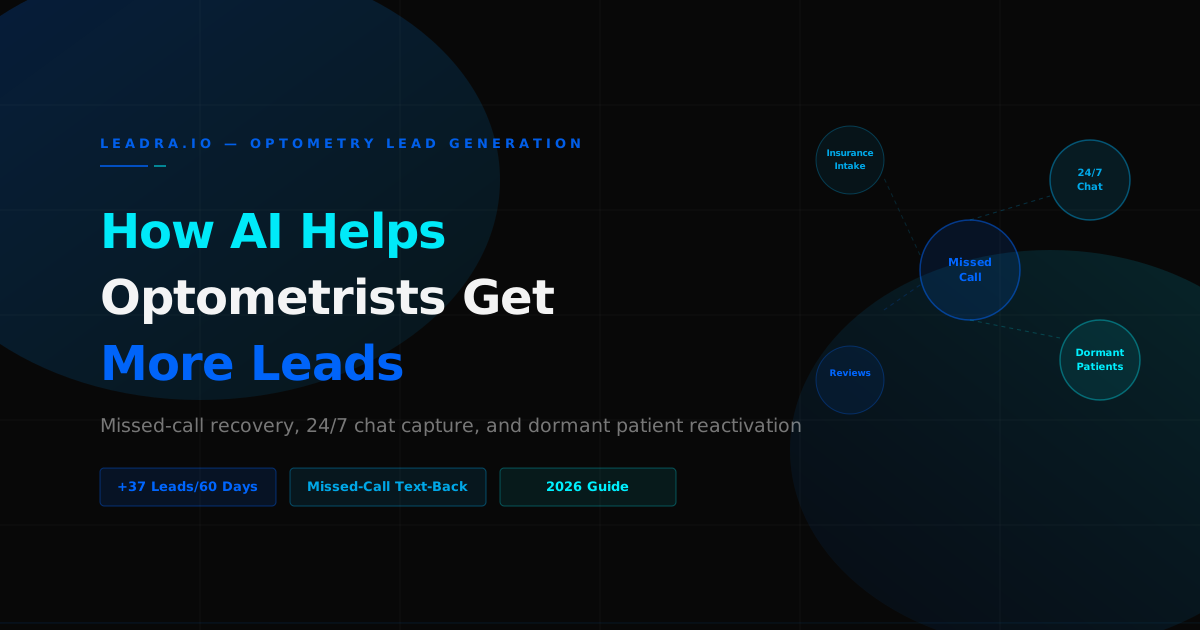
Ask most optometry practices how to get more leads and they will say the same thing: spend more on ads. But when you actually audit a practice's phone system, website, and patient list, the leads are usually already there. They are calling and hanging up on hold. They are landing on the website at 9 PM and leaving without booking. They are sitting in the patient database, twelve months overdue for an exam, never contacted.
AI does not just create new demand out of nowhere — its biggest impact on optometry lead generation is recovering demand that already exists but is currently going to waste. A practice that plugs those leaks first typically adds more booked exams per month than a practice that just increases ad spend without fixing the intake side.
That said, AI also expands where new leads come from — local search, AI answer engines like ChatGPT and Google AI Overviews, and review-driven discovery all respond directly to how well a practice is set up with AI tools. This guide covers both sides: where optometry leads are currently getting lost, and the specific AI systems that recover and generate them.
For a full breakdown of every AI component an optometry practice should consider and what each one costs, see the complete buyer's guide to AI tools for optometry practices. This guide focuses specifically on the lead-generation piece.
Why Optometry Leads Behave Differently Than Other Practices
An optometry lead rarely converts on the first touch. A patient searching for an eye doctor is usually comparing two or three practices, checking reviews, and confirming insurance before ever picking up the phone. That research window is exactly where AI has the most leverage — a chat widget that answers an insurance question at 10 PM or a missed-call text that arrives within seconds keeps the practice in the running while a competitor with no after-hours presence gets skipped entirely.
The other difference is repeat opportunity. A dental implant patient converts once and is largely done; an optometry patient reappears every year for an exam and every few months for contact lenses. That means every lead a practice generates is really the start of a recurring relationship, which is why reactivating a dormant patient is treated here as seriously as capturing a brand-new one.
Where Optometry Leads Actually Get Lost
Before adding new lead sources, it is worth knowing where the existing ones are leaking. These three gaps show up in almost every practice we audit:
5 Ways AI Actually Generates More Leads for an Optometry Practice
Here is what closes each of those gaps, in the order most practices see return on investment.
1 — Missed-Call Text-Back
When a call to the practice goes unanswered, an AI system fires an automatic text within seconds: a short message offering to book the exam, answer an insurance question, or connect the patient with the next available appointment. It works because the patient already showed intent by calling — the text just meets them where they are instead of losing them to voicemail.
This is the single fastest lead-recovery system to deploy and usually the first thing we turn on for a new client. Practices commonly see 30-50% of missed callers respond within the hour, and a meaningful share book same-day.
2 — 24/7 Website Chat and Voice Capture
An AI chat widget or voice agent answers questions and books appointments on the website around the clock, not just during business hours. It asks the same qualifying questions front desk staff would — reason for visit, insurance provider, preferred time — and books directly into the scheduling system without a human ever touching it.
The value shows up disproportionately outside business hours, since that is when a website visitor has no other way to reach the practice and is most likely to leave for a competitor that responds instantly.
3 — Dormant Patient List Mining
AI scans the existing patient database for anyone overdue for an annual exam or contact lens reorder and sends personalized, timed outreach by text and email — not a generic once-a-year blast. A patient who is 14 months overdue gets a different message than one who is three months overdue and running low on lenses.
This is effectively a free lead source: the patient already trusts the practice, so conversion rates run far higher than any new-patient advertising channel. A practice with 3,000-4,000 active patients commonly finds several hundred qualified, contactable leads sitting untouched in this segment alone.
4 — AI-Assisted Review Generation
An AI system sends a short review request right after a completed exam or eyewear pickup — the moment satisfaction is highest — and quietly routes any negative feedback to a private form instead of a public post. More reviews directly improve ranking in the local map pack, which is where the largest share of new optometry leads originate.
Review volume is also increasingly what AI answer engines use to decide which practice to recommend when a patient asks ChatGPT or Google AI Overviews for the best optometrist in their area.
5 — Insurance-Qualified Intake
Before a lead ever reaches the schedule, AI intake asks whether the visit is routine (vision insurance) or medical (health insurance) and checks it against the practice's accepted plans. Leads that clear this step arrive at the front desk already qualified, instead of staff discovering an insurance mismatch after the appointment is booked.
This does not add new leads on its own, but it raises the show-up and conversion rate on every lead the other four systems generate — fewer no-shows, fewer last-minute cancellations from confused patients, more filled exam slots.
What This Looks Like in Practice
Single-Location Practice, 60-Day Results
A single-location optometry practice was booking 90 exams a month and estimated it was missing 40-50 calls monthly with no follow-up process. It deployed missed-call text-back and website chat capture in week one, then dormant patient list mining in week three.
By day 60, the practice had recovered 22 leads directly from missed-call text-back and generated 31 additional booked exams from the dormant patient list — patients who had not been contacted in over eight months. Total new leads captured: 68. Monthly exam volume moved from 90 to 127.
Monthly exams
Missed-call leads recovered
Dormant list leads booked
Missed calls/mo
None of these leads came from new advertising spend — they came from fixing the intake side of a practice that was already getting enough interest. For a look at how this plays out over a full quarter, including review and local SEO growth, see how a Charlotte NC optometry practice filled its exam schedule with AI marketing.
Common Mistakes Practices Make Trying to Generate Leads With AI
4 Questions to Ask Before You Invest in AI Lead Generation
What AI Lead Generation Costs for an Optometry Practice
Lead Recovery
$800 – $1,500/mo
Missed-call text-back, 24/7 website chat capture, and dormant patient list reactivation. The fastest path to more booked exams for a single-location practice, since it recovers leads that already exist. Setup time: 1-2 weeks.
Lead Recovery + Local Search Growth
$1,800 – $3,500/mo
Everything above plus AI-assisted review generation and ongoing local SEO content, so the practice compounds leads from local search and AI answer engines on top of the leads it recovers internally. Setup time: 2-4 weeks.
Infrastructure costs — texting fees, AI voice minutes, review request volume — usually add $50-$150/month on top of the retainer and are billed at cost. Most practices recover the monthly investment from missed-call and dormant list leads alone within the first 30-45 days, before local search growth even factors in. Compare this against the full optometry AI buyer's guide to see how lead generation fits alongside recall, reviews, and local SEO as one connected system.
FAQ: AI Lead Generation for Optometrists
How does AI actually generate leads for an optometry practice?
AI generates leads in two ways: it captures demand that already exists but is going to waste — missed calls, abandoned website visits, dormant patient files — and it makes the practice easier to find in local search and AI answer engines like Google AI Overviews and ChatGPT. Most practices see the fastest results from the first category, since it recovers people who were already trying to book.
What is the single fastest way AI increases leads for an eye doctor?
Missed-call text-back. When a call goes unanswered, AI immediately texts the caller offering to book the exam or answer a question. Practices typically see 30-50% of missed callers respond within the hour, converting calls that used to go to voicemail into booked appointments the same day.
Can AI find new leads from patients a practice already has?
Yes, and it is often the highest-ROI lead source available. AI scans the patient list for anyone overdue for an annual exam or contact lens reorder, then sends automated, personalized outreach. A practice with 3,000-4,000 patients typically has several hundred overdue and uncontacted — a warm lead pool that costs nothing to acquire.
How much does AI lead generation cost for an optometry practice?
A focused system — missed-call text-back, 24/7 website chat, and dormant patient reactivation — typically runs $800-$1,500 per month for a single-location practice. Adding review generation and local SEO content moves the range to $1,800-$3,500 per month, depending on patient volume and location count.
Built for Optometry Practices
Stop Losing Leads You Already Have
Leadra.io builds missed-call recovery, 24/7 chat capture, and dormant patient reactivation systems for optometry practices. Tell us your current call and patient volume — we will show you exactly how many leads are currently slipping through.