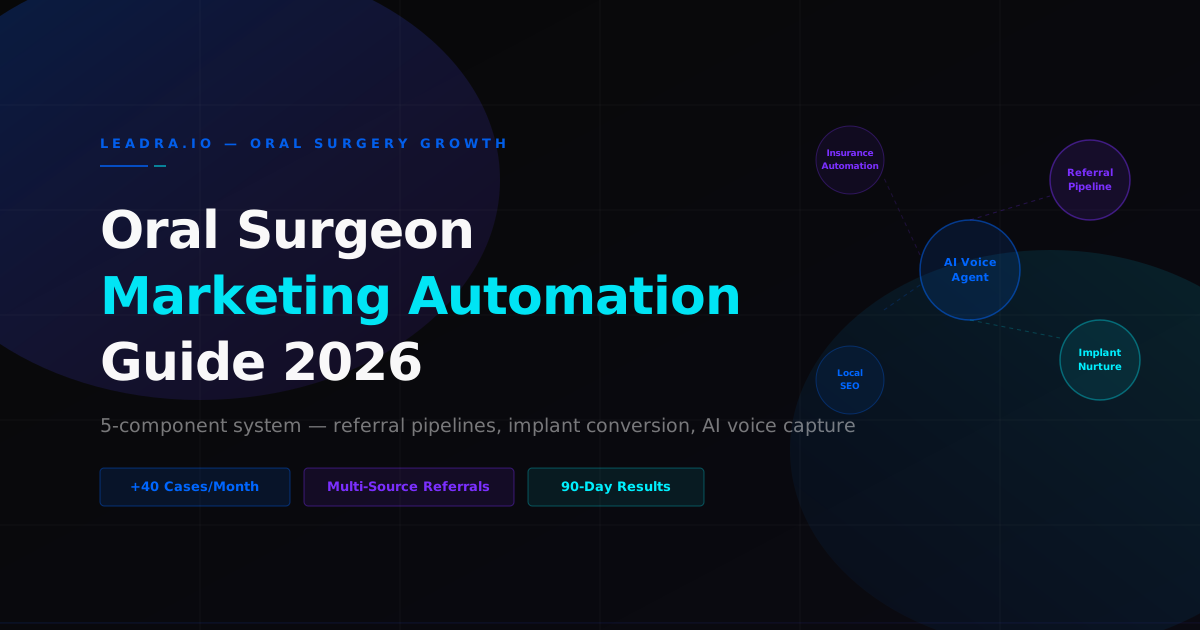
Oral surgery practices face a marketing problem that almost no other specialty shares: your growth depends on maintaining productive relationships with five different provider types simultaneously — general dentists, orthodontists, endodontists, periodontists, and pediatric dentists — each of whom refers for different reasons, on different timelines, and responds to different kinds of communication.
Most oral surgeons handle this with a combination of personal visits when they can squeeze them in, holiday cards, and a rep who covers maybe a third of the referral network on a rotating schedule. The result is that referral volume is uneven, inconsistent, and heavily weighted toward the 4-5 practices that happen to send cases regularly — while dozens of warm referral relationships sit dormant.
The second problem is case conversion. Wisdom tooth extractions book fast — patients are in pain. But implant placements, All-on-4 reconstructions, and corrective jaw surgery cases require patients to process cost, insurance coordination, recovery time, and fear before they commit. The average high-value OMS patient contacts 2-3 practices before booking. Without a follow-up system that runs 30-45 days, you are losing those cases to the practice that followed up more consistently.
This guide covers the complete marketing automation system for oral surgery practices — five components built specifically for how OMS practices grow, what they cost, and what results each component produces.
What Makes Oral Surgery Marketing Different from Other Dental Specialties
Oral surgery has a more complex growth model than general dentistry or even most other dental specialties. Three factors define it:
The 5-Component Oral Surgery Marketing Automation System
Here is the full system Leadra.io deploys for oral surgery practices. Each component solves a specific growth constraint and feeds into the next.
Component 1 — Multi-Source Referral Pipeline Automation
This is the single highest-leverage component for most oral surgery practices. The system runs five segmented referral communication tracks simultaneously — one per provider type. GPs receive case outcome reports within 48 hours of completing a referred procedure (extraction details, complications noted, patient instructions given, follow-up scheduled) plus a monthly educational sequence on implant placement timing and socket preservation. Orthodontists receive surgical exposure outcome reports and a quarterly case review highlighting successful ortho-OMS co-treatment outcomes. Endodontists and periodontists receive co-referral outcome communications. Pediatric dentists get pediatric sedation availability updates and emergency extraction response-time confirmations.
The outcome report is the system's highest-impact element across all five tracks. Referring providers refer more when they feel informed about what happened to their patient. Practices that deploy consistent, provider-specific outcome communication see 20-35% more referrals from existing partners within 60 days — without adding a single new referral source. The reactivation sequence targeting providers who referred 6-18 months ago but went quiet typically produces the fastest visible results.
Component 2 — 24/7 AI Voice Agent for After-Hours Lead Capture
Oral surgery has one of the highest rates of after-hours inbound calls of any dental specialty. Wisdom tooth pain does not wait until 9 AM Monday. Dry socket pain peaks at night. Patients who just got a referral slip from their dentist call the same afternoon when they are anxious and motivated — which is often after your front desk has left.
The AI voice agent answers every call 24 hours a day and does four things: collects patient name, referring provider, procedure type, and insurance; triages urgency (pain or swelling requiring same-day contact vs. routine scheduling); routes emergency cases to the on-call line while scheduling routine cases directly into the production calendar; and for implant, All-on-4, and orthognathic inquiries, immediately enrolls the patient into the high-value procedure conversion sequence (Component 3). Practices that deploy after-hours AI voice capture recover an average of 8-14 cases per month that previously went to voicemail and never booked.
Component 3 — High-Value Procedure Conversion Sequences
Implant placements, All-on-4 cases, and corrective jaw surgeries do not close in one conversation. The typical patient is weighing cost, insurance coverage, recovery timeline, fear of sedation, and whether the outcome is worth it. A patient who called on Tuesday and did not book is not necessarily gone — they are considering. Without a follow-up system, you lose that consideration window to inaction or the practice that texted them on Thursday.
The conversion sequence runs a 7-touchpoint track over 30 days, differentiated by procedure type. Implant sequences cover single-tooth replacement vs. full-arch options, titanium biocompatibility, bone grafting needs, and financing. All-on-4 sequences cover same-day teeth, sedation options, total investment range, and before/after photography. Jaw surgery sequences cover insurance authorization, recovery timeline, functional vs. cosmetic outcomes, and the co-treatment process with the referring orthodontist. Touchpoints alternate between SMS, email, and AI voice calls. Practices using procedure-specific conversion sequences convert 30-45% of high-value inquiries that would otherwise go cold.
Component 4 — Insurance Navigation Automation
Insurance complexity kills more OMS cases than fear does. A patient who is interested in an implant placement loses motivation when they are told to "check with your insurance and call us back." Most never call back. A patient who is interested in jaw surgery but does not understand that medical insurance covers it — not dental — abandons the case entirely.
Insurance navigation automation handles three functions: benefit verification status updates sent to patients at 24 hours and 72 hours after their consultation request (removing the "I'm waiting to find out" friction), automated pre-authorization status notifications for medical insurance cases including jaw surgery and sleep apnea procedures, and a medical-dental crossover education sequence that explains to implant and jaw surgery patients which benefits apply and how to use both simultaneously. Practices that implement insurance communication automation see 20-30% fewer cases abandoned during the authorization waiting period.
Component 5 — Local SEO and Direct-Access Patient Acquisition
Patients with wisdom tooth pain, implant interest, or jaw surgery questions are searching Google, ChatGPT, and Perplexity right now. Searches like "oral surgeon near me," "cost of dental implants Charlotte," "wisdom teeth removal same day," and "All-on-4 implants near me" generate thousands of searches per month in mid-size markets. Most oral surgery practices rank for their own name and nothing else — meaning they capture zero of this direct-access patient flow.
The content engine publishes 8-12 authoritative articles per month targeting high-intent OMS keywords, each structured for Google AI Overviews and formatted to appear in ChatGPT and Perplexity citations. Google Business Profile is automated for weekly posts, post-visit review requests via SMS, and Q&A responses. Emergency availability posts go live on Sunday evenings — the highest-volume wisdom tooth search window. Practices in markets like Charlotte typically rank for primary OMS keywords within 90-120 days and for secondary keywords (specific procedure + city combinations) within 60 days.
Before vs. After: What Changes When You Automate Your OMS Marketing
Here is what the same oral surgery practice looks like operating manually versus with the full automation system deployed:
| Area | Without Automation | With Leadra.io System |
|---|---|---|
| Referral partner communication | Rep visits + holiday gifts — inconsistent | 5-track automated system, all providers covered |
| After-hours call capture | Voicemail — 60-70% don't leave a message | AI agent answers, triages, and books 24/7 |
| Implant and All-on-4 follow-up | One callback if staff remembers | 7-touch 30-day procedure-specific sequence |
| Insurance authorization friction | Patient told to check and call back — most don't | Automated status updates + crossover education |
| Direct-access patient flow | Ranks for practice name, zero keyword traffic | 8-12 content pieces/month, GBP automation |
| Dormant referral reactivation | None — forgotten provider relationships | Automated sequences target providers quiet 6+ mo |
| Review collection | Sporadic manual requests | Post-visit SMS triggers automatically every patient |
Case Study: Charlotte Oral Surgeon, 85 to 142 Procedures Per Month in 90 Days
Client Story
A two-surgeon oral surgery practice in north Charlotte came to Leadra.io averaging 85 procedures per month — 71 from referrals (mostly GPs and ortho), 14 from direct patient searches. The practice had relationships with 38 referring providers but communicated with them primarily through two annual rep visits per practice. After-hours, 7-10 calls per day reached voicemail. The implant conversion rate was below 30% from inquiry to scheduled case, and three All-on-4 cases in the prior quarter had been lost to a competing practice after patients did not hear back within 48 hours.
Leadra.io deployed all five components over a 4-week onboarding. Provider contacts were segmented into GP, ortho, endo, perio, and peds tracks. Outcome report automation launched for all active referral relationships. The AI voice agent went live for after-hours and overflow coverage. Implant and All-on-4 conversion sequences activated immediately. Insurance navigation automation launched for medical-dental crossover cases.
Results at day 90: procedures per month reached 142 — a 67% increase. Referral-driven procedures grew from 71 to 112, driven by reactivated dormant referral relationships (9 providers who had not sent a case in 6+ months began referring again) and increased frequency from existing active referrers who noted the outcome report communications. Direct patient procedures grew from 14 to 30 as the SEO content engine ranked for six primary OMS keywords. The implant conversion rate rose from 29% to 51%. Zero All-on-4 cases were lost to follow-up delay in months 2 and 3.
Monthly procedures
Referral procedures/mo
Direct search patients
Implant conversion rate
Total system cost: $2,800/month. Monthly revenue added attributable to the system in month 3: estimated $187,000 in completed procedures at average case values. The two surgeons did not add administrative staff — the AI voice agent and automation handled intake workload that previously required front desk time. Staff shifted toward treatment coordination and implant case presentations.
The referral reactivation component was the fastest-producing element. Practices underestimate how many warm referral relationships have simply gone dormant because communication fell off. A structured reactivation sequence targeting providers who referred in the prior 18 months but went quiet converts 30-50% of them back into active referrers within 45 days. See the Charlotte oral surgeon AI marketing overview.
Oral Surgery Marketing Automation Pricing: 3 Tiers
Tier 1 — Foundation
$1,800 – $2,500/mo
24/7 AI voice lead capture, referral outcome report automation for existing provider relationships (one or two referral types), and basic local SEO content (4 posts/month). Best for solo oral surgeons or practices in smaller markets who need to stop losing after-hours leads and systematize GP communication. Setup time: 2-3 weeks.
Tier 2 — Full Growth System
$2,500 – $4,000/mo
Everything in Tier 1 plus multi-source referral pipeline covering all five provider types, high-value procedure conversion sequences for implants, All-on-4, and orthognathic cases, insurance navigation automation, and 8-12 SEO posts/month. The complete system for practices targeting 40-60 additional cases per month. Setup time: 3-5 weeks.
Tier 3 — Multi-Location or Group Practice
$4,000 – $6,500/mo
Custom system for multi-location OMS groups, DSO specialty divisions, or hospital-affiliated oral surgery programs. Includes location-level referral tracking, provider-specific outcome reporting by location, medical billing crossover automation for jaw surgery and trauma cases, and analytics dashboards by surgeon and location. Setup time: 5-8 weeks.
Infrastructure costs (AI voice minutes, SMS, content delivery, GBP management) add $150-$400/month on top of the retainer and are billed directly at cost. Most oral surgery practices recover the full monthly investment from one or two additional implant placements per month — a bar most practices clear within the first 30 days of deployment. See the complete AI implementation cost guide for healthcare practices.
FAQ: Oral Surgeon Marketing Automation
What is the best marketing automation strategy for an oral surgery practice?
The highest-ROI strategy combines five components: a multi-source referral pipeline that systematizes communication with GPs, orthodontists, endodontists, periodontists, and pediatric dentists simultaneously; a 24/7 AI voice agent for after-hours call capture; a high-value procedure conversion sequence for implant, All-on-4, and orthognathic cases; insurance navigation automation for medical-dental crossover; and a local SEO content engine. Practices deploying all five typically add 35-55 new cases per month within 90 days.
How do oral surgeons get more referrals from dentists using AI?
AI automates the communication most OMS practices handle inconsistently: post-surgical outcome reports to referring providers within 48 hours, monthly educational sequences segmented by provider type (GPs receive different content than orthodontists), and reactivation campaigns for dormant referral sources. Practices that implement segmented referral automation see 20-35% more referrals from existing partners within 60 days — without needing to add new referral sources.
How long does oral surgeon marketing automation take to show results?
Most practices see measurable results within 30-45 days. The fastest wins come from after-hours AI voice capture (wisdom tooth pain calls at night now get answered and booked) and referral reactivation (dormant providers re-engage quickly because trust already exists). Implant conversion sequences show results at 45-60 days. Local SEO rankings for primary OMS keywords typically appear at 90-120 days.
How much does marketing automation cost for an oral surgery practice?
A complete marketing automation system for an oral surgery practice typically runs $1,800-$6,500/month depending on scope and practice size. Solo or small practices start at $1,800-$2,500/month. Full five-component systems for growth-focused practices run $2,500-$4,000/month. Most practices recover the monthly investment from one or two additional implant placements per month — a result most see within the first 30 days.
Built for Oral Surgery Practices
Ready to Build Your Referral Pipeline and Add 40+ Cases Per Month?
Leadra.io builds full marketing automation systems for oral surgery and dental specialty practices. Tell us your current case volume, active referral source count, and biggest growth gap — we will give you a system recommendation and 90-day projection.