Plumber After Hours Call Answering Service: Why AI Beats Live Operators in 2026
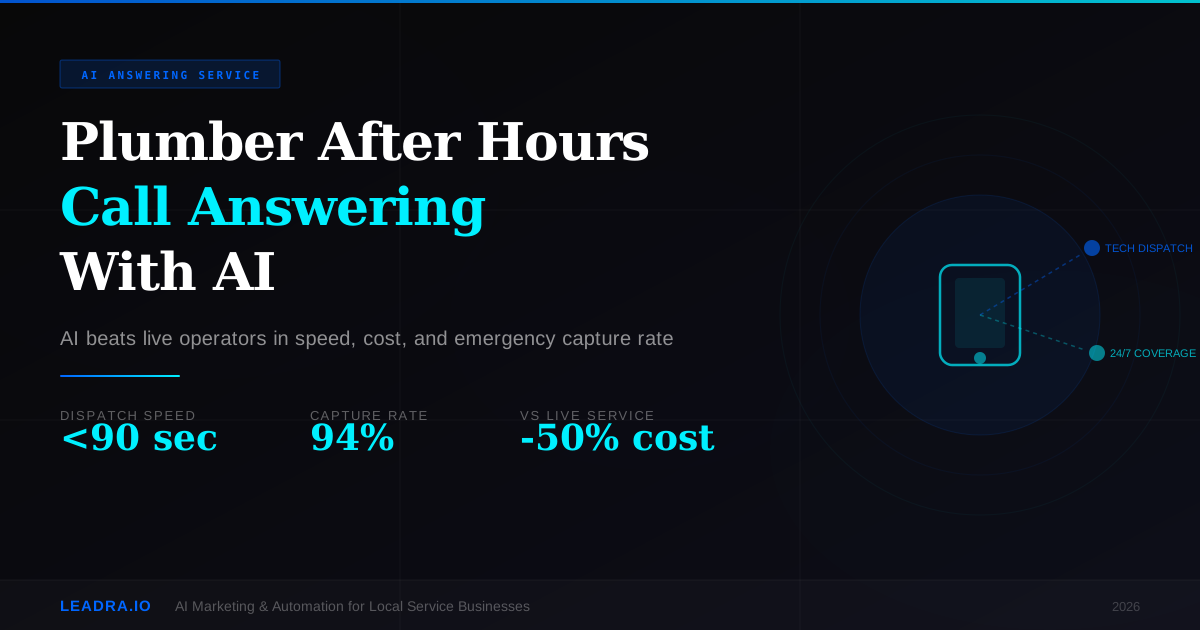
If you run a plumbing company, you already know you need an after-hours call answering service. The question is whether a live answering service is actually doing the job — or just giving you the feeling that it is.
Most plumbers who use a traditional live answering service pay $1,500-$3,500 per month and still miss 25-40% of true after-hours emergencies. The calls get answered, but the operators use generic scripts that do not detect urgency correctly, dispatch too slowly, and occasionally misroute jobs that needed a tech on-site in under an hour. Meanwhile, the homeowner with a flooded basement has already called the next number on their Google search results.
This guide breaks down what makes a plumber after hours call answering service AI different from a traditional live answering service, how the triage logic works, what real cost and performance comparisons look like, and what a Charlotte plumbing company experienced after switching from a live service to AI in 2025.
The Real Problem with Live Answering Services for Plumbers
Traditional plumber answering services were built to handle general service calls — take a message, get a callback number, and tell the caller someone will be in touch. That workflow made sense in 1998. It does not work in 2026 when a homeowner with a burst pipe has already Googled three competitors before your on-call tech even gets the message.
Four specific failure points keep showing up with live answering services for plumbing companies:
1. Generic Scripts Miss Emergency Severity
A live operator reading from a generic script does not know that "water coming from the ceiling" is different from "water dripping from a faucet." They ask for a name and callback number, note the issue as described, and send a message. Your tech gets a text saying "customer has water issue" and has to call the homeowner before they know whether to drive out at 2 AM or schedule something for 8 AM.
2. Dispatch Speed Is 5-15 Minutes, Not Seconds
After a live operator takes a call, they have to log it, classify it, then send a message to your on-call line. That process takes 5-15 minutes depending on the service. If a homeowner is calling three plumbers — which they do during any active emergency — a 12-minute delay in reaching your tech is often a 12-minute head start for the competitor who picked up first.
3. Costs Spike During the Moments That Matter Most
Live answering services charge per minute. During a Charlotte freeze event when your call volume triples overnight, your per-minute bill triples with it. The highest-demand moment for your business — when capturing every call would generate the most revenue — is exactly when a live answering service gets most expensive and most overloaded. AI costs the same whether you handle 20 calls or 200 in a single night.
4. Operator Consistency Varies by Shift
A live answering service has different operators on different nights. The quality of the triage, the professionalism of the interaction, and the accuracy of the dispatch note depends on who picks up. Your 3 AM emergency call is handled by a different person than your 11 PM call, with different levels of engagement. AI delivers identical call quality every time, regardless of the hour.
What a Plumber After Hours Call Answering Service AI Actually Does
A purpose-built plumber after hours call answering service AI is not a chatbot or a generic virtual receptionist. It is a voice agent trained specifically on plumbing call logic — the difference between a job that needs a tech in 60 minutes and a job that can wait until morning. Here is what the system does on every after-hours call:
Answers in 2 Rings With Your Company Name
The caller hears a live-sounding voice using your business name within two rings. No hold music, no recorded message, no "your call is important to us." The AI greets them naturally, which keeps them on the line and immediately establishes that your company is responsive — the first data point in whether they hire you or keep dialing.
Runs a Plumbing-Specific Triage Sequence
Instead of taking a message, the AI runs a structured intake with plumbing-specific questions: Is water actively flowing or flooding? Can they reach the main shutoff? What part of the home is affected? Has there been any visible damage to walls or floors? These answers determine the severity level and the routing decision — dispatch immediately or book next-morning service. The triage takes 60-90 seconds and generates a job summary detailed enough for your tech to arrive prepared.
Dispatches Your On-Call Tech in Under 90 Seconds
For true emergencies — burst pipes, active flooding, sewage backup, no hot water in freezing temps, gas smell near a water heater — the AI fires an SMS to your on-call tech within 90 seconds of the call ending. The message includes caller name, phone number, address, and the full triage summary. Your tech has everything needed to respond immediately, without calling back to get details.
Books Non-Emergencies Without Waking Your Tech
Slow drains, running toilets, low water pressure, quote requests — the AI handles these without dispatching anyone. It books the caller into your next-available morning slot, sends them a confirmation text, and logs the job in your field software. Your on-call tech sleeps through the calls that do not need them. That matters for retention: techs burned out by unnecessary overnight calls tend to leave.
Escalates Automatically If Your Tech Does Not Respond
If your on-call plumber does not confirm or call the homeowner within the agreed window — typically 20-30 minutes — the system sends a second alert to the tech and a reassurance SMS to the caller. This prevents the scenario where a panicked homeowner, hearing nothing back, dials your competitor and gives them the job. The escalation loop closes the gap that kills emergency revenue.
Live Answering Service vs. AI: How They Compare for Plumbing Companies
Here is a direct performance comparison across the metrics that determine whether your after-hours coverage is actually capturing emergency revenue:
| Factor | Live Answering Service | AI Answering Service |
|---|---|---|
| Monthly Cost (200 calls) | $1,500-$3,500 (per-minute) | $600-$1,800 (flat rate) |
| Cost During Freeze Surge | Spikes 2-3x with volume | Same flat rate, unlimited calls |
| Answer Speed | 3-7 rings, possible hold | 1-2 rings, always |
| Emergency Triage Quality | Generic script, inconsistent | Plumbing-specific, consistent |
| Dispatch Speed to Tech | 5-15 min after call | Under 90 sec after call |
| Emergency Capture Rate | 60-75% | 90-95% |
| Non-Emergency Filtering | Limited — often over-dispatches | Automatic — no unnecessary dispatch |
| Field Software Integration | Rare — usually SMS/email only | ServiceTitan, Housecall Pro, Jobber |
| Escalation If Tech Does Not Respond | None | Automatic second alert + caller SMS |
The most significant gap is not cost — it is the 90-second dispatch versus the 5-15 minute dispatch. When three plumbers all show up in a homeowner's search results and they are calling all three, your 12-minute response delay is your competitor's 12-minute head start.
Case Study: Charlotte Plumbing Company Switches From Live Service to AI — Results After 90 Days
A 5-technician plumbing company in Charlotte's University City area had used a regional live answering service for three years. Monthly cost: $2,100 at their call volume. The service was answering calls, but the owner noticed something during a February cold snap: he was running into customers at supply houses who mentioned they had called his company overnight and ended up booking with someone else.
He pulled three months of call records and cross-referenced with booked jobs. The gap was significant: 31% of after-hours calls resulted in a next-day follow-up attempt, but only 44% of those follow-ups actually booked. The answering service was creating a message queue, not capturing emergency jobs. Callers with active emergencies were not waiting for a callback — they were booking the first plumber who showed up with immediate service confirmation.
They deployed a Leadra.io AI plumber after hours call answering service in March 2025. Setup took 9 days including ServiceTitan integration.
Results at 90 days:
- →After-hours call capture rate: 69% to 94%
- →Emergency jobs dispatched same night: 8 to 27 per month
- →Average dispatch time from call end: 11 min (live service) to 74 sec (AI)
- →Non-emergency calls correctly deferred to next day: 43/month (protecting on-call tech)
- →Monthly cost: $2,100 (live service) to $1,100 (AI) — $1,000/month saved
- →Added monthly revenue from captured emergency jobs: $11,780
- →Combined savings + new revenue vs prior setup: $12,780/month
The owner noted that the triage quality changed the field experience: "My techs are arriving with real information now. Before, they'd get a message that said 'water problem' and have to call the customer from the driveway to figure out what they were walking into. Now they get a full intake — location, scope, what the customer already tried — before they leave the house."
What to Look For When Choosing a Plumber After Hours Call Answering Service AI
Not every AI answering product handles plumbing emergencies correctly. Before you switch, verify these four capabilities:
1. Plumbing-Specific Emergency Detection
Ask the vendor to walk you through the specific emergency flags their system uses for plumbing calls. A generic AI that only asks "Is this urgent?" is not adequate. The system should detect burst pipes, active flooding, sewage backup, frozen pipe symptoms, water heater failures, and gas smell situations without relying on the caller to self-classify. If they cannot name the specific triage logic, the system is not built for plumbing.
2. Dispatch Speed Under 2 Minutes
Ask for the average time from call end to tech notification. Any system requiring manual review before dispatch is not a real-time system. The dispatch SMS to your on-call tech should fire automatically within 90 seconds of the call ending. If there is a human review step in the middle, that is a live answering service with AI branding — not an AI system.
3. Field Software Integration
The job should write directly into ServiceTitan, Housecall Pro, or Jobber — not just send an email or text. An SMS with job details is better than voicemail, but it still creates a manual entry step that gets missed at 3 AM. Full integration means the job appears on your dispatch board automatically, with the triage summary attached, ready to accept and close.
4. On-Call Escalation Logic
Ask what happens when your on-call tech does not respond. The answer should be: the system sends a second alert to the tech, then sends a reassurance SMS to the caller telling them their request is being processed. If the vendor has no answer to this question — or the answer is "nothing happens until the next business day" — that gap will cost you jobs during high-volume events when your tech is already running between jobs.
AI Plumber After Hours Call Answering Service: 2026 Pricing Breakdown
| Tier | Monthly Cost | What's Included |
|---|---|---|
| Core | $600-$900/mo | 24/7 AI call answering, plumbing emergency triage, on-call SMS dispatch under 90 seconds, next-day booking for non-emergencies. Best for solo operators and 2-3 tech shops replacing a basic answering service. |
| Growth | $900-$1,800/mo | Everything in Core + field software integration (ServiceTitan, Housecall Pro, Jobber), multi-tech dispatch routing, escalation logic, call recording and quality review. Best for 4-8 tech operations replacing a full live answering service. |
| Enterprise | $1,800-$3,500/mo | Everything in Growth + multi-location support, custom escalation trees, live performance dashboards, quarterly triage optimization. Best for multi-location or high-volume plumbing operations. |
At the Growth tier, most plumbing companies replacing a live answering service see a net cost reduction of $500-$1,500 per month while capturing significantly more emergency jobs. The math on this is not close: the AI costs less and performs better on both dispatch speed and emergency capture rate.
For a complete look at how the AI emergency triage logic works step by step — including the specific plumbing emergency flags and what happens during a pipe-freeze call surge — read the full breakdown in our guide on the best AI for plumbing companies emergency calls.
If you want to build a full lead generation system that works across organic search, Google Business Profile, and after-hours call capture — not just the answering service layer — our guide on the AI marketing system for Charlotte plumbers covers the complete 5-channel approach with real results.
Frequently Asked Questions
What is an AI plumber after hours call answering service?
An AI plumber after hours call answering service is a 24/7 voice agent that answers every inbound call immediately using your company name, runs a structured plumbing-specific triage to distinguish true emergencies from routine requests, and dispatches your on-call tech via SMS in under 90 seconds - with no live operator involved. Unlike traditional answering services that use generic scripts and per-minute billing, an AI answering service is purpose-built for plumbing call logic: it knows the difference between a burst pipe and a dripping faucet, and routes accordingly.
How does an AI answering service for plumbers compare to a live answering service in cost?
A traditional live answering service for plumbers costs $1,200-$3,500 per month based on call volume, typically billing $1.50-$2.50 per minute with plumbing calls averaging 4-7 minutes each. At 200 calls per month, that is $1,200-$3,500 per month with variable costs that spike during freeze events. An AI plumber after hours call answering service costs $600-$1,800 per month as a flat rate - no per-minute billing, no cost spikes during high-volume weather events, and the AI handles unlimited concurrent calls for the same price.
Will an AI answering service understand plumbing emergencies correctly?
Yes, when configured correctly. A purpose-built AI plumber after hours call answering service is trained on plumbing-specific emergency logic: burst and frozen pipes, active flooding, sewage backup inside the home, no hot water in freezing temperatures, gas smell near a water heater, and main shutoff valves that will not close. These trigger immediate on-call dispatch. Routine requests like slow drains, dripping faucets, low pressure, and inspection questions are handled without a dispatch and booked for next-day service. The key difference vs a generic AI or answering service: plumbing intent detection rather than just collecting a name and number.
How fast can a plumbing company set up an AI after hours answering service?
Most plumbing companies are live with an AI after hours call answering service in 7-10 business days. The setup process includes: 2-3 days building the triage script with your specific emergency thresholds and service areas, 2-3 days of test calls and refinement, 1-2 days of integration with your field software (ServiceTitan, Housecall Pro, Jobber), and 2-3 days of live monitored calls before full handoff. Leadra.io includes 30 days of live monitoring after launch to catch any routing gaps before you are fully on your own.
Replace Your Answering Service With AI That Actually Captures Emergency Jobs
Leadra.io deploys AI plumber after hours call answering service systems in 7-10 days. Setup includes plumbing-specific emergency triage scripting, field software integration, on-call dispatch logic, and 30 days of live monitoring. Most plumbing companies recover their first month cost within the first week of deployment and cut their answering service bill in half.