Trucking Company Marketing Automation Guide: Build a Direct Shipper Pipeline Without Load Boards (2026)
By Leadra.io Team · June 23, 2026 · 9 min read
Trucking company marketing automation is a connected system that handles direct shipper outreach, RFQ follow-up, quote nurture sequences, Google review generation, and shipper reactivation on autopilot. The goal is a direct freight pipeline that cuts load board dependency, raises average revenue per mile by $0.60–$1.20, and runs in the background while your drivers focus on moving freight.
The average owner-operator spends 78% of loads on load boards or through freight brokers. That means 18–25% of gross revenue leaves the business before a single invoice is sent. On a 5-truck fleet running $1.2M per year in gross revenue, that is $216,000–$300,000 going to intermediaries. Not to drivers. Not to equipment. Not to you.
The carriers that consistently run at $3.80–$4.50 per mile instead of $2.80–$3.20 are not finding better loads. They built a direct shipper relationship system. And in 2026, the fastest way to build that system is through trucking company marketing automation — outreach, follow-up, and trust-building that runs without you touching it every day.
This guide covers the five automation systems that matter, how to stack them in the right order, what they cost, and what realistic results look like for fleets of every size. If you want the Charlotte-specific version, see our AI marketing guide for trucking companies in Charlotte, NC. For fleet efficiency tools, see our best AI tools for trucking companies in 2026.
Why Trucking Marketing Breaks Down Without Automation
Most carriers understand that direct shippers mean better rates. The problem is execution. Building shipper relationships requires consistent outreach, fast quote response, and follow-up that does not stop after the first email. Almost no owner-operator or small fleet manager has time for that while running dispatch, managing drivers, and handling compliance.
Here is what manual trucking marketing actually looks like in practice:
- An operations manager at a Charlotte distribution center gets a cold email about your freight capacity. No one follows up. They forget about you by Thursday.
- A shipper submits an RFQ through your website at 7 PM on a Friday. Your reply comes Monday morning. They booked someone else Saturday.
- You have 12 shippers you hauled for in the past two years who stopped calling. No reactivation sequence exists. That freight is now going to a competitor who stays in touch.
- Your Google Business Profile says "trucking company" with 3 reviews. The shipper's procurement manager Googles your DOT number before signing a contract and sees almost nothing.
- A shipper who liked your service asks who else you work with. You have no case studies, no testimonials, no credibility content. The conversation stalls.
According to the American Trucking Associations, over 90% of U.S. trucking companies operate fewer than 6 trucks — which means almost the entire industry is competing for direct freight without a dedicated sales team. Automation is the only way to run a consistent sales motion at that scale.
The 5 Automation Systems Every Carrier Needs
These five systems work as a stack. You can start with any one of them, but the full pipeline compounds: each system feeds the next and cuts the manual work required at every stage.
1. AI Direct Shipper Outreach
This is the top of the funnel. The system identifies manufacturers, distributors, and logistics managers along your existing lanes — then sends personalized outreach emails at scale without you writing each one.
A well-built outreach sequence for trucking looks like this: Day 1 sends a lane-specific introduction (your average rate, equipment type, and on-time record on that corridor). Day 4 follows up with a brief case study or reference from a similar shipper. Day 10 sends a rate comparison showing the delta between broker rates and your direct rate on that lane. Day 18 sends a soft close with a specific ask — a 30-day trial lane or a single load to test the relationship.
The key differentiator from generic email blasts is lane specificity. Shippers receive dozens of carrier solicitations. A message that says "we run Charlotte to Atlanta three times a week, average 6.5 hours door to door, and our current broker rate for that lane is $2.15/mile — here is what we charge direct" converts at 4–6x the rate of a generic "we haul freight" pitch.
AI tools build and personalize these sequences by pulling publicly available company data — industry type, estimated freight volume, current carrier relationships — and inserting relevant details automatically.
2. AI Quote Follow-Up Automation
The average trucking company loses 60–70% of inbound freight quotes to slow or nonexistent follow-up. A shipper submits an RFQ, gets a quote within a few hours, but hears nothing after that. Life gets busy. The quote goes cold.
Automated quote follow-up changes that math. The moment a quote goes out, a timed sequence starts: a check-in at 24 hours, a gentle nudge at 48 hours with a value-add (your on-time percentage, a reference contact), and a final ask at 72 hours. If the shipper responds at any point, the sequence stops and routes to you directly.
This alone typically recovers 20–35% of quotes that would have gone cold. On a 5-truck fleet quoting 25 loads per month at an average of $4,200 per load, recovering even 3 additional loads per month from follow-up is $12,600/month in additional revenue.
3. AI Phone Agent for Inbound Freight Calls
Shippers call. Brokers call. Drivers call about loads. Most of those calls hit a voicemail during dispatch, after hours, or when the owner is under a truck. An AI phone agent for trucking answers every inbound call in under 2 seconds, handles load inquiries, collects RFQ details, provides rates for established lanes, and routes urgent calls to the right person.
For direct shipper acquisition specifically, the AI agent can qualify inbound shipper interest — freight volume, lane, equipment requirements, timeline — and automatically add them to your CRM for follow-up. No call goes to voicemail during business development hours.
4. Shipper Reactivation Sequences
Every carrier has a graveyard of past shippers who used them once or twice and went quiet. These are warm contacts. They already trusted your service once. Getting a second chance is far cheaper than finding a new shipper.
A reactivation sequence goes out to every dormant shipper (no loads in 90+ days) with a lane update, a rate refresh, and a direct ask. The best-performing reactivation message is simple: "We're running [Lane X] three times next week. We have capacity at $X/mile. Want to move a load?" Direct, specific, no fluff.
Most carriers who run this sequence for the first time recover 2–4 dormant shippers in the first 30 days. Each recovered relationship is worth $8,000–$40,000 per year in direct freight revenue depending on volume.
5. Google Credibility Automation
Before a procurement manager signs a master carrier agreement with you, they Google your company. What they find determines whether the deal closes or stalls. This system handles two things: Google review generation (automatically requesting reviews after every successful load from drivers and dispatch contacts at the shipper) and Google Business Profile optimization (keeping your hours, lanes, and equipment type current and accurate).
Carriers with 15+ Google reviews and an active GBP profile show up in "trucking company near me" and lane-specific searches far more often than competitors with 2 reviews and a bare listing. That passive inbound traffic adds 3–6 shipper inquiries per month with zero ongoing effort once the system is running.
Case Study: 8-Truck Charlotte Fleet, 14 Months
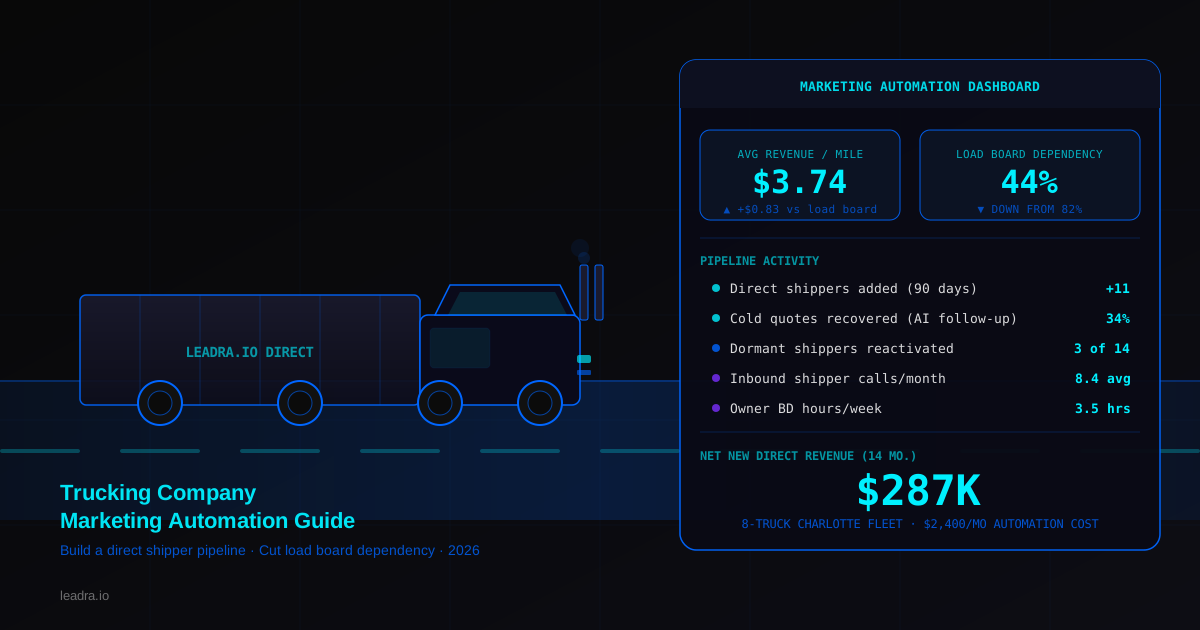
A Leadra.io client running an 8-truck dry van operation out of Charlotte started with 82% of loads coming through brokers and load boards. Average revenue per mile was $2.91. The owner was spending 12–15 hours per week on business development with minimal results.
After installing all five automation systems:
- Month 1–2: AI phone agent live, quote follow-up running. 4 cold quotes recovered. 2 new direct shippers from inbound calls that previously went to voicemail.
- Month 3–4: Outreach sequences targeting Charlotte-to-Atlanta and Charlotte-to-Raleigh lanes. 8 shipper conversations opened. 3 trial loads booked.
- Month 5–6: Reactivation sent to 14 dormant shippers. 3 reactivated with regular freight. Google reviews grew from 4 to 19. Inbound shipper calls increased from 1–2/month to 7–9/month.
- Month 12–14: Load board dependency dropped from 82% to 44%. Average RPM rose from $2.91 to $3.74. Owner BD time dropped from 12–15 hours/week to under 4 hours/week.
Net new direct revenue over 14 months: approximately $287,000. Monthly automation cost: $2,400.
How to Stack These Systems: The 60-Day Launch Order
Do not try to build all five systems at once. Stack them in this order to get results fast and avoid complexity overload:
Week 1–2: Install the AI phone agent and quote follow-up automation. These generate the fastest wins because they recover revenue you are already generating but losing to slow response.
Week 3–4: Launch the shipper reactivation sequence against your dormant contacts. You already have a relationship — this is the cheapest revenue to recover.
Week 5–6: Start the direct shipper outreach sequences targeting your two highest-volume lanes. Build the Google review request flow.
Month 2+: Let outreach and review generation run in the background. Focus operator time on responding to shipper conversations the automation surfaces, not on generating them.
By day 60, you have a live pipeline generating shipper inquiries, recovering cold quotes, and building your online credibility — all without adding headcount.
For a full breakdown of how AI fits into lead generation specifically, see our guide on how AI helps trucking companies get more leads.
ROI Breakdown: What to Expect by Fleet Size
| Fleet Size | Monthly Automation Cost | Expected RPM Gain | Net Monthly Gain (90 days) |
|---|---|---|---|
| 1–3 trucks | $800–$1,200 | $0.45–$0.70/mi | $1,800–$4,200 |
| 4–8 trucks | $1,500–$2,500 | $0.55–$0.85/mi | $6,000–$14,000 |
| 9–20 trucks | $2,500–$3,500 | $0.65–$1.10/mi | $18,000–$42,000 |
These numbers assume 10,000–12,000 miles per truck per month and a mix of existing direct shippers plus new ones added through the outreach system. The RPM gain comes from moving loads off broker and load board channels — not from finding higher-paying loads through the same channels.
Frequently Asked Questions
What is trucking company marketing automation?
Trucking company marketing automation is a system of connected tools that handles direct shipper outreach, RFQ follow-up, quote nurture sequences, Google review generation, and shipper reactivation campaigns without requiring the owner or dispatcher to do manual marketing work. The goal is a direct freight pipeline that reduces load board dependence and raises average revenue per mile.
How much does marketing automation cost for a trucking company?
Marketing automation for trucking companies typically runs $800–$3,500 per month depending on fleet size and how many systems are active. A 3–5 truck owner-operator setup with outreach automation, quote follow-up, and an AI phone agent runs around $1,200/month. Most carriers recover the cost within 60–90 days through higher RPM on direct loads.
How long does it take to see results from trucking marketing automation?
Most carriers see measurable results within 30–60 days. The fastest wins come from AI quote follow-up — recovering cold quotes in the first 2 weeks — and Google Business Profile optimization, which drives more inbound shipper calls within 3–4 weeks. Building a meaningful direct shipper pipeline typically takes 90–120 days of consistent outreach and follow-up automation running in the background.
Can small trucking companies with 1–5 trucks use marketing automation?
Yes — small carriers benefit most because the owner is usually the only salesperson. A single-truck owner-operator running automated outreach to 30 target shippers per month, with AI follow-up on every RFQ, can add 2–4 direct shipper relationships per quarter without spending time on manual sales. That typically moves 20–35% of loads off load boards within 6 months.
Start Building Your Direct Shipper Pipeline
Load board dependency is not a permanent condition. It is a marketing system problem — and marketing system problems have marketing system solutions. The five automation systems in this guide are not theoretical. They are running right now for carriers across Charlotte, Atlanta, Raleigh, and beyond, generating shipper conversations that owners do not have to initiate manually.
At Leadra.io, we build these systems for trucking companies and small businesses across the country. Our clients typically see measurable RPM improvement within 60 days and a meaningful reduction in load board dependency within 90–120 days.
Call us at +1 (864) 721-8384 or visit our contact page to talk through your current load mix and what a direct shipper pipeline would look like for your fleet.
Last updated: June 23, 2026 | Tim Johnson, CEO at Leadra.io — AI marketing automation for trucking companies and small businesses.