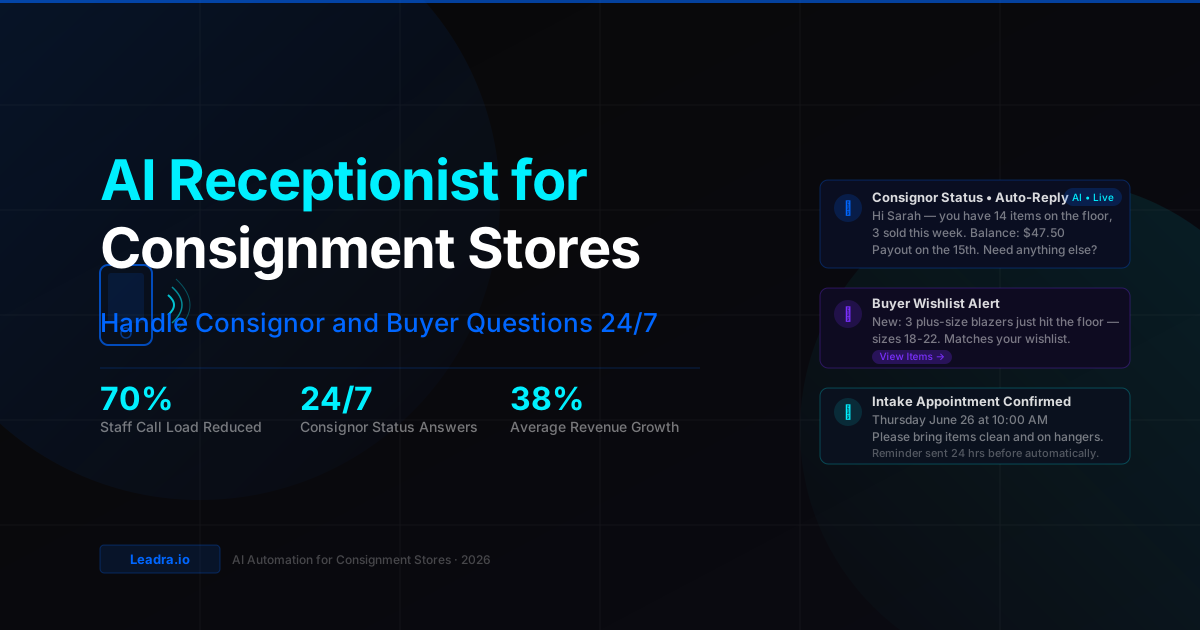
A consignor calls at 11am on a Tuesday. They want to know if their winter coats sold yet, what their account balance is, and when they can bring in more spring items. Your one staff member is sorting a new intake drop with three people waiting. The call goes to voicemail. The consignor leaves frustrated. By Friday they're dropping off at the competitor down the road.
Consignment stores run on two relationships at once: consignors who need consistent communication to stay loyal, and buyers who need to know when the right item arrives before someone else grabs it. Most stores manage both relationships manually — calls answered when someone is free, status updates given by memory, buyer notifications posted on Facebook when there's time. The result is a slow leak of both consignors and buyers that compounds over months.
An AI receptionist for a consignment store handles both sides automatically. This guide covers what that system actually does, what it costs in 2026, and what stores with 200-500 active consignors are seeing after 90 days.
The Double Communication Problem Every Consignment Store Faces
Unlike a standard retail store, a consignment shop manages two separate customer relationships with opposite needs. Consignors want outbound updates without having to call in. Buyers want instant responses when they reach out. Most consignment stores are understaffed for one of these demands, let alone both.
According to a 2025 survey by the National Consignment and Resale Association, the average consignment store with 300 active consignors handles 40-60 inbound status calls per week. At 3-4 minutes per call — looking up accounts, reading sales data, calculating balances — that's 2-4 hours of staff time per week spent answering the same questions over and over. That's before a single item is sorted, priced, tagged, or put on the floor.
Consignor status calls are the single biggest staff time drain.
"Did my stuff sell?" "What's my balance?" "Can I bring more items in?" These questions are predictable, repetitive, and require looking something up in your consignment software to answer. They happen every day, including evenings and weekends when no one is there to pick up. Voicemails pile up. Consignors who don't hear back quickly start assuming the worst — that their items aren't being managed properly — and pull their inventory.
Buyers lose interest in the minutes before you respond.
A buyer who texts asking whether you have plus-size women's blazers in is a warm lead. They're already interested, already in buying mode. The window is short — studies on retail messaging show that 68% of buyers who message a resale or consignment store move on or purchase elsewhere if they don't get a response within two hours. For evening and weekend messages, most consignment stores are responding the next morning. By then, the buyer found what they needed somewhere else.
Intake appointment chaos drains intake quality and consignor patience.
When consignors show up without appointments during peak hours, it creates floor chaos — staff pulled from sales to sort a drop, other customers waiting, intake done quickly instead of carefully. Stores that don't enforce intake appointments average 35% more mislabeled and mispriced items than those with structured scheduling, according to industry data. The bottleneck isn't the intake process itself — it's the scheduling friction that turns it into a free-for-all.
5 Things a Consignment Store AI Receptionist Does Every Day
A properly built AI receptionist for a consignment store isn't a generic chatbot. It connects to your consignment management software, handles both consignors and buyers through different communication flows, and runs follow-up sequences that no staff member has time to run manually. Here's what the day-to-day looks like:
24/7 Consignor Account Status Responses
When a consignor calls or texts asking about their account, the AI pulls live data from your consignment management platform — SimpleConsign, ConsignCloud, Liberty4, or comparable systems — and responds with their current item count, what has sold, the amount in their account, and their next payout date. The entire exchange takes under 90 seconds and requires no staff involvement.
This eliminates the most common call type in most consignment stores. A store with 300 active consignors handling 50 status calls per week saves roughly 200 minutes of staff time weekly just by routing these calls through AI. Those 200 minutes go back to floor work, intake quality, and customer service for buyers who are actively shopping.
Intake Appointment Scheduling and Confirmation
The AI books intake appointments directly: checks your available intake slots, asks the consignor what category and quantity they're bringing, confirms the appointment with intake guidelines (clean, on hangers, season-appropriate), and sends a 24-hour reminder with a one-tap confirm or cancel option. Cancellations open the slot back up immediately and trigger an outreach to the next consignor on the waiting list.
Stores that enforce scheduled intake appointments report 40-60% fewer walk-in interruptions during peak hours and 25-35% improvement in intake processing speed because staff can prepare for an appointment instead of reacting to a drop-in. Consignors with scheduled appointments also show a measurably higher item quality rate because they've had time to review your intake guidelines in advance.
Buyer Wishlist Notifications for New Arrivals
Buyers who visit a consignment store and don't find what they need often have a specific item in mind — a designer handbag in a certain size, plus-size business casual, furniture for a specific room, children's clothing in size 4T. The AI captures these wishlists via SMS opt-in in store, through a website chat widget, or from a "notify me" text keyword, and sends an automatic notification the same day new inventory matching their preferences is added to the floor.
Wishlist-triggered notifications convert at 28-42% in consignment retail — significantly higher than generic promotional texts — because the buyer has already told you exactly what they want. They're not being marketed to. They're being served. Stores that run active buyer notification lists see a 15-25% increase in same-week sell-through on new intake drops compared to stores relying on walk-in traffic alone.
Aged-Item Pickup Reminders and Consignor Churn Prevention
Items that age past their consignment window and aren't picked up tie up floor space and create administrative headaches. Most consignment stores handle this manually — a staff member makes calls when they get around to it, which is often weeks after the pickup deadline. The AI runs this automatically: a 30-day reminder, a 7-day warning, and a final-day notification with a clear call to action to schedule a pickup or donate.
The same system identifies consignors who haven't dropped off in 60-90 days and sends a reengagement message: "We'd love to see what you have for the new season — intake slots are open Tuesday and Thursday." Consignor reactivation campaigns typically bring back 20-35% of dormant consignors within 30 days. For a store with 100 dormant consignors, recovering even 25 of them with an average drop-off of 15 items each adds significant new inventory without any sourcing effort.
Inbound Buyer Questions and Store Information Coverage
Buyers call and message constantly with questions that pull staff off the floor: What are your hours today? Do you take designer handbags? What categories are you strongest in right now? Do you have men's suits? Is there parking nearby? Do you buy outright or consignment only? The AI handles all of these instantly, with accurate answers that reflect your current policies and inventory focus.
For calls that require a human — pricing disputes, policy exceptions, complex intake questions — the AI captures the caller's name and question and routes a callback request to the right staff member with context, so the return call is efficient instead of starting from scratch. No more "who called and what did they want?" written on a Post-it that gets lost.
No System vs. Dedicated Staff vs. AI Receptionist: The Real Numbers
| Area | No System | Dedicated Staff | AI Receptionist |
|---|---|---|---|
| Monthly cost | Free | $2,500–$4,000/mo | $300–$1,800/mo |
| Consignor status calls | Manual, during hours | During shift only | 24/7, instant, automated |
| Intake scheduling | Walk-ins or phone calls | Phone-based booking | Self-serve, 24/7 |
| Buyer notifications | Facebook post if time allows | Occasional, manual texts | Auto on new intake match |
| Aged-item pickup reminders | Manual calls, inconsistent | Weekly batch if prioritized | Automatic 30/7/1-day sequence |
| Dormant consignor outreach | None | Occasional mass email | 20–35% reactivation rate |
| After-hours coverage | None | None | Full 24/7 coverage |
| Callback routing | Missed calls, Post-its | Manual callback list | Captured and routed with context |
Case Study: Charlotte Consignment Shop Cuts Staff Call Load 70% and Grows Revenue 38%
A women's consignment store in Charlotte, NC had 380 active consignors and two full-time staff members managing the floor, intake, and all communication. The owner was fielding 55-65 inbound calls per week — mostly status inquiries — while trying to run intake appointments, help floor buyers, and manage the daily operations of a busy store. Revenue had plateaued at $31,000 per month despite strong foot traffic.
Three problems were compounding each other: staff couldn't answer all inbound calls during busy periods, leading to voicemails that backed up, buyer messages on Facebook and via text were being handled hours later or not at all, and the aged-item pickup process was running on a messy spreadsheet that regularly missed follow-ups, leaving unsold items on the floor past their window.
Inbound call load
60+ calls/wk
18 calls/wk
Buyer response time
6-10 hrs
< 3 min
Aged-item pickup
Missed 40%
97% resolved
Monthly revenue
$31,000
$42,800
Leadra.io deployed an AI receptionist integrated with the store's consignment management software. The AI handled all inbound status calls with live account data, booked intake appointments through a self-serve flow, and launched buyer wishlist notifications the first week — starting with 80 buyers already in the store's contact list.
Within 30 days, inbound staff call volume dropped from 60+ per week to 18 per week. The remaining calls were the complex ones — pricing disputes, exceptions — that genuinely needed a human. Buyer notifications triggered 34 in-store visits in the first month from the initial contact list alone. The aged-item pickup sequence resolved 97% of expired items within their deadline window.
By month 3, monthly revenue had grown from $31,000 to $42,800. The two staff members shifted from spending 40% of their day on the phone to spending nearly all of it on intake, floor work, and building buyer relationships in person. The AI receptionist cost $980 per month.
What an AI Receptionist Costs for a Consignment Store in 2026
Cost depends on consignor count, call and message volume, consignment software integration complexity, and which automation sequences are included. Here's how the tiers typically break down for consignment and resale stores:
Basic
$300–$600/mo
- →Inbound call handling: store hours, policies, intake FAQ, categories
- →Intake appointment scheduling with automated confirmation and reminder
- →Consignor status FAQ via SMS (balance, payout dates, general account info)
- →Google Business Profile chat coverage for buyer inquiries
- →Best for: stores under 150 active consignors with moderate call volume
Standard
$600–$1,200/mo
- →Everything in Basic
- →Live consignment software integration for real-time account status responses
- →Buyer wishlist capture and new-arrival notification automation
- →Aged-item pickup reminder sequences (30/7/1-day cadence)
- →Dormant consignor reactivation campaigns
- →Best for: stores with 150-400 active consignors and active buyer repeat traffic
Full AI Receptionist
$1,200–$1,800/mo
- →Everything in Standard
- →Inbound voice AI (calls handled fully by AI or routed with context)
- →Multi-channel coverage: phone, SMS, Facebook Messenger, website chat
- →Consignor payout notification and payout-schedule reminders
- →Intake no-show follow-up and automatic slot re-release
- →Monthly consignor and buyer engagement reporting
- →Best for: high-volume stores with 400+ consignors replacing phone desk time
What to Look for When Choosing an AI Receptionist for Your Consignment Store
Generic AI receptionist tools were built for appointment-heavy service businesses — dental offices, salons, gyms. Consignment retail has requirements those systems weren't designed for. Here's what separates a tool that actually works for a consignment store from one that creates more confusion than it solves:
Native consignment software integration — not a generic FAQ form
The single most important feature is a live connection to your consignment management platform. An AI that answers consignor status calls with pre-programmed responses instead of live account data will give wrong answers — especially during payout periods when account balances change daily. Ask any vendor specifically which consignment platforms they integrate with (SimpleConsign, ConsignCloud, Liberty4, Ricochet, etc.) and whether the integration is real-time or on a scheduled sync.
Separate communication flows for consignors and buyers
A consignor calling to check their balance needs a completely different conversation flow than a buyer asking if you have vintage denim. Generic AI tools use a single conversation structure for all callers. A consignment-specific system recognizes whether the caller is a consignor (prompts for account number or phone number on file) or a buyer (directs to categories, hours, wishlists) and branches accordingly. If a vendor can't explain how they handle this distinction, their system wasn't built for consignment.
Proactive outreach — not just inbound coverage
Most of the revenue impact from an AI receptionist in a consignment store comes from outbound automation: buyer notifications when new inventory arrives, aged-item pickup reminders before you're stuck with unsold product, dormant consignor reactivation. If a vendor only covers inbound calls and messages, you're getting maybe 30% of the potential value. Ask specifically which outbound sequences they run and what response rates their consignment clients see.
Results tied to consignment-specific metrics
Ask any vendor for their average client outcomes on call volume reduction, consignor retention rate, buyer notification conversion, and aged-item pickup compliance. If they can only talk about 'improved customer experience' and 'faster response times' without hard numbers, they haven't tracked what matters for your business model. You need numbers — reduced staff call load, percentage of dormant consignors reactivated, sell-through lift from buyer notifications.
Frequently Asked Questions
What does an AI receptionist for a consignment store actually do?
An AI receptionist for a consignment store handles two distinct customer types simultaneously. For consignors, it answers status inquiries ('What sold this week?', 'When do I get paid?', 'How many of my items are still on the floor?'), books intake appointments, and sends pickup reminders for items that have aged out. For buyers, it answers questions about store hours, item availability, category arrivals, and pricing — and notifies shoppers automatically when inventory matching their wishlist comes in. The system runs 24/7 with no staff involvement for routine calls and messages.
How much does an AI receptionist cost for a consignment store?
AI receptionist systems for consignment stores typically run $300 to $1,800 per month depending on call and message volume, integration with your consignment management software, and which automation sequences are included. A basic system handling inbound calls, appointment booking, and consignor status FAQs starts around $300-$600 per month. A full system with live consignment software integration, buyer wishlist notifications, consignor payout reminders, and aged-inventory pickup campaigns runs $900-$1,800 per month. Most consignment stores recover the cost within the first 45-60 days from time saved and recovered buyer conversions.
Can an AI receptionist check consignment software and give consignors their account status?
Yes, when integrated with your consignment management platform, an AI receptionist can pull real-time account data and tell a consignor exactly how many items they have on the floor, what has sold, their current account balance, and when their next payout date is. This eliminates the most common call type for consignment stores: status inquiries that take 2-4 minutes each and happen dozens of times per week. Consignors get accurate answers instantly, any time of day, without putting your staff on hold.
What is the ROI of an AI receptionist for a consignment store?
The return on investment for a consignment store AI receptionist comes from three areas: staff time recovered from handling repetitive consignor status calls (typically 8-15 hours per week), recovered buyer sales from instant notifications when matching inventory arrives, and reduced consignor churn from faster, more consistent communication. Consignment stores with 200-500 active consignors and $20,000-$60,000 in monthly sales typically see net revenue gains of $3,000-$9,000 per month against a system cost of $600-$1,400 per month.
Related Reading
Ready to Stop Losing Consignors and Buyers to Slow Responses?
Leadra.io builds and manages AI receptionist systems for consignment stores. We handle setup, consignment software integration, buyer notification automation, and ongoing optimization. Most stores see measurable call load reduction within the first two weeks.