A parent calls at 7 PM because their kid's bracket popped off before a soccer tournament. A prospective patient calls during their lunch break to ask if you take their insurance and offer payment plans. An Invisalign patient calls to move their check-in because of a work trip. Your front desk closed two hours ago. All three calls go to voicemail — and at least one of them books with the ortho practice down the street instead.
An AI receptionist for orthodontists answers every one of those calls the moment they come in, day or night, and handles the scheduling logic that's specific to running an orthodontic practice — not just general dental scheduling. New patient consults, aligner check-ins, retainer reorders, and broken-appliance triage all follow different rules than a routine dental cleaning, and a generic AI answering service isn't built for that.
This guide covers what an orthodontic AI receptionist actually does, what it costs, how it handles the parts of ortho scheduling that trip up generic systems, and a real case study from a Charlotte NC practice.
Why Orthodontic Scheduling Needs Its Own Logic
Orthodontic practices run on a completely different appointment rhythm than general dentistry. A new patient goes through a consult, records appointment, bonding, and then a recurring cycle of short adjustment or aligner check-in visits every 4-10 weeks for 12-24 months. Most of that volume is short, routine, and highly schedulable — which is exactly the kind of call an AI receptionist should be absorbing so your front desk can focus on new patient conversions and in-office care.
The common thread: nearly all of this is repeatable, rules-based work. A well-configured AI receptionist doesn't need to be creative — it needs to follow your practice's scheduling rules consistently, every single call, without getting tired at 6 PM on a Friday.
AI Receptionist Pricing for Orthodontic Practices
Pricing scales with scope, similar to general dental AI receptionists, but ortho-specific configuration (aligner check-in logic, retainer reorder campaigns, referral tracking) adds setup work that shows up in the tier structure.
The AI answers calls when your front desk is closed or all lines are busy — evenings, weekends, and lunch hours. It collects new patient inquiries, reschedules check-ins, and handles basic broken-appliance triage, then sends your team a structured summary each morning. No changes to your existing phone number.
Setup time: 1-2 weeks. Best for solo orthodontists and small practices where after-hours call recovery is the primary gap.
Best for: 1-2 provider practices losing consult inquiries to voicemail outside business hours.
Everything in Tier 1 plus direct PMS integration (Dolphin, OrthoTrac, Cloud9), automated aligner check-in scheduling, retainer reorder campaigns for finished patients, referral source logging, and post-appointment review requests. The AI also handles website chat and online form inquiries with the same booking logic.
Setup time: 3-4 weeks for PMS integration and treatment-stage-aware scheduling rules.
Best for: Established practices with 3+ chairs and an active patient base moving through multi-year treatment cycles.
Custom routing for multi-location orthodontic groups — separate scheduling and referral logic per office, provider-specific availability, and a dashboard tracking call volume, consult conversion rate, and referral source performance across locations.
Implementation: 5-8 weeks, requiring your team to map call flows and referral relationships per location before go-live.
Best for: Ortho groups with 3+ locations and complex referral networks with local general dentists.
What Moves Your Price Within a Tier
Two practices in the same tier can still land at different price points. These factors push the number up or down:
Active patient count.
A practice with 400 patients in active treatment generates more aligner check-in and adjustment calls than one with 150. Higher call volume means more AI voice minutes, which moves the infrastructure cost up within a tier.
PMS platform.
Dolphin and Cloud9 have mature, well-documented APIs that deploy faster. OrthoTrac and older or highly customized setups sometimes need a middleware layer, which adds setup time and a small monthly fee.
Number of providers.
Each additional orthodontist or associate needs their own availability rules, appointment types, and chair assignment logic. Practices with 2+ providers typically land at the higher end of Tier 2.
Size of your retainer and observation patient list.
Practices with a large backlog of finished patients due for retainer reorders, or a big observation-phase list waiting to start treatment, see faster payback from Tier 2 — the automated outreach converts a list that was sitting idle into scheduled revenue almost immediately.
Most practices find the fastest payback isn't from the after-hours coverage alone — it's from the combination of after-hours consult booking and automated outreach to patients already in the system who need a retainer, a check-in, or a next step in treatment they haven't scheduled yet.
AI Receptionist vs. a Second Front Desk Hire
Here's how the numbers compare for a Charlotte NC orthodontic practice weighing AI against hiring another team member:
| Factor | Second Front Desk Hire | AI Receptionist (Tier 2) |
|---|---|---|
| Monthly cost (all-in) | $3,600 – $4,900 salary + benefits | $1,550 – $3,000 retainer + infra |
| After-hours coverage | None | 24/7 — evenings, weekends, holidays |
| Aligner check-in rescheduling | Manual, depends on staff availability | Instant, any time a patient calls |
| Retainer reorder outreach | Rarely tracked systematically | Automated campaign on your schedule |
| Broken appliance triage | Voicemail after hours | Immediate, with same-week fit-in offer |
| Training time | 4-8 weeks to full productivity | 2-4 weeks for full deployment |
| Turnover risk | High — front desk average tenure under 2 years | None |
The right setup for most practices isn't AI replacing your team — it's AI absorbing the after-hours calls, recurring check-in scheduling, and retainer reorder outreach that a human team can't realistically cover consistently, freeing your in-office staff to focus on new patient consults and chairside care. See how AI also helps orthodontists generate more new patient leads.
Case Study: Charlotte NC Orthodontic Practice, $1,650/Month, 27 Extra Consults Booked
Client Story
A two-provider orthodontic practice in south Charlotte was missing an estimated 5-7 new patient inquiry calls per week after 5:30 PM, and their front desk was spending roughly 90 minutes a day rescheduling aligner check-ins and fielding broken-bracket calls. Retainer reorders were handled reactively — only when a former patient happened to call in.
We deployed a Tier 2 AI front desk: 24/7 voice answering with Dolphin integration for direct consult booking, automated aligner check-in rescheduling, broken-appliance triage with same-week fit-in offers, and a retainer reorder campaign targeting patients 6+ months post-debond. Total retainer: $1,650/month. Infrastructure costs: $190/month.
In the first 60 days, the after-hours system booked 27 new patient consults that would have gone to voicemail. Front desk time spent on check-in rescheduling dropped by roughly an hour a day. The retainer reorder campaign generated 14 reorders in month one — a revenue stream that had previously been almost entirely reactive.
New consults booked/mo
Front desk hrs/day on scheduling
Retainer reorders/mo
Consult show rate
The higher consult show rate came from automated appointment reminders and confirmation texts the AI sends between booking and the visit — a byproduct of the same system handling the initial call. Six months in, the practice expanded the AI's scope to include observation-phase outreach — patients who'd had an initial exam but weren't ready to start treatment. The AI checks in with these patients every few months to track development and re-offer a consult when they're ready, a follow-up cadence the front desk never had bandwidth to run consistently on its own.
See the full AI marketing framework Leadra.io uses for orthodontic practices in Charlotte NC for more on turning this kind of consistent follow-up into new patient growth.
What to Ask Before You Sign
Not every AI receptionist vendor understands orthodontic scheduling out of the box. Before committing, confirm the vendor can handle these ortho-specific requirements:
Does it integrate with your practice management software?
Dolphin, OrthoTrac, and Cloud9 are the most common ortho PMS platforms. Ask for a direct integration timeline, not a generic answer about compatibility.
Can it distinguish a true emergency from a routine broken appliance?
A loose band and a facial injury need very different responses. Confirm the escalation logic before go-live, and test it with real scenarios.
Does it understand multi-year treatment timelines?
The AI should know the difference between a new patient consult, an active treatment check-in, and a finished patient due for a retainer reorder — each needs different scheduling and messaging.
Is it HIPAA-compliant?
Any system handling patient scheduling and treatment information should run on BAA-compliant infrastructure. Confirm this in writing before signing.
Once those questions are answered, the setup itself is straightforward: your vendor maps your treatment stages and scheduling rules, tests the system against real call scenarios, and phases the AI in — usually starting with after-hours coverage before expanding to full front desk automation. Compare this against other AI tools orthodontists are using in 2026.
FAQ: AI Receptionist for Orthodontists
What does an AI receptionist do for an orthodontic practice?
An AI receptionist for an orthodontic practice answers every incoming call 24/7, books new patient consults, reschedules aligner check-ins and adjustment appointments, answers financing and self-pay plan questions, sends retainer reorder reminders, and triages emergencies like a poking wire or broken bracket. It hands off complex clinical questions to your treatment coordinator while handling the repetitive scheduling volume that eats up front desk time.
How much does an AI receptionist for an orthodontist cost?
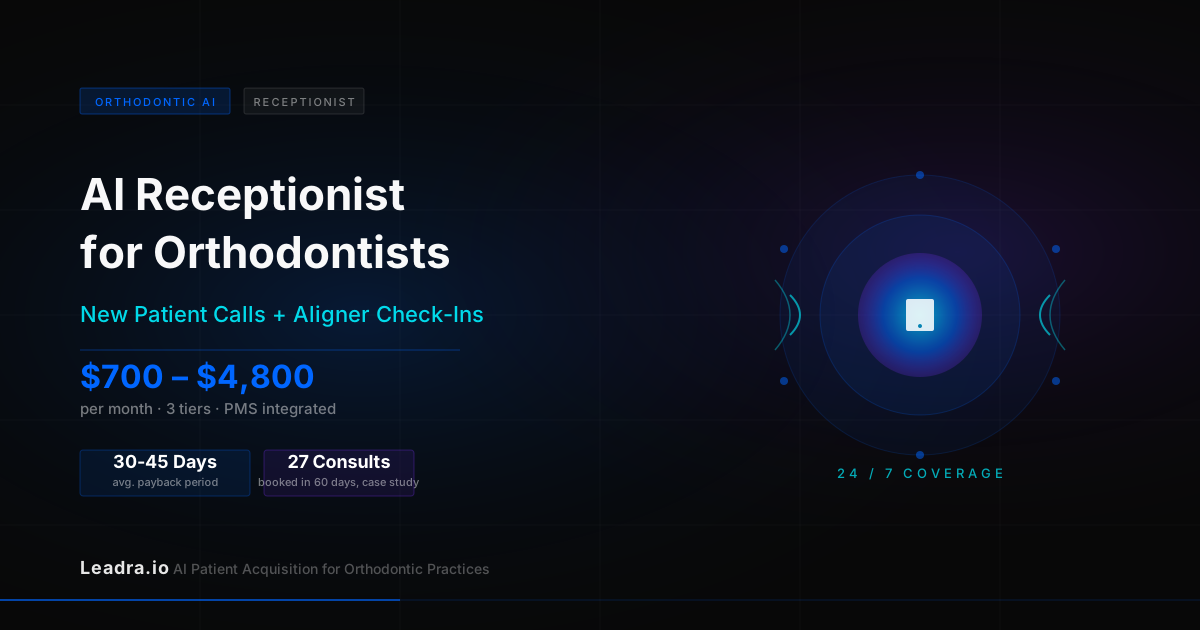
An AI receptionist for an orthodontic practice typically costs $700-$1,400/month for after-hours call coverage and consult booking, or $1,400-$2,800/month for a full front desk system that includes PMS integration, aligner check-in scheduling, and automated retainer reorder campaigns. Multi-location ortho groups with custom referral routing run $2,800-$4,800/month. Most single-location practices recover the cost within 30-45 days from recovered consult bookings alone.
Can an AI receptionist handle Invisalign and aligner check-in scheduling?
Yes. An AI receptionist trained on your practice's treatment protocols can schedule and reschedule aligner check-ins, remind patients when it's time to move to the next tray, and flag patients who report broken or lost aligners for a same-week fit-in slot. It can also send automated texts confirming aligner wear compliance check-ins between in-office visits, reducing the no-show rate for these shorter appointments.
Will an AI receptionist replace my treatment coordinator?
No. An AI receptionist is built to remove repetitive scheduling and phone volume from your team, not replace the consultative sales conversation a treatment coordinator has with a new patient about financing and treatment options. The AI books the consult, collects insurance and referral information, and answers common FAQs before the appointment — your treatment coordinator still closes the case in person or on a follow-up call, working from a warmer, better-qualified lead.
Get a Custom Quote
See What an AI Receptionist Would Cost for Your Orthodontic Practice
Tell us your PMS, call volume, and biggest scheduling gap — Leadra.io will give you a tier recommendation and realistic ROI projection based on your actual numbers.