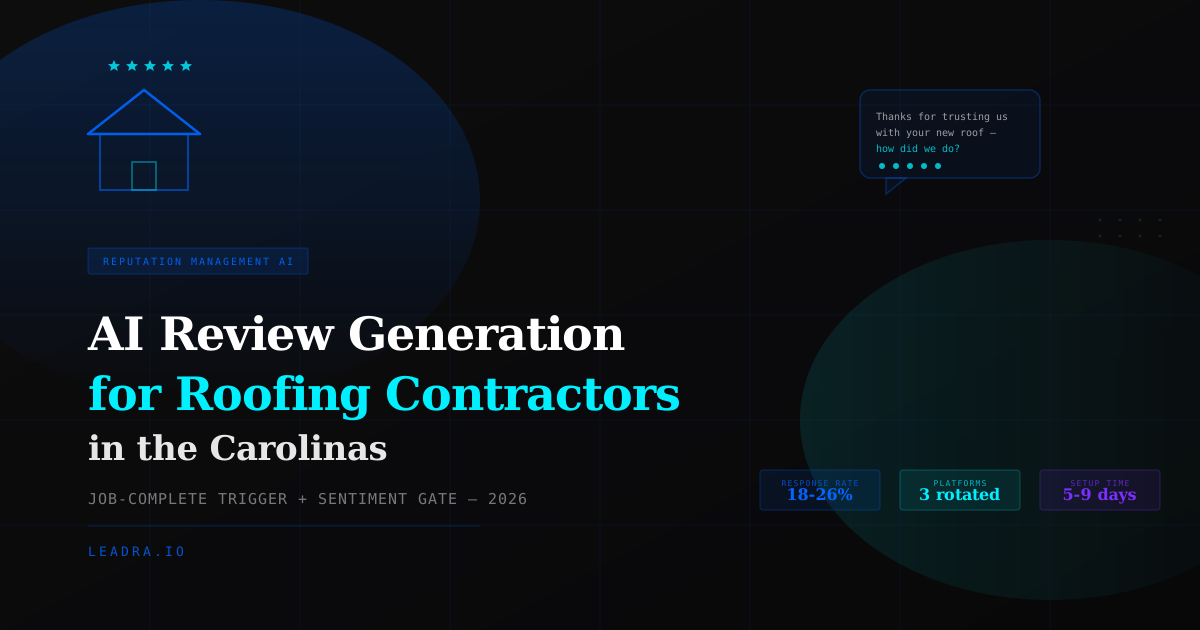
A roofing crew can finish a flawless tear-off and install, load the truck, and drive away — and the homeowner still won't leave a review unless someone asks at the right moment, in the right way. For most Carolinas roofing contractors, that ask never happens. The office is busy scheduling the next storm surge, the crew lead isn't trained to request reviews, and the one mailed thank-you card that does go out gets a 2% response rate at best.
Reviews aren't a vanity metric for roofing companies — they're one of the few trust signals a homeowner can check in the 10 minutes between finding your name and deciding whether to let your crew on their roof or hand you their insurance claim. After a major hail event, every roofing company in the Carolinas gets flooded with leads, including a wave of unlicensed out-of-town storm chasers. Review count, rating, and recency are how homeowners tell the difference — and how Google decides who shows up first in the local pack for "roofing contractor near me" and "roof repair near me" searches.
AI review generation fixes the ask problem by triggering automatically off job-complete status, personalizing the message to the actual job, and filtering unhappy customers away from public platforms before they post. This guide covers how the system works, what makes it different from a generic review-request tool, what it costs, and the mistakes that get roofing companies burned during storm season.
Why Review Generation Works Differently for Roofing Than Other Trades
Most review-request tools were built for trades with short, low-stakes jobs — an HVAC tune-up, a plumbing repair, a single visit that wraps in a couple of hours. Roofing doesn't work that way. A full replacement runs one to three days, often involves an insurance adjuster and a claim number, and ends with a punch-list walkthrough the homeowner has to sign off on before the job is truly "done" in their mind.
That changes when the review ask should fire. Send it the moment the crew leaves the site, and you're asking before the homeowner has walked the yard for nails, checked the gutters, or confirmed the color matches what they picked. Send it too late, and the moment of relief and gratitude — right after final walkthrough, when the new roof looks perfect and the stress of the claim is over — has already passed.
Storm season adds a second layer most other trades never deal with: reputation volatility. A roofing company can go from a strong 4.7 rating to a damaged one in a single bad week if a handful of frustrated homeowners — waiting on backordered shingles, a delayed adjuster, or a subcontractor scheduling conflict — post angry reviews in the same window competitors are actively bidding for the same leads. Review generation for roofing has to account for both sides: getting more happy customers to post, and catching unhappy ones before they do.
Why Reviews Move the Needle for Roofing
Manual review-ask response rate
2-4%
Mailed cards and one-off staff texts, industry average
AI review-ask response rate
18-26%
Personalized SMS + email with sentiment gate
Homeowners who check reviews first
~9 in 10
Before contacting a roofing contractor after storm damage
The 5-Component AI Review System for Roofing Contractors
A real review generation system for roofing companies isn't a single automated text. It's five components working together, timed to the roofing job cycle rather than a generic service-business template.
Job-Complete Trigger Tied to Punch-List Sign-Off
The system watches for a specific status change — a CompanyCam final photo set upload, an AccuLynx "job complete" status, or a JobNimbus workflow event — that fires only after the punch-list walkthrough is signed off, not when the crew leaves the site. This is the single biggest difference from generic review tools, which trigger on invoice-paid or job-closed status and catch homeowners before they've actually inspected the finished roof.
Personalized SMS and Email Referencing the Actual Job
The message references the homeowner's name, the crew lead who ran the job, the shingle color or roof type installed, and — for insurance jobs — a line acknowledging the claim process is behind them. "Hi Sarah, thanks for trusting us with your Owens Corning Duration install on Providence Rd — how did Mike's crew do?" converts at a meaningfully higher rate than "How was your recent service with us?"
Sentiment Gate Before Any Public Platform Link
Before a public review link is ever shown, the homeowner answers one quick question: a 1-5 star tap or a thumbs up/down. A 4 or 5 rating routes straight to a pre-filled Google, Facebook, or Nextdoor review page. A 1-3 rating routes to a private feedback form instead, and the office manager gets an instant alert with the homeowner's name, job address, and complaint so they can call back same-day — before a frustrated customer becomes a public 1-star review during storm season.
Platform Rotation Across Google, Facebook, and Nextdoor
The system rotates which platform it asks for next based on where your company is thinnest — if you have 140 Google reviews but only 8 on Facebook, it directs the next few happy customers to Facebook instead. Nextdoor matters more for roofing than most trades, since neighbors specifically ask each other for contractor recommendations after a shared storm event hits an entire block at once.
Insurance-Context Messaging and Storm-Season Monitoring
For insurance claim jobs, the request references the specific outcome — "we're glad we could get your full replacement approved and installed before the adjuster deadline" — which tends to produce longer, more detailed reviews that mention claim navigation, a differentiator competitors' generic reviews don't have. The system also monitors incoming review volume and sentiment in real time during storm season, flagging any unusual spike in negative reviews that could signal a competitor smear campaign or a genuine operational issue that needs immediate attention.
Manual Review Requests vs. AI Review Generation
Here's how the two approaches compare across the metrics that actually determine whether your review count grows fast enough to matter for local search rankings:
| Factor | Manual Ask | AI Review System |
|---|---|---|
| Trigger timing | Whenever staff remembers | Fires on punch-list sign-off, every job |
| Response rate | 2-4% | 18-26% |
| Message personalization | Generic or none | Crew name, roof type, insurance context |
| Unhappy customer filtering | None — risk of public complaint | Sentiment gate routes to private feedback |
| Platform coverage | Google only, if any | Google, Facebook, Nextdoor rotation |
| Storm-season monitoring | Not tracked | Real-time sentiment spike alerts |
| Staff time required | 15-20 min/job, if done at all | Zero — fully automated |
Case Study: Rock Hill SC Roofing Company Triples Review Count in 5 Months
A 4-crew roofing company outside Rock Hill, SC had 61 Google reviews and a 4.1 rating after 11 years in business. They knew reviews mattered but had no consistent process — requests happened only when an office manager remembered, which was inconsistent during storm surges when the team was underwater with scheduling.
Client Results — 5 Months Post-Deployment
We connected the review system directly to their JobNimbus workflow so the request fired automatically on punch-list sign-off, added a sentiment gate before any public link, and set platform rotation between Google and Facebook. Setup took 6 days, including a message template referencing each crew lead by name.
Over the following 5 months, the system sent 214 review requests and generated 187 public reviews — a 26% response rate, mostly because the sentiment gate meant every request that went out was pre-filtered to happy customers. It also caught 19 negative sentiment responses privately, 14 of which the office resolved with a callback and converted into a positive review after the issue was fixed.
Google reviews
Average rating
Response rate
Local pack calls/mo
The owner's take: "We always knew we needed more reviews, we just never had a system that didn't depend on someone remembering to ask. The part that surprised me was catching the unhappy customers before they went public — we fixed problems we didn't even know we had, and turned three of them into five-star reviews after the fact."
4 Mistakes Roofing Companies Make With Review Generation
1. Sending the request before the punch-list walkthrough.
If your trigger fires when the crew leaves the site instead of after final sign-off, you're asking homeowners to review a job they haven't fully inspected yet. Wait for the punch-list confirmation — it's a stronger review and a more accurate signal of satisfaction.
2. Skipping the sentiment gate.
Sending every customer straight to a public Google review link, with no filter, means unhappy customers post publicly with zero chance for you to resolve the issue first. During storm season, when homeowners are already comparing multiple contractors, one unresolved public complaint can cost several leads before you even know it happened.
3. Using a generic message with no job details.
"How was your recent service?" gets ignored. Referencing the crew lead's name, the shingle brand and color, and the fact that a claim is now behind them produces a message that feels earned, not automated — and it shows in response rates.
4. Not monitoring for storm-season sentiment spikes.
A sudden run of negative reviews during a major weather event can be a real operational issue — or a competitor-driven smear campaign timed to a surge when everyone's stretched thin. Without real-time monitoring, you find out weeks later, after the rating has already dropped.
What AI Review Generation Costs for Roofing Contractors
Review generation can run standalone or as part of a broader automation stack. Here's a realistic breakdown for the Carolinas market:
- —Job-complete trigger via CompanyCam, AccuLynx, or JobNimbus
- —Personalized SMS + email review requests
- —Sentiment gate with private feedback routing
- —Google + Facebook platform rotation
- —Manager alerts for negative sentiment
Best for: Roofing companies with an existing CRM who just need reviews fixed
- —Everything in Standalone Review System
- —Nextdoor platform rotation added
- —Real-time storm-season sentiment spike alerts
- —Insurance-context message templates
- —Monthly review velocity + rating reporting
Best for: 3-8 crew companies competing hard for local pack rankings
- —Full review generation system
- —AI voice agent for storm surge and after-hours calls
- —Insurance claim lead qualification scoring
- —Estimate follow-up sequences
- —CRM automation and dormant customer reactivation
Best for: Roofing companies ready to automate the full customer lifecycle
Most Carolinas roofing contractors see the standalone system pay for itself through improved local pack visibility alone, since Google weighs review count and recency heavily for "roofing contractor near me" searches. See the full buyer's guide for how review generation fits into a complete AI stack for roofing contractors. For storm surge call handling, see the AI voice agent playbook.
Frequently Asked Questions
How does AI review generation work for roofing contractors?
It triggers off job-complete status in your CRM — a CompanyCam final photo upload, an AccuLynx status change, or a JobNimbus workflow event. The system sends a personalized SMS and email, asks for a quick 1-5 star rating first, then routes 4-5 star responses to a public review link and routes 1-3 star responses to a private feedback form with an internal manager alert.
Why do roofing companies need a review system different from other trades?
Roofing is a high-dollar, low-frequency purchase homeowners research heavily before letting a crew on their roof or handling a claim. Post-storm markets flood with unlicensed out-of-town crews, so review count and recency are a fast trust check. The timing is also different: the ask should fire after final walkthrough and punch-list sign-off, not when the crew leaves the site.
What is a sentiment gate and why does it matter for roofing companies?
A sentiment gate is a 1-tap rating step before a customer reaches a public review platform. A 4-5 rating routes straight to Google, Facebook, or Nextdoor. A 1-3 rating routes to a private feedback form and alerts the office manager to call back same-day. For roofing, a single public 1-star review during storm season — when homeowners are comparing several contractors at once — can cost multiple leads before it's resolved.
How much does AI review generation cost for a roofing company?
AI review generation for roofing contractors in the Carolinas costs $350-$750/month standalone, or it's commonly bundled into a full automation stack (voice agent, lead qualification, CRM automation) for $1,500-$2,800/month. Setup typically takes 5-9 days, including CRM integration with AccuLynx, JobNimbus, or Jobber.
A finished roof is your best marketing asset — but only if the homeowner tells other people about it in the place they'll actually look: Google, Facebook, and Nextdoor. AI review generation turns every completed job into a chance to build the trust signal that wins the next storm surge, without adding a single task to your office team's day. See how AI qualifies insurance claim leads before your inspector deploys.
At Leadra.io, we build review generation systems for roofing contractors across Charlotte, Raleigh, and the broader Carolinas market, connected directly to the CRM you already use. Setup takes 5-9 days.
Built for Carolinas Roofing Contractors
Turn Finished Roofs Into 5-Star Reviews, Automatically
Stop losing reviews to a process that depends on someone remembering to ask. We'll deploy a job-complete trigger, a sentiment gate, and platform rotation — connected to the CRM you already run.