Commercial Electrical Bid Follow-Up Automation: Close More Contracts Without Chasing Prospects (2026 Guide)
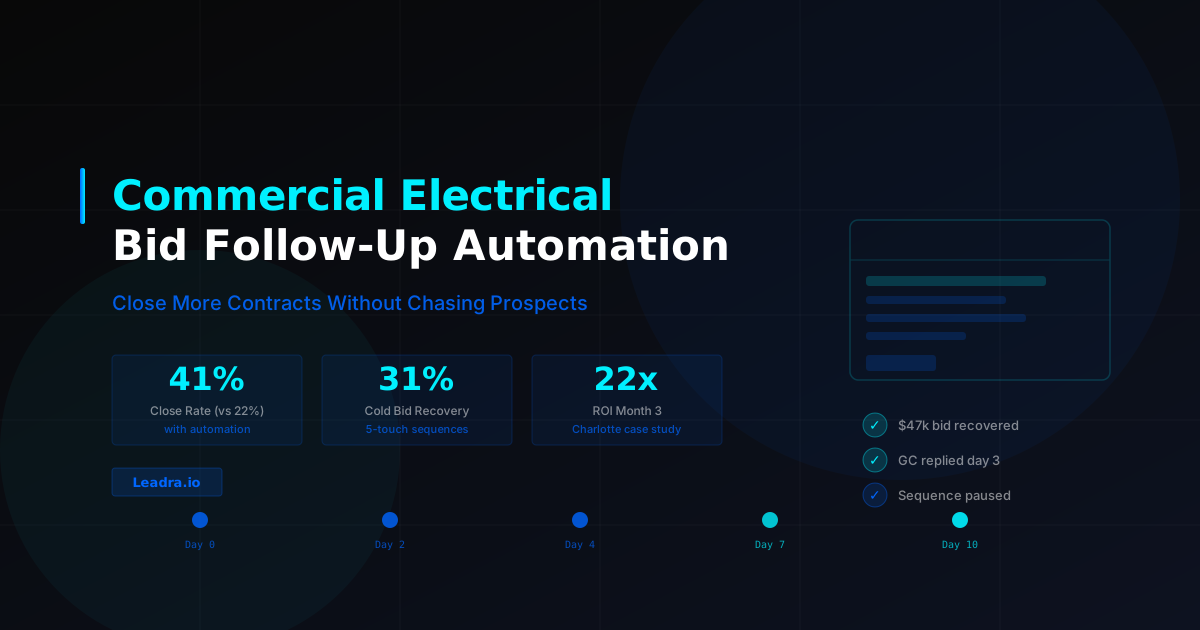
A commercial electrical contractor in east Charlotte submitted a $47,000 bid for a tenant improvement project — new panel, branch circuits for a 12,000-square-foot office build-out, under-slab conduit. The GC asked for the proposal by Wednesday. It was submitted Tuesday afternoon. Thursday passed. Friday passed. The following week passed. No call, no email. The contractor assumed he lost on price and moved on.
Six weeks later he ran into the GC at a supplier. The GC apologized. He'd loved the bid but a new project had blown up the same week, the proposal slipped to the bottom of the pile, and by the time he came back up for air he'd assumed the contractor had moved on too. He gave the job to someone else — not because the price was wrong, but because no one followed up.
That $47,000 contract is not an outlier. It is the default outcome when commercial electrical contractors submit bids without a follow-up system. Industry close rates for commercial electrical bids without follow-up run 18-28%. With a structured 5-touch automated follow-up sequence, that number moves to 38-52% — on the same bids, at the same prices, with the same competition.
This guide covers how commercial electrical bid follow-up automation works, what a complete system looks like, real results from a Charlotte commercial electrical company, and what to demand from any AI system you evaluate.
Why Commercial Electrical Bids Die Without Follow-Up
Commercial electrical bidding has a structural follow-up problem that residential work does not. Three factors make it worse in commercial:
Decision-maker overload. A general contractor managing a mid-size commercial project is juggling 15-40 open subcontractor bids across electrical, plumbing, HVAC, framing, and finishes — simultaneously. Your bid enters an inbox that already contains dozens of other pending items. The GC meant to respond Thursday. Thursday turned into a site visit, two change orders, and a subcontractor dispute. Your bid is still in the inbox, unread, on the following Tuesday.
Decision cycles that outlast attention spans. Commercial electrical decision cycles run 1-4 weeks for most projects — long enough for a prospect to genuinely forget about your proposal without meaning to. A homeowner deciding on a panel upgrade acts in days. A property manager deciding on an electrical buildout for a new tenant has competing priorities for four weeks. Without touchpoints keeping your bid visible, you disappear.
Estimators who have no time to chase. The person who built the bid is typically the owner, project manager, or lead estimator — the same person who is on-site, pricing the next job, and managing the current crew. Following up on 20-30 open bids at various stages is genuinely impossible to do manually without dedicated sales staff. So it does not happen. The bids go cold. Revenue that was already earned in the estimating process gets left on the table.
Research on commercial contractor close rates consistently shows that a majority of lost bids are not price losses. The prospect was willing to hire you. No one called back. Commercial electrical bid follow-up automation exists to solve this specific problem — systematically, without requiring anyone on your team to remember who needs a call.
The 5-Step AI Bid Follow-Up System for Commercial Electricians
A purpose-built commercial bid follow-up system is not a generic CRM drip campaign. It is a structured, project-specific sequence calibrated to how GCs, property managers, and facility directors actually communicate and make decisions. Here is how each step works:
Step 1: Bid Submission Trigger (Day 0)
The moment a bid is submitted — whether from your estimating software (Procore, Buildertrend, AccuBid, Electrical Bid Manager) or a manual upload — the system logs the bid with the prospect name, project address, bid amount, and contact details. A same-day confirmation text goes to the GC or property manager: “Hi [Name], this is [Your Company] confirming we submitted our electrical proposal for [Project Address] — $[Amount] as discussed. Let me know if you need any clarification. Happy to walk through it by phone anytime.” This single step — which most contractors skip — establishes presence and makes the follow-up sequence feel like a natural continuation rather than a cold call.
Step 2: 48-Hour Check-In Email (Day 2)
If no response has come in within 48 hours, the system sends a brief follow-up email — not a marketing email, a project-specific note. Subject: “[Project Address] — electrical proposal questions?” Body: two short sentences asking if they had a chance to review and whether any scope questions came up. The email references the specific project scope, not a generic “following up on my proposal.” This specificity is what separates automated follow-up that works from generic sequences that annoy people. Personalization at scale is what AI enables that a manual process cannot consistently deliver.
Step 3: Text Follow-Up (Day 4)
Commercial decision-makers check texts more reliably than email during busy site weeks. On day 4, the system sends a short text: “Hey [Name], just want to make sure our electrical bid for [Project Address] didn't get buried. Happy to answer any scope questions or adjust if the schedule shifted. — [Your Name], [Company].” Under 35 words, project-specific, non-pushy. This touch point alone recovers a meaningful percentage of bids — GCs who intended to reply but never got to email often respond to a text within hours.
Step 4: AI Voice Outreach (Day 7)
On day 7, the system places a call from your business number. An AI voice agent delivers a 20-second message: the caller ID shows your company name, the message references the project and bid, and it invites a callback or reply text. For prospects who prefer phone communication — common among older GCs, facility managers, and building owners — this touchpoint is often the one that closes. The AI handles timing automatically: calls go out during business hours, not at 7 AM or 8 PM. If the call is answered, the AI routes immediately to your live team or takes a message if no one is available.
Step 5: Final Bid Validity Notice (Day 10-14)
The final touch uses a psychological trigger that works reliably in commercial bidding: a bid expiration notice. “Hi [Name] — our proposal for [Project Address] is valid through [Date + 7 days]. After that, material pricing may change and we'd need to requote. If you're still moving forward, happy to lock this in now.” This is not a bluff — material costs in commercial electrical work (conduit, copper, switchgear, panel equipment) shift quarterly, and a validity window is standard practice. The notice creates genuine urgency and gives the prospect a reason to act or respond with a timeline. Bids recovered at this step tend to close quickly because the prospect was already leaning toward yes.
The sequence pauses automatically at any step the moment the prospect responds — a reply email, an incoming call, a text back. The system does not keep sending after engagement. That is the difference between automation that builds relationships and automation that annoys people into blocking your number.
Manual Bid Follow-Up vs. Automated Sequences: The Numbers
Here is what changes when a commercial electrical contractor moves from ad-hoc follow-up to a structured automated system:
| Metric | Manual / No System | With AI Automation |
|---|---|---|
| Average bid close rate | 18-28% | 38-52% |
| Bids with 3+ follow-up touches | 5-15% | 100% |
| Time to first follow-up contact | 3-10 days (often never) | Same day (Day 0 confirmation) |
| Hours/week spent on follow-up calls | 4-12 hrs (inconsistently) | Automated |
| Cold bid recovery rate | 8-14% | 25-40% |
| Average response time from GC | Unknown (no trigger) | 2.8 days avg (tracked) |
| Bid pipeline visibility | Spreadsheet or memory | Real-time dashboard |
| Revenue per bid submitted | $3,200-$4,800 avg | $6,800-$9,400 avg |
The revenue-per-bid figure is the most important one. At the same bid prices, the same competition, and the same crew — a commercial electrical contractor with automated follow-up generates roughly twice as much revenue per dollar of estimating effort. Estimating is expensive: owner time, fuel, site visits, software, drafting. If only 23% of that effort converts, you are subsidizing the work of competitors who are winning the same jobs through better follow-up.
Case Study: Charlotte Commercial Electrical Company Adds $31,000/Month in 90 Days
A commercial electrical contractor in the University City corridor of Charlotte had a consistent problem with bid conversion. They were well-regarded — solid references, union-trained crew, clean work — but their close rate on commercial bids sat at 22% over the prior 12 months. The owner estimated they were submitting 18-25 bids per month. Of those, 4-5 converted. The rest went cold, almost always without any follow-up.
Their primary clients were GCs handling tenant improvement work across office parks, retail strip centers, and mid-size industrial. Average bid value: $28,000-$65,000. The owner knew follow-up mattered. He had tried assigning it to his project manager. The PM followed up on two or three bids per week — the obvious hot ones — but the rest fell through. There was no system, no trigger, no visibility into which bids were aging.
Leadra.io deployed a 5-touch automated bid follow-up system integrated with their existing estimating workflow. Setup took 8 days: bid submission webhook configuration, sequence build-out with project-specific personalization tokens, AI voice agent script for the day-7 call, and a real-time bid pipeline dashboard showing every open proposal and its follow-up stage.
Results after 90 days:
- →Bid close rate: 22% to 41%
- →Monthly bids converted: 4-5 to 9-11
- →Cold bid recovery rate (no initial response): 31%
- →Average time to GC response: 3.1 days (was untracked)
- →New GC relationships from follow-up conversations: 7
- →Monthly revenue: $186,000 to $217,000
- →Monthly system cost: $1,400
- →ROI in month 3: 22x
The owner noted something beyond the revenue numbers: “The follow-up system made us look more professional to GCs. A couple of them mentioned it specifically — they said we were the only sub that followed up consistently. That's now part of why they come back to us first. It changed the relationship, not just the close rate.”
That pattern — follow-up as a relationship signal — is consistent across commercial trades. GCs who receive consistent, professional follow-up from a sub perceive them as more organized, more reliable, and lower-risk on a project. The automation itself becomes a competitive differentiator.
4 Things to Demand from Any Commercial Electrical Bid Follow-Up System
Generic CRM follow-up tools and residential contractor software are not built for commercial electrical bidding. Here is what separates a system that works from one that frustrates your team and gets your number blocked:
1. Project-Specific Personalization (Not Generic Templates)
A follow-up email that says “just checking in on my proposal” tells a GC reviewing 30 bids nothing. A follow-up that says “checking on our electrical proposal for the Meadowbrook Office Park TI — $42,800 for the panel, branch circuits, and under-slab work” immediately surfaces the right context. The system must pull project-specific data — address, scope, bid amount, contact name — into every touchpoint. This requires integration with your estimating workflow, not a standalone email tool that knows nothing about your pipeline.
2. Multi-Channel Sequences (Email + Text + Voice)
GCs and property managers have different communication preferences. Older principals prefer phone calls. Younger project managers live in text. Facility directors check email twice a day. A system that only sends emails will miss the GC who never opens marketing email but responds to texts within hours. A system that only calls will annoy the PM who prefers async communication. The sequence needs to use all three channels — email, text, and voice — in a calibrated order, with each channel doing what it does best: email for scope references and documentation, text for quick high-visibility touchpoints, voice for the human connection that closes commercial relationships.
3. Engagement-Based Pause Logic
The sequence must stop the moment a prospect engages — opens and replies to an email, responds to a text, answers or returns a call. Sending a “just checking in” email to someone who replied yesterday is the fastest way to look disorganized and damage the relationship you just recovered. Real-time engagement tracking — open detection on emails, reply detection on SMS, call event logging — ensures every sequence pauses at the right moment. This is not a nice-to-have; it is what separates follow-up automation that builds trust from follow-up automation that burns bridges.
4. Bid Pipeline Visibility Dashboard
You cannot manage what you cannot see. A good commercial bid follow-up system includes a live dashboard showing every open bid, its submission date, current follow-up stage, last contact, and prospect engagement status. This gives the owner and estimator a real-time view of the pipeline without digging through email threads or a spreadsheet. When a bid is aging past day 14 with no engagement, the dashboard flags it. When a GC opens an email three times in one day, the dashboard surfaces that signal as a call opportunity. Visibility turns follow-up from a reactive process into a managed sales function.
Bid Follow-Up Automation Pricing for Commercial Electricians: 3-Tier Breakdown
| Tier | Monthly Cost | What's Included |
|---|---|---|
| Follow-Up Core | $600-$1,200/mo | 5-touch bid follow-up sequences (email + text + voice), project-specific personalization tokens, engagement-based pause logic, bid pipeline dashboard, up to 50 active bids in sequence. Best for 3-6 tech commercial shops submitting 15-30 bids/month. |
| Commercial Growth | $1,500-$2,800/mo | Everything in Core + estimating software integration (Procore, Buildertrend, AccuBid), 24/7 AI voice agent for inbound calls, inbound lead qualification, GBP automation, review generation. Best for 6-12 tech companies with mixed residential and commercial work. |
| Enterprise Commercial | $2,800-$4,500/mo | Everything in Growth + multi-location bid tracking, 4 local SEO posts/week targeting commercial electrical keywords, GC relationship nurture sequences (quarterly check-ins for warm accounts), advanced pipeline analytics, quarterly strategy reviews. |
Add $60-$150/month for call minutes and SMS credits at commercial bid volumes. Given average commercial contract values of $20,000-$75,000, recovering a single project through the follow-up system returns 15-60 months of subscription cost. Most commercial electrical contractors with 4-12 techs hit positive ROI in the first 30-45 days.
How Fast Can You Deploy This? A 10-Day Timeline
Commercial electrical bid follow-up automation does not require months of implementation. A properly resourced deployment looks like this:
- →Days 1-2: Audit current bid pipeline, identify estimating software, configure webhook or manual import trigger for new bid submissions
- →Days 3-5: Build 5-touch sequence with your voice, your job categories, and your typical GC/PM communication style — not a generic template
- →Days 6-7: Configure AI voice agent for day-7 call, set up engagement tracking, connect pipeline dashboard
- →Days 8-10: Test with 3-5 live bids under monitoring, refine messaging based on initial response data, full handoff
Your next submitted bid enters the system from day one. You do not need to wait for a complete CRM migration, a new website, or a sales team. The system attaches to your existing workflow and starts recovering bids immediately.
Commercial electrical bid follow-up works best as one layer of a broader lead and revenue recovery system. For commercial contractors who also want to capture every inbound call — GCs calling to discuss a project before it goes to formal bid — our guide on the best AI for electrical contractors covers the full 5-component system including 24/7 voice capture and emergency triage.
If you handle both commercial and residential work, the same AI infrastructure that runs bid follow-up sequences also manages emergency call capture for residential electrical leads — so after-hours homeowner calls get answered while your crew is on a commercial job site.
For contractors evaluating full AI implementation costs before committing, our AI implementation cost breakdown for Charlotte NC businesses covers three tiers with real numbers from trades businesses in the area.
Frequently Asked Questions
What is commercial electrical bid follow-up automation?
Commercial electrical bid follow-up automation is an AI system that sends structured, multi-touch follow-up sequences to general contractors, property managers, and facility directors after you submit a bid — automatically, without manual calls or emails from your office. When a prospect receives your bid but doesn't respond within 48-72 hours, the system triggers a pre-built sequence: email on day 2, text on day 3, call script on day 5, final touch on day 9. Each message references the specific project, job address, and bid amount. The system tracks opens, responses, and callbacks, and pauses the sequence the moment the prospect engages. Most commercial electrical companies recover 25-40% of bids that would otherwise go unanswered.
Why do commercial electrical bids go cold without follow-up?
Commercial electrical bids go cold for three reasons. First, general contractors and property managers are managing 15-40 active projects simultaneously — your bid lands in an inbox alongside a dozen others and gets buried. Second, decision cycles for commercial electrical work run 1-4 weeks, and a prospect who planned to respond “this week” simply forgets as other fires take priority. Third, most electrical contractors send one bid email and never follow up — because the owner or estimator is already on-site, quoting the next job, with no process to chase proposals. The prospect isn't saying no. They're just busy. A single well-timed follow-up recovers a large share of those cold bids, but that follow-up rarely happens without a system to enforce it.
How much does bid follow-up automation cost for commercial electricians?
Bid follow-up automation for commercial electricians costs $600-$1,200 per month for a standalone sequence system, and $1,500-$4,500 per month for a full commercial growth stack that includes bid follow-up, inbound call capture, estimating software integration, review automation, and a local SEO content engine. Given that the average commercial electrical contract runs $8,000-$75,000, recovering a single mid-size project through automated follow-up pays for 6-24 months of the system. Most commercial electrical contractors with 4-12 techs see positive ROI within the first 30-45 days of deployment.
What types of commercial electrical projects benefit most from bid automation?
Commercial electrical bid follow-up automation works best for mid-size projects with 1-4 week decision cycles: tenant improvement and office fit-outs ($15,000-$90,000), retail and restaurant buildouts ($20,000-$120,000), multi-family unit upgrades ($8,000-$40,000 per building), commercial panel upgrades and service entrances ($12,000-$60,000), EV charging station installations for commercial lots ($25,000-$200,000), and industrial machine hookups ($10,000-$80,000). These projects have identifiable decision-makers — GC project manager, property manager, facility director, building owner — and long enough decision cycles to benefit from follow-up. Very large projects ($500k+) typically involve formal bid processes with defined decision timelines where automated follow-up is less appropriate.
Stop Losing Commercial Bids to Silence
Leadra.io builds commercial electrical bid follow-up systems in 8-10 days. Setup includes 5-touch personalized sequences, AI voice follow-up, engagement-based pause logic, estimating software integration, and a live pipeline dashboard. Most commercial electrical contractors recover the first month's cost within 2-3 recovered bids.