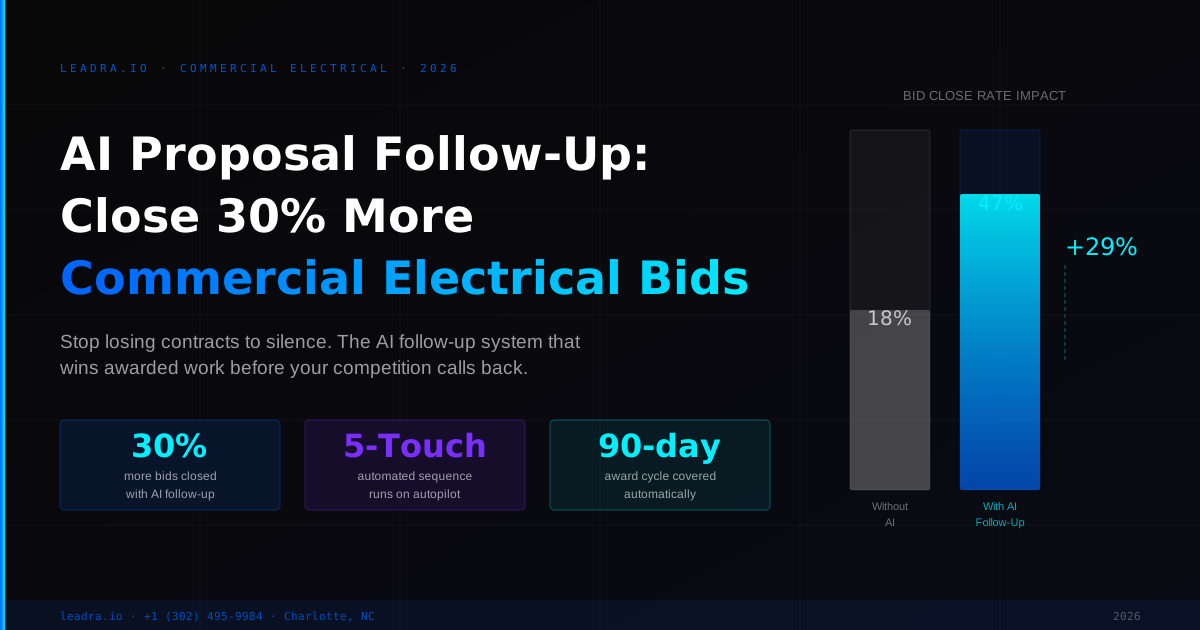
The average commercial electrical contractor submits 30 to 60 proposals per month and closes 15 to 20 percent of them. That means 80 percent of the estimating work — the site visits, the takeoffs, the material pricing — produces nothing. In most cases, those bids didn't lose to a competitor on price. They lost to silence.
The GC got busy. The property manager went dark. The decision got pushed to next month. And the electrical contractor who submitted the bid — already on the next job site — never followed up. AI proposal follow-up systems exist to fix exactly this. They cover the full 30 to 90 day award window automatically, sending the right message at the right time, so your bid stays top-of-mind without you having to manually track dozens of open proposals.
Why Commercial Electrical Close Rates Are So Low
Commercial electrical close rates sit between 15 and 25 percent across the industry, according to data from the National Electrical Contractors Association. For comparison, residential contractors typically close 35 to 50 percent of estimates. The gap comes down to one factor: decision timelines.
On a residential job, the homeowner decides in days. On a commercial tenant improvement, the GC is waiting on the architect, the building owner, and the tenant — and that process takes 2 to 5 weeks. On a retail buildout with a national chain, decisions go through three layers of corporate approval. Municipal electrical work can take 60 to 120 days from bid submission to contract award.
Long decision timelines mean most bids die not at the moment of the initial decision — but during the follow-up window. The contractor who submitted a competitive bid gets displaced by whoever called back two weeks later. Research from Salesforce shows that 80 percent of B2B sales require five or more follow-up touchpoints before a decision is made. Most commercial electrical contractors make zero.
| Project Type | Typical Award Window | Decision-Maker | Ideal Follow-Up Touches |
|---|---|---|---|
| Tenant Improvement (TI) | 1–3 weeks | GC Project Manager | 3 touches over 14 days |
| Retail / Restaurant Buildout | 2–5 weeks | GC + Franchisee / Owner | 4 touches over 28 days |
| Multi-Family / Apartments | 3–8 weeks | Property Manager / Developer | 5 touches over 45 days |
| Industrial / Warehouse | 4–10 weeks | Facility Director / Owner | 5–6 touches over 60 days |
| Municipal / Government | 8–16 weeks | Procurement Dept | 6–8 touches over 90 days |
| EV Charging (Commercial Lot) | 3–6 weeks | Fleet Mgr / Property Owner | 5 touches over 35 days |
What AI Proposal Follow-Up Actually Does
AI commercial electrical bid follow-up automation is a system that triggers automatically when a proposal is submitted and runs a pre-built message sequence until the prospect responds or the award window closes. It does not replace your estimator or your project manager. It handles the administrative follow-up work that nobody has time for.
When your estimator submits a bid, the system logs the project: GC name, job address, proposal amount, project type, and estimated decision date. From that point, it manages the follow-up calendar. No one has to remember to send the check-in email on day 3 or the timeline question on day 10. The system sends it, tracks whether the email was opened, and pauses the sequence the moment the prospect replies.
The critical difference between AI follow-up and a generic drip campaign is personalization. Every message references the specific project. The day-7 email doesn't say "following up on your inquiry." It says "following up on the panel upgrade quote for [job address] — wanted to check if the building owner has confirmed the scope yet." That specificity is what gets responses from busy GCs who receive dozens of generic follow-up emails every week.
Already using follow-up but still losing commercial bids? See the full multi-touch bid recovery sequence for electrical contractors — covering the complete system from GC outreach to panel upgrade close.
The 5-Touch Sequence That Closes Commercial Electrical Bids
The specific structure of your follow-up sequence matters. Too many messages look like spam. Too few let the prospect forget you exist. For most commercial electrical projects with a 3 to 6 week award window, a 5-touch sequence covers the full decision cycle without overwhelming the contact.
Touch 1 — Day 2: Bid Confirmation
Send a brief email confirming the proposal was submitted and offering to answer questions. Include the specific project address and your total bid amount. This establishes a paper trail and shows responsiveness. Keep it to 3 sentences. Do not restate everything in the proposal.
Touch 2 — Day 5: Value Add
Send a message that provides something useful — not a sales pitch. This could be a note about current material lead times on switchgear or conduit, a question about whether the architect has finalized the electrical drawings, or a quick reference to a similar project you completed. The goal is to demonstrate expertise, not push for a decision.
Touch 3 — Day 10–12: Timeline Check
Ask a direct question about the decision timeline. 'Do you have a target award date for the [address] project? We want to make sure we can hold pricing and have the crew available.' This is the most effective message in the sequence — it gives the GC a reason to respond without feeling pressured, and it surfaces the real status of the project.
Touch 4 — Day 20–25: Alternatives Offer
If no response yet, send a brief message offering to adjust scope or phasing. 'If the full project isn't moving forward yet, we can also quote Phase 1 separately so you can begin work on the critical areas.' This reframes the conversation and often surfaces projects that were put on hold rather than canceled.
Touch 5 — Day 35–45: Final Touch
A short, non-pressuring close. 'We'll be updating our project schedule soon — wanted to check one last time whether the [address] job is moving forward. No pressure either way, just want to make sure we're available if you need us.' This message recovers projects that were delayed, not killed.
Handling the 90-Day Award Cycle on Large Projects
Municipal electrical bids, large industrial projects, and multi-building multi-family work don't follow a 3-week decision cycle. These projects can take 60 to 120 days from bid submission to award — and most commercial electrical contractors abandon follow-up after 30 days, assuming the project went to someone else.
On long-cycle projects, AI follow-up systems run an extended sequence with lower frequency. Instead of touching the prospect every 5 to 7 days, the sequence sends one message every 2 to 3 weeks. The messages shift from "are you deciding soon?" to "staying in touch on the [project] — wanted to share what we're seeing on commercial electrical costs in Q3 2026 that may affect the project." This keeps the relationship warm without burning the contact.
The data on this is clear: a bid with active follow-up through the full award window closes at roughly 3 times the rate of a bid that goes quiet after week 2. For projects in the $200K to $2M range, that multiplier translates directly into contract revenue.
Real-World Example: Commercial Electrical Contractor, Charlotte, NC
Case Study
A 12-person commercial electrical contractor in the Charlotte metro area was submitting 45 to 55 bids per month and closing 9 to 11 — a close rate of roughly 19 percent. Their estimator was doing all follow-up manually, which meant following up on maybe 20 percent of open bids. The rest sat in a spreadsheet until the project appeared on a permit list — at which point another contractor already had the contract.
After implementing an AI proposal follow-up system integrated with their bid tracking spreadsheet, the system began covering 100 percent of submitted bids with project-specific sequences calibrated to project type. No additional staff. No change to their estimating process.
In the first 90 days, their close rate moved from 19 to 31 percent on the same bid volume. That represented 5 to 7 additional closed contracts per month, averaging $38,000 per contract — roughly $200,000 in additional monthly revenue from follow-up alone.
Results represent a composite of client outcomes. Individual results vary based on market, bid volume, and project types.
Integration: Connect Follow-Up to the Tools You Already Use
The most common objection commercial electrical contractors have to follow-up automation is that it will require them to learn new software or enter data twice. Neither is true if the system is set up correctly.
AI follow-up systems connect directly to the platforms most commercial electrical companies already use. Procore users can pull project contact information and status automatically — when a bid is submitted in Procore, the follow-up sequence starts without the estimator touching anything else. Foundation Software and Viewpoint Vista both support bid export formats that the system reads natively. AccuBid users can export itemized proposal data that gets pulled into the personalized follow-up messages.
For contractors who don't use formal estimating software, a shared Google Sheet works fine. The estimator fills in five fields after submitting each bid: GC name, contact email, job address, bid amount, and project type. The AI system reads the sheet every hour and triggers the appropriate sequence automatically.
The setup process takes 1 to 3 days. The estimator workflow changes by approximately 2 minutes per bid — the time it takes to log the submission. Everything after that runs without manual input.
Your Action Plan: Start Closing More Commercial Bids This Month
Audit your last 60 days of submitted bids
Pull your bid log and count how many proposals received zero follow-up after submission. For most commercial electrical contractors, that number is 70 to 80 percent of all submitted bids.
Categorize open bids by project type and award window
Group your open bids into the project categories above. This tells you how long each sequence needs to run and what tone to use — a TI bid and a municipal bid need completely different follow-up cadences.
Write project-specific follow-up for your top 10 open bids manually
Before automating, do 10 bids by hand. Send a 3-sentence check-in for each one today. Track how many respond. This gives you baseline data and proves the value of systematic follow-up before you invest in a system.
Connect a follow-up system to your bid tracking process
Whether that's integrating with Procore, building a Google Sheet trigger, or working with a team like Leadra.io to configure a full AI system — close the gap between bid submission and follow-up coverage.
Review sequence performance monthly
Track which project types respond best to which messages, and refine the sequence. A TI bid in a hot construction market responds differently than a municipal project in a slow procurement cycle. Your follow-up content should reflect that.
Commercial Electrical Bid Competition in Charlotte, NC in 2026
Charlotte's commercial construction market is growing faster than most metros in the Southeast. The city issued over 4,200 commercial building permits in 2025, driven by industrial development along the I-85 corridor, multi-family construction in South End and NoDa, and corporate office expansion in Uptown and Ballantyne. That pipeline means strong bid volume for commercial electrical contractors.
It also means more competition on every RFQ. Mecklenburg County commercial electrical work is attracting regional contractors from Atlanta, Raleigh, and Columbia — companies with larger estimating teams who can follow up more aggressively. Local contractors who don't have a systematic follow-up process are losing contracts not on price, but on persistence.
The contractors who are winning the highest volume of commercial electrical contracts in Charlotte right now are not necessarily the lowest bidders. They're the ones who are easiest to get on the phone, fastest to respond to changes, and most consistent about staying in contact through the decision window. AI systems for electrical contractors in Charlotte are making that consistency automatic.
Frequently Asked Questions
How does AI proposal follow-up improve close rates for commercial electrical contractors?
AI proposal follow-up covers the entire award window — 30 to 90 days — with timed, project-specific messages that keep your bid visible to the decision-maker without requiring manual effort. Most contractors who implement AI follow-up see close rates move from 15–20% to 35–50% on the same bid volume. The improvement comes from covering bids that previously received zero follow-up after submission.
What is the typical award timeline for commercial electrical bids and how does AI handle it?
Award timelines range from 1–3 weeks for tenant improvements to 8–16 weeks for municipal projects. AI follow-up systems set sequence length based on project type — a TI bid gets a 3-week sequence while a government bid gets a 90-day sequence. The system pauses automatically when the prospect responds, and resumes if the response doesn't lead to an award.
Will automated follow-up come across as pushy to general contractors?
No — if messages are written correctly. Automated follow-up feels pushy when it's generic. Good AI systems send 4–5 messages over 30–60 days, each one referencing the specific job address and scope, and each providing something useful rather than just asking for a decision. GCs consistently respond better to contractors who stay in professional contact than to those who submit a bid and go silent.
Can AI proposal follow-up integrate with software commercial electricians already use?
Yes. AI follow-up systems integrate with Procore, Foundation Software, Viewpoint Vista, and AccuBid. For contractors not using estimating software, a Google Sheet updated after each bid submission works as the trigger. Integration typically takes 1–3 days to configure, and eliminates the need for manual data entry to start a follow-up sequence.
Final Thoughts
Most commercial electrical contractors are not losing bids. They are abandoning them. The difference between a 20 percent close rate and a 40 percent close rate is rarely price — it is follow-up. The GC awarded the contract to the contractor who called back. The property manager chose the electrical company that sent a project-specific message two weeks after the bid.
AI proposal follow-up systems make that follow-up systematic. They cover 100 percent of submitted bids, run project-appropriate sequences, and stop the moment a prospect engages. The estimator submits the bid and moves to the next one. The system handles everything after that.
Ready to Close More Commercial Electrical Bids?
We build AI follow-up systems for commercial electrical contractors
Leadra.io configures and manages proposal follow-up automation for electrical companies across the US. Most clients are running within 5 days. Results tracked and reported monthly.
Written by the Leadra.io Team. Leadra.io is an AI marketing agency helping commercial electrical contractors, dental practices, and service businesses grow with AI-powered automation and lead generation. Based in Charlotte, NC — serving clients nationwide.