The average RV dealership loses 45-65% of its qualified leads before they ever walk onto the lot. Not because the inventory is wrong. Not because the pricing is off. Because a buyer submitted an inquiry on a Saturday evening, got no response until Monday morning, and had already scheduled a walkthrough somewhere else before the weekend was over.
RV retail has a structural lead capture problem. Buyers research for weeks — watching walkthrough videos, comparing floor plans, checking trade-in values, reading financing FAQs — while dealerships are only staffed during business hours. That gap between when buyers are active and when dealerships can respond is where the majority of high-ticket RV leads disappear. AI closes it. Not by replacing the sales team, but by making sure every lead gets a qualified response within 60 seconds regardless of when they reach out.
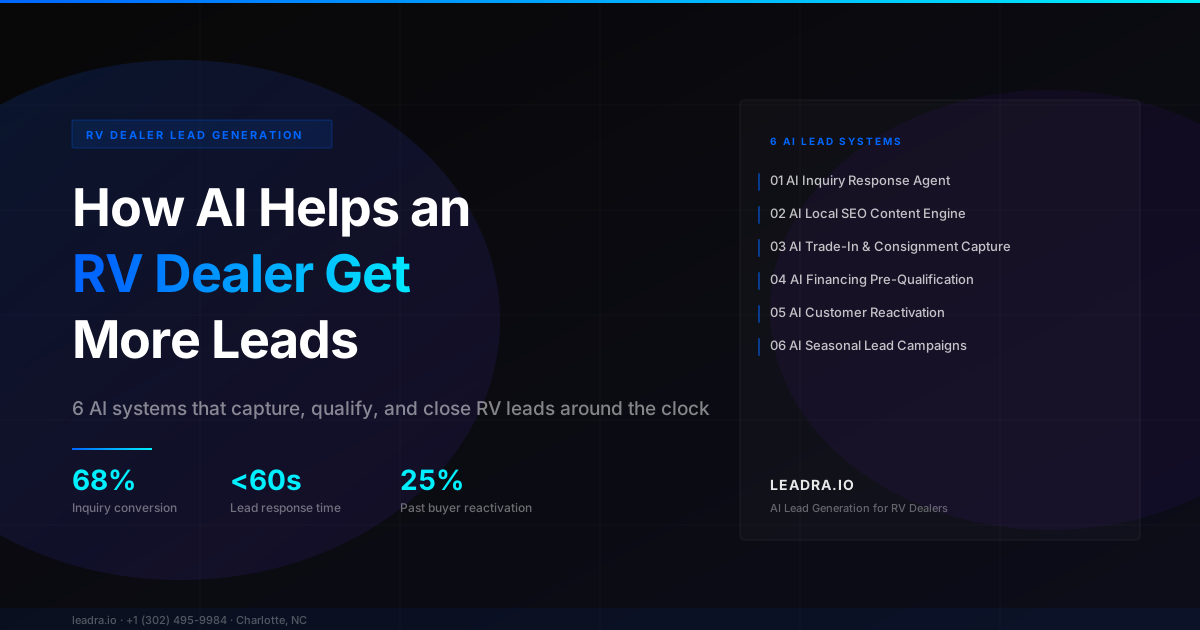
This guide covers six AI systems that help RV dealers get more leads: what each one does, why it works specifically for the RV industry, and what results look like in the first 90 days. These are the systems Leadra.io deploys for dealerships and high-ticket local businesses across Charlotte, NC and nationwide — these are the numbers clients actually see.
If you run an RV dealership and feel like leads are slipping through the cracks — inquiries that go quiet, trade-in leads that vanish, a website getting consistent traffic that never converts to floor traffic — every one of those problems has a specific AI solution running for other RV dealers right now.
Why RV Dealers Lose Leads Before the First Conversation
RV lead loss happens in four consistent places. Understanding each one makes the AI solution straightforward.
The overnight and weekend response gap
RV buyers do their heaviest research on evenings and weekends — the exact windows when dealerships are closed or lightly staffed. A buyer who submits a website inquiry at 7 PM on a Friday and gets a callback at 9 AM Monday has had 38 hours to contact competing dealers. According to industry research, leads contacted within the first five minutes are 21 times more likely to convert than those contacted after 30 minutes. In the RV industry, where a sale ranges from $30,000 for a travel trailer to $400,000 for a Class A diesel pusher, the cost of one missed lead is enormous. Most dealership CRMs show a pattern of leads that view multiple inventory pages, download a brochure, and then go completely dark — the signature of a buyer who found the response time too slow and moved on.
Trade-in and consignment inquiries handled too slowly
An RV owner asking what their current unit is worth is almost always planning an upgrade. Trade-in inquiries are among the highest-intent lead types in RV retail because they signal active purchase planning. But most dealerships treat them as a separate process: the seller fills out a form, waits two to three business days for an appraisal callback, and by that point has already received quotes from a competing dealer and two private buyer platforms. The window to transition a trade-in conversation into a new RV sale is narrow — typically 30-60 minutes from first inquiry. After that, the buyer's attention is split and the conversion rate drops sharply.
Financing uncertainty killing deals before they start
RV financing is a known barrier. A buyer who wants a $90,000 Class C but isn't sure they'll get approved doesn't call the dealership. They stay home. They scroll inventory late at night but never take the next step because the uncertainty of a potential public rejection is higher than their desire to move forward. Dealerships that proactively remove that friction — by offering a fast, non-invasive financing pre-qualification before the showroom visit — convert hesitant browsers into booked appointments at dramatically higher rates.
A past buyer database that no one is actively working
The average RV dealership with four to six years of sales history has 400 to 2,000 past buyers in a CRM — most of whom have never received a single personalized outreach message beyond a generic email newsletter. These buyers already know the dealership. Their current unit is three to five years older. Their usage patterns have shifted. A meaningful percentage of them are actively thinking about an upgrade and haven't been asked yet. That database is one of the most valuable marketing assets an RV dealership owns. It's also almost universally untapped.
None of these are inventory or pricing problems. They're operational gaps — places where the dealership earned the lead but failed to capture it. AI solves each one without adding headcount or increasing ad spend.
6 AI Systems That Help an RV Dealer Get More Leads
Here is a breakdown of each system, what it does specifically for RV dealerships, and what the 90-day result benchmark looks like based on Leadra.io deployments.
AI Inquiry Response Agent
Respond to every RV inquiry in 60 seconds — at 11 PM on a Sunday
RV buyers research for weeks before they reach out. By the time they send that first inquiry, they've already narrowed their choices to two or three units at two or three dealerships. The difference between getting the appointment and losing the deal comes down to who responds first. An AI inquiry response agent eliminates the overnight and weekend gap entirely. It handles the full first-contact conversation instantly: asking about the buyer's intended RV type (Class A, Class B, Class C, travel trailer, fifth wheel), travel frequency, family size, tow vehicle if applicable, and budget range — then books a lot walk-through, virtual tour, or video call on the spot. The agent knows the current inventory and can answer spec questions in real time. RV dealerships using AI response agents convert 40-60% more inquiries into showroom visits, because the biggest structural cause of lost high-ticket leads — the 12-to-36-hour response window — is completely closed.
AI Local SEO Content Engine
Rank on page 1 for 'RV dealer near me' — without paying per click
RV search intent is hyperlocal and high-value. A buyer searching 'Class A motorhome for sale near Charlotte' or 'travel trailer dealer within 50 miles' is ready to buy within weeks. A dealership that doesn't appear on page 1 for those searches is invisible to that buyer — and competing dealers who do appear get the inquiry first. Ranking for RV keywords requires consistent, structured content: model comparison guides, financing FAQ pages, local campground destination posts, RV lifestyle content, and inventory spotlight articles published at a volume most dealerships can't maintain manually. An AI SEO content engine publishes three to five pieces per week: model-specific pages optimized for Google, local travel guides that naturally rank for geographic terms, side-by-side RV type comparisons with internal links to active inventory, and FAQ-rich articles built to appear in Google AI Overviews. Within 60-90 days, dealerships running this system rank for 20-40 local RV search terms — pulling in consistent inbound traffic from buyers who found the lot because they were already searching for exactly what the dealership sells.
AI Trade-In and Consignment Capture
Turn every trade-in inquiry into a qualified buyer — not just a seller
The RV owner asking what their current unit is worth is almost always in the market for an upgrade. Trade-in and consignment inquiries are the highest-converting lead type in the RV industry because they signal clear intent — this person is already planning their next move. Most dealerships handle these manually: the seller fills out a form, waits two to three days for a callback with a valuation, and by that point has contacted two other dealers and a private-buyer platform. An AI trade-in capture system responds within 60 seconds. It collects the RV's make, model, year, mileage, slide count, and condition through a conversational intake, generates an estimated value range based on current market data, and immediately transitions the conversation to upgrade options — surfacing new and pre-owned inventory that matches the seller's stated preferences. For consignment inquiries, the AI captures the listing details, explains the dealership's consignment program, and books a unit inspection appointment the same day. Dealerships using AI trade-in capture typically convert 45-65% of trade-in and consignment inquiries into active sales conversations, because the first response is instant and the path from 'sell my RV' to 'buy my next RV' is handled before the seller has time to shop elsewhere.
AI Financing Pre-Qualification Sequence
Convert hesitant buyers into showroom appointments with fast financing clarity
RV purchases are large financial decisions — ranging from $25,000 for an entry-level travel trailer to $400,000 or more for a Class A diesel pusher. Financing uncertainty is the most common reason a qualified buyer never converts. They want the unit. They've watched the walkthrough videos. But they don't know if they'll get approved, and the idea of showing up to a dealership and being turned down in front of a salesperson is enough friction to make them do nothing. An AI financing pre-qualification sequence removes that barrier before the showroom visit. When a buyer shows interest in a specific unit but doesn't book an appointment, the AI follows up with a short, conversational financing flow: it asks about income, down payment, and credit comfort level, then gives the buyer a realistic sense of their monthly payment, loan term, and approval likelihood — before they ever drive to the lot. Buyers who complete the pre-qualification convert to showroom appointments at 3-5x the rate of unqualified leads. The uncertainty is gone, and the dealership is meeting a buyer who already knows they can buy and is excited about it.
AI Customer Reactivation Sequences
Turn your past buyer database into a monthly upgrade pipeline
An RV buyer who purchased three to five years ago is statistically one of the best leads an RV dealer has. They already trust the dealership. Their current unit has miles on it. Their kids are older or their retirement timeline has changed. They're thinking about a larger Class A or a more fuel-efficient Class B — and they haven't been asked yet. Most dealerships have 300 to 2,000 of these contacts in a CRM, and the only outreach those past buyers receive is a generic promotional newsletter. An AI reactivation system identifies past buyers who haven't returned in 18-36 months and launches a personalized sequence: a message referencing their original purchase, relevant new inventory that matches their unit history, a trade-in estimate for their current RV, and a financing pre-qual offer. The outreach feels personal because the AI is using the buyer's actual purchase data — their specific model, purchase date, and stated travel interests — not a mass email template. Dealerships running reactivation sequences typically bring 15-25% of contacted past buyers into active sales conversations within 60 days. In a business where the average RV sale is $60,000-$80,000, that response rate from a list the dealership already owns makes reactivation one of the highest-ROI marketing activities available.
AI Seasonal Lead Campaigns
Capture spring RV buyers three weeks before every competitor starts advertising
Spring is to the RV industry what tax season is to accountants — the annual surge that makes or breaks annual revenue targets. Most dealerships respond to it reactively. They launch promotions in March when everyone else does. By that point, the serious buyers who were planning their spring purchase in January have already been engaged by whichever dealership reached out first. An AI seasonal lead campaign flips this sequence by launching structured outreach eight to ten weeks before peak spring RV buying season. The campaign includes a winter storage check-in with a trade-in valuation offer, an early-bird inventory preview with first-right-of-refusal on incoming units, an RV show follow-up sequence for anyone who visited the booth but didn't buy, and a spring-delivery incentive tied to limited allocation on popular models. Every contact who opens but doesn't respond triggers a separate, personalized follow-up focused on their specific interests. Dealerships using AI seasonal campaigns consistently book 35-55% of their peak-season inventory before the season officially opens — more pre-sold units, cleaner lot operations when traffic spikes, and a revenue pipeline that is fully funded before competitors have even started advertising.
What the Numbers Look Like Before and After AI
These benchmarks reflect Leadra.io deployments for high-ticket dealerships across the US. The "before" column is a typical RV dealer relying on manual follow-up and a standard CRM. The "after" column reflects 90-day results with a full AI lead generation stack running.
Inquiry-to-appointment rate
Before: 32%
After: 68%
Avg. lead response time
Before: 22 hours
After: < 60 seconds
Trade-in leads converted
Before: 18%
After: 52%
Past buyer reactivation rate
Before: 0%
After: 15-25%
Organic Google leads/month
Before: 10-20
After: 50-100
Marketing hours/week (mgr)
Before: 10-12 hrs
After: < 2 hrs
The inquiry-to-appointment rate is the fastest lever to pull. Most RV dealers convert around 30-35% of inquiries into showroom visits because leads cool down over nights and weekends. Responding within 60 seconds consistently pushes that above 65%. For a dealership receiving 25 qualified inquiries per week at an average deal value of $70,000, moving from 32% to 68% appointment conversion represents roughly $630,000 in additional annual closed revenue — from one operational change that costs a fraction of that.
How the Systems Work Together to Compound RV Lead Flow
Each AI system generates leads independently. The compounding effect of running them together is where RV dealerships see the largest growth jumps. Here's how they connect:
AI SEO content drives organic traffic from high-intent RV searches
AI-generated local content begins ranking for RV dealership search terms within 60-90 days. New visitors arrive from searches they made themselves — 'travel trailer dealer near me', 'Class A motorhome for sale Charlotte NC', 'fifth wheel financing with bad credit'. These buyers are actively searching. The dealership shows up because it published consistent content that matches exactly what they typed.
AI inquiry response and trade-in capture convert traffic into leads
Visitors who land on the site from organic search are immediately engaged by the AI inquiry agent or trade-in capture flow. Instead of browsing inventory and bouncing, they receive an instant, qualified response to their first question. The traffic that AI SEO generates feeds directly into the intake systems — no manual follow-up required, no leads falling through overnight gaps.
AI financing pre-qualification removes the biggest conversion barrier
Buyers who engage with the inquiry agent but don't immediately book a lot walk-through are routed into the financing pre-qual sequence. Removing uncertainty about loan eligibility is the single highest-ROI conversion action in RV sales. Buyers who know their monthly payment and have a realistic approval signal show up to the lot ready to move — not to browse.
AI reactivation and seasonal campaigns work the existing database
While the intake and SEO systems generate new leads, the reactivation and seasonal campaigns work the past buyer database in parallel. Every customer who has bought before is a high-probability upgrade candidate. AI sequences reach them at the right time — before peak spring season, when their current unit is aging, when new floor plans arrive that match their stated travel preferences.
What the First 30 Days Look Like for an RV Dealership
Deploying AI lead generation for an RV dealership doesn't require replacing the existing CRM or retraining the sales team. Leadra.io handles setup in 72 hours and integrates with whatever system the dealership already runs — IDS, Lightspeed, DealerSocket, or a basic spreadsheet CRM.
First 30 Days — What Activates and When
AI inquiry response agent live on the dealer website. Trade-in and consignment capture tool active. Google review automation configured for all closed deals and service completions.
AI financing pre-qualification sequence running for buyers who engaged but didn't book. First past-buyer reactivation sequence launches to contacts who haven't engaged in 18+ months.
First reactivated showroom appointments come in. Google reviews accumulate on the Business Profile. If peak RV season is within 8 weeks, spring seasonal campaign launches.
AI SEO content engine has published 15-20 posts. First keyword rankings appear. Organic RV search traffic begins growing month over month with no additional ad spend.
Most RV dealerships see positive ROI within the first 30 days — typically from a combination of recovered after-hours and weekend inquiries and the first wave of reactivated past buyers. The SEO and review systems take 60-90 days but generate the most durable, cost-efficient lead flow once established. In a business where closing two additional units per month can mean $120,000 to $160,000 in additional revenue, recovering even one-tenth of previously lost leads pays for the entire AI system many times over.
Frequently Asked Questions
How does AI help an RV dealer get more leads?
AI helps an RV dealer get more leads through six systems: instant inquiry response that eliminates the overnight and weekend gap, local SEO content that ranks for searches like 'RV dealer near me' and 'Class A motorhome for sale', trade-in and consignment capture that converts existing RV owners into new buyers, financing pre-qualification that removes uncertainty before the showroom visit, past-buyer reactivation that mines the existing CRM for upgrade-ready customers, and seasonal campaigns that fill the pipeline before spring RV buying season. Each system targets a different lead loss point in the RV dealership sales funnel.
What is the fastest way for an RV dealer to get more leads with AI?
The fastest impact comes from deploying an AI inquiry response agent on the dealership website and Google Business Profile. Most RV dealers see measurable results within 48 hours — every inquiry gets a response in under 60 seconds, 24/7. The agent qualifies the buyer's RV type preference, budget, and travel use case, then books a showroom walk-through. Dealerships receiving 20-40 inquiries per week typically add 8-14 additional appointments per month within 30 days, simply by closing the overnight and weekend response gap.
How long does it take AI to generate leads for an RV dealer?
AI inquiry response starts working within 24-48 hours of going live. Customer reactivation sequences produce showroom appointments within 14-21 days. AI local SEO content takes 60-90 days to rank for RV search terms but generates consistent organic leads for years once established. Seasonal campaigns should launch 4-6 weeks before peak spring RV buying season to maximize impact. Most dealerships deploying a full AI lead generation stack see positive ROI within 30 days from the inquiry response and reactivation components alone.
Can AI generate RV dealer leads without paid advertising?
Yes. AI generates RV dealer leads through organic channels requiring no ongoing ad spend. Local SEO content ranks for high-intent searches like 'RV dealer near me', 'travel trailer for sale [city]', and 'fifth wheel financing'. Review automation improves Google Business Profile rankings and drives more inbound calls. Customer reactivation turns the existing CRM into a monthly pipeline. Leadra.io clients consistently find that AI organic lead generation outperforms paid RV advertising at lower cost within 90 days of deployment.
Related Guides
The Bottom Line
The question "how does AI help an RV dealer get more leads" has a specific answer: it closes the four places where RV dealerships consistently lose leads they have already earned. The Saturday evening inquiry that sits unanswered until Monday. The trade-in lead that gets a callback 48 hours later after the seller has already accepted an offer elsewhere. The past buyer who was ready to upgrade but never received a single personalized message. The spring buyer who was engaged by a competing dealership in February because that dealer had better follow-up systems in place.
AI doesn't create lead volume from nothing. It captures the leads that are already flowing through the dealership's existing channels — more of them, faster, at a fraction of the cost of increasing ad spend. In a business where one additional closed deal per month can mean $60,000 to $150,000 in additional revenue, that's not a marginal improvement. That's a fundamentally different revenue trajectory.
Ready to Stop Losing RV Leads?
See how many leads your dealership is losing — and how to fix it
Leadra.io deploys AI lead generation systems for RV dealers and high-ticket local businesses across Charlotte, NC and the US. Setup takes 72 hours. Most dealerships see positive ROI within 30 days — often from the first recovered weekend inquiry alone.