No-Heat Emergency Calls Overnight: How AI Voice Agents Triage HVAC Winter Emergencies (2026)
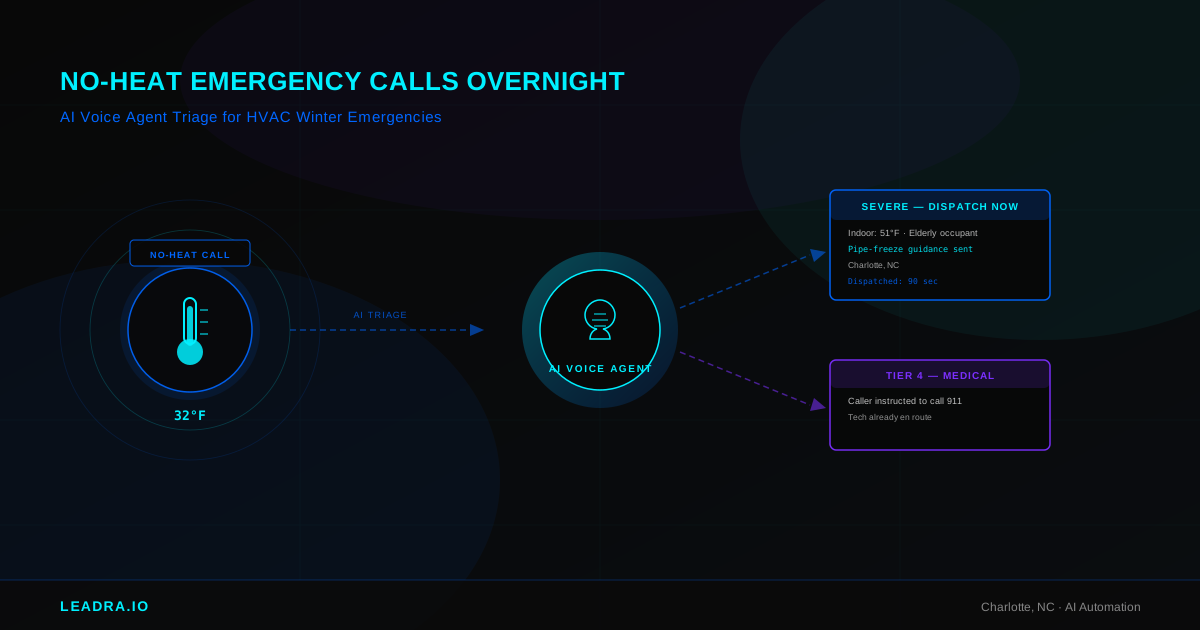
It's 2:15 AM in January and a Charlotte homeowner's furnace just died. The house is dropping toward 50 degrees. There's a 78-year-old grandmother in the guest room and a nursery down the hall. This isn't a comfort complaint — it's a health risk and a pipe-freeze risk stacked into one call.
A no-heat emergencyis not the same problem as a no-AC emergency, and it shouldn't be triaged the same way. A broken AC in July is miserable. A broken furnace in a hard freeze can put a vulnerable occupant in the hospital or burst a pipe behind drywall before sunrise. If your after-hours system — voicemail, a live answering service, or even a general-purpose AI voice agent — treats every overnight call the same, you're missing the specific triage logic that no-heat emergencies require.
This guide breaks down the temperature-based triage thresholds, the 4-tier escalation protocol, and the dispatch logic HVAC companies use to handle no-heat calls safely and fast — and why this is a different build than a standard overnight emergency AI voice agent.
Why No-Heat Calls Carry Higher Liability Than No-AC Calls
Every overnight HVAC emergency deserves a fast response. But no-heat calls carry two risks that don't exist with a broken AC unit:
- →Frozen pipe damage. A house without heat for 6-8 hours in sub-freezing weather can drop cold enough for supply lines inside exterior walls to freeze and split. The average burst-pipe claim runs $5,000-$25,000 in water damage — and if your company took the call and delayed dispatch, that liability question gets asked.
- →Hypothermia risk for vulnerable occupants. Infants, elderly residents, and anyone with a chronic respiratory or cardiac condition can develop hypothermia symptoms in a home that's dropped into the 40s overnight. This isn't a comfort issue — it's a medical one, and it changes what the right response is.
A no-AC call in summer can usually wait until morning without real harm. A no-heat call in a hard freeze, with the wrong occupant in the house, cannot. The triage script needs to know the difference — and route accordingly.
The Temperature-Based Triage Thresholds AI Voice Agents Use
A no-heat triage script asks two questions a no-AC script doesn't: current indoor temperature, and who's in the house. Here's how the routing typically breaks down:
Indoor Temp Above 60°F, No Vulnerable Occupants
Routed to next-morning booking. The AI confirms the first available appointment window and sets expectations — no overnight dispatch fee, no waking the on-call tech for a job that can safely wait 6-8 hours.
Indoor Temp 55-60°F, or Outdoor Below 40°F
Flagged as a priority call. On-call tech gets an SMS dispatch alert, but with a longer confirmed response window (60-90 minutes) since the situation is serious but not acute. The AI also offers space-heater safety guidance while the caller waits.
Indoor Temp Below 55°F, or Vulnerable Occupant Present
Immediate emergency dispatch. On-call tech is alerted within 90 seconds with occupant details flagged (infant, elderly, medical condition) so they know to prioritize this job over any lower-severity call already in queue.
Outdoor Below 32°F, Regardless of Indoor Temp
Pipe-freeze protocol triggers automatically. The AI walks the caller through opening cabinet doors under sinks and letting faucets drip on exterior-wall plumbing while dispatch is in transit — a step that can prevent a $15,000 water damage claim in the time it takes a tech to arrive.
The 4-Tier Escalation Protocol
Temperature alone doesn't capture every risk. A well-built no-heat AI voice agent runs a second layer — occupant condition — and escalates independently of the thermostat reading:
- 1.Routine. Home is cool but livable, no vulnerable occupants. Next-morning booking.
- 2.Priority. Home is cold, no immediate health risk. Dispatched within 60-90 minutes.
- 3.Severe. Home is cold and a vulnerable occupant is present, or pipe-freeze risk is active. Dispatched within 90 seconds, tech notified of the specific risk factor.
- 4.Medical. Caller reports hypothermia symptoms, a distressed infant or elderly occupant, or a carbon monoxide alarm sounding. The AI immediately instructs the caller to call 911 or leave the home — in addition to dispatching your technician. This tier exists for the caller's safety first and your liability second.
That fourth tier is the one most generic AI voice agents don't have, because most weren't built with a no-heat use case in mind. It's also the tier that matters most if it's ever needed.
No-Heat vs. No-AC: How Triage Actually Differs
| Factor | No-AC (Summer) | No-Heat (Winter) |
|---|---|---|
| Property Risk | None (discomfort only) | Frozen/burst pipes, $5K-$25K claims |
| Medical Escalation Needed | Rare | Built-in 911 branch for vulnerable occupants |
| Key Triage Question | Outdoor temp, system symptoms | Indoor temp + who's in the house |
| Interim Safety Guidance | Not usually needed | Faucet-drip / cabinet-door pipe protection |
| Peak Demand Season | May-September | November-March, spikes during cold snaps |
Case Study: Charlotte HVAC Company During a January Cold Snap
A Charlotte HVAC company with 4 technicians ran a general-purpose overnight AI voice agent that treated every after-hours call the same way — first-come, first-dispatched. During a three-day cold snap in January 2026, they took 22 no-heat calls in a single overnight window. Their technician worked through the queue in call order, which meant a routine no-heat call from an empty vacation rental got dispatched before a call from a home with a newborn and a 60-degree living room.
They rebuilt their triage script through Leadra.io to add indoor-temperature and occupant-vulnerability questions, plus the pipe-freeze protocol and the 4-tier severity queue. The rebuild took 5 days: 2 days scripting the new questions and thresholds, 2 days of test calls against real winter scenarios, and 1 day of live monitoring.
Results during the next cold snap, three weeks later:
- →19 no-heat calls in one overnight window, correctly prioritized by severity instead of call order
- →3 calls flagged Severe (vulnerable occupant + cold home) dispatched first, all within 90 seconds
- →1 call flagged Medical — caller with an elderly parent showing early hypothermia signs — instructed to call 911 while the tech was already en route
- →Zero reported frozen-pipe claims from customers who received the interim safety guidance
- →Owner reported the technician finished the cold snap "working the right jobs first instead of just the next one on the list"
Configuring Dispatch for Multi-Day Cold Snaps
A single no-heat call is straightforward. A cold snap that generates 15-25 calls in one night against a single on-call technician is a different operational problem. Three adjustments matter most:
- →Severity-ranked queue, not first-come dispatch. The AI should hold a live-ranked list so your tech works the Severe and Medical tier calls first, even if a Routine call came in earlier.
- →Realistic response windows communicated up front. During a cold snap surge, the AI should tell lower-tier callers an honest window ("a technician will call you back within 2-3 hours") rather than a generic promise it can't keep — this reduces repeat calls and frustrated customers dialing competitors.
- →Multi-tech alerting when queue depth crosses a threshold. If more than 4-5 Priority-or-higher calls stack up in one night, the system should alert a second on-call tech or the owner directly, instead of leaving one person to work through a growing backlog in icy road conditions.
What Does a Winter-Specific Triage Build Cost?
If you already run a general overnight AI voice agent, adding no-heat-specific triage logic is usually a script update, not a new system. Most HVAC companies working with Leadra.io pay a one-time build fee of $400-$900 to add the temperature thresholds, occupant-vulnerability questions, pipe-freeze guidance, and the medical escalation branch to an existing deployment.
For companies starting from scratch, a full HVAC AI voice agent with winter triage built in from day one runs $700-$1,400/month — the same range as a standard overnight system, since the added logic is a script difference, not additional infrastructure. Either path, the cost is small relative to a single avoided burst-pipe claim or a missed medical-risk call.
How to Test a No-Heat Triage Script Before the First Cold Snap
A triage script is only as good as the scenarios it's been tested against. Before relying on it during a real cold snap, run the AI through a set of test calls that cover the full severity range:
- →A routine call. Indoor temp in the low 60s, no vulnerable occupants. Confirm it books next-morning with no dispatch fee.
- →A pipe-freeze scenario. Outdoor temp reported below 32°F. Confirm the AI delivers the faucet-drip and cabinet-door guidance before the call ends.
- →A vulnerable-occupant scenario. Caller mentions an infant or elderly parent in the home. Confirm the call gets flagged Severe and the tech alert includes that detail.
- →A medical-symptom scenario. Caller mentions shivering, confusion, or a CO alarm. Confirm the AI instructs the caller to call 911 in addition to dispatching your tech — this is the branch you cannot afford to have fail silently.
Run all four before the first freeze of the season, not after. A script that's never been stress-tested against the medical-escalation branch is a liability gap you won't discover until the night it matters.
No-heat triage is one piece of a full overnight emergency system. For the general framework covering both no-heat and no-AC after-hours calls, see our guide on the HVAC AI voice agent for emergency calls overnight. For the summer counterpart to this cold-snap surge problem, read how AI handles overflow call triage during a heat wave. And for the full call-to-dispatch picture, see the best AI dispatcher for HVAC companies.
Frequently Asked Questions
Why does a no-heat call need different triage than a no-AC call?
No-heat calls carry two risks a no-AC call doesn't: frozen pipes bursting inside the walls (a $5,000-$25,000 water damage claim) and hypothermia risk for infants, elderly occupants, or anyone with a chronic health condition. A no-heat AI triage script asks occupant-vulnerability questions and indoor temperature that a standard no-AC script skips, and routes differently based on the answers.
What temperature triggers an emergency dispatch for a no-heat call?
Most HVAC AI voice agents flag a no-heat call as an immediate emergency dispatch when outdoor temperatures are at or below 35-40°F, or when the caller reports indoor temperature under 55°F. Below 32°F outdoor, pipe-freeze risk adds a second dispatch trigger regardless of indoor temperature, since the risk shifts from comfort to property damage.
Should an AI voice agent ever tell a caller to call 911 instead of dispatching a technician?
Yes. A properly configured no-heat triage script includes a medical-emergency branch. If a caller reports symptoms of hypothermia, an infant or elderly occupant in visible distress, or a carbon monoxide alarm sounding, the AI immediately instructs the caller to call 911 or leave the home, in addition to dispatching your technician. This is a liability safeguard, not just a customer service step.
How do AI voice agents handle multiple no-heat calls during the same cold snap?
During a multi-day cold snap, an AI voice agent scores every incoming no-heat call by severity (indoor temperature, occupant vulnerability, pipe-freeze risk) and queues them in priority order rather than first-call-first-served. Your on-call technician gets the highest-risk job first, with the full queue visible so they can plan a route instead of getting pulled in five directions by simultaneous alerts.
Build a No-Heat Triage Script That Actually Protects Customers
Leadra.io configures winter-specific triage — temperature thresholds, occupant-vulnerability questions, pipe-freeze guidance, and a 911 escalation branch — into your HVAC AI voice agent in 5-7 days. Ready before the next cold snap hits.