A $35,000 patio and outdoor living estimate doesn't close the way a $400 mowing quote does. Nobody signs on the spot. The homeowner walks the design with you, nods at the rendering, says they'll talk it over — and then you're left hoping they remember your company three weeks later when they finally decide.
Most design-build and hardscape companies handle that gap with one follow-up call, maybe two, squeezed in between site visits and installs. Meanwhile the homeowner is sitting on 3-4 competing bids, and the company that stays visible — without being annoying — through the entire decision window is usually the one that wins the job, not necessarily the one with the best design or the lowest price.
This guide covers what AI follow-up actually looks like for high-ticket landscape estimates specifically — not the same 5-touch sequence built for a $400 mowing quote, but a system built around a 30-60 day decision cycle, a second decision-maker, and a financing conversation that most companies handle badly.
Short answer: the best follow-up for design-build estimates resends the design and rendering at the point recall fades, introduces financing with a real seasonal deadline, gives homeowners something easy to forward to a spouse, and flags real buying signals so your estimator's time goes to the leads actually ready to sign.
Why High-Ticket Landscape Estimates Go Cold During a 30-60 Day Decision
A design-build sale isn't a single conversation — it's a decision that stretches over weeks, and most of what happens during that stretch is invisible to you unless you're the one reaching out.
Homeowners are comparing 3-4 bids, not just yours
A patio or outdoor living project this size almost never gets one estimate. Homeowners typically collect several bids before deciding, and the company that goes quiet after the first meeting effectively removes itself from consideration — not because the design was worse, but because it stopped being top of mind.
The decision usually involves a second person
One spouse or partner often sits through the design meeting; the other has to be convinced secondhand, from memory, over dinner. If the homeowner you met with can't easily explain the rendering, the material choices, and the price breakdown to their partner, the project stalls — not because anyone said no, just because nobody said yes yet.
Financing gets mentioned once and then forgotten
Most projects over $20,000 get financed, but financing is rarely the first thing discussed and often the reason a decision drags. If nobody reminds the homeowner that financing exists, what it costs monthly, and that current install slots are limited, the project quietly slides to 'maybe next year.'
Estimators don't have time to chase every open bid evenly
A busy design-build estimator is running site visits, drafting new designs, and managing active installs. Manually following up with every open estimate at the right cadence — not too pushy, not too sparse — competes directly with the work that generates the next batch of estimates in the first place.
None of this means your design or your price is the problem. It means a $28,000 decision needs more sustained, well-timed contact than a same-day service call ever does — and most companies simply don't have the staff hours to deliver that manually across every open bid.
The AI Follow-Up System Built for Design-Build Estimates
This isn't a generic quote-follow-up sequence borrowed from lawn care. It's built around the specific shape of a high-ticket, multi-week decision.
Rendering and design-recall follow-up
A homeowner who saw a 3D rendering of their new patio during the design meeting forgets most of it within a week. AI follow-up resends the rendering, the material selections, and a short recap of what was discussed — timed a few days after the estimate, not immediately, so it lands when the initial excitement has faded and needs a reminder. This alone keeps your bid top of mind while competitors send a flat PDF once and go silent.
Financing and seasonal install-slot reminders
Most $20,000+ outdoor living projects get financed, and most homeowners haven't decided on financing when the estimate goes out. AI follow-up introduces financing options at the right moment — not on day one, which feels pushy, but once initial interest has been confirmed — and layers in a real deadline: install slots for the current season fill up, and waiting past a certain point pushes the project to next year. That urgency is honest, and it moves slow deciders.
Two-decision-maker tracking
High-ticket landscaping projects almost always involve two people signing off, and the person who sat through your design meeting isn't always the one who has the final say. AI follow-up sends a version of the recap built to be forwarded — clear photos, plain-language pricing breakdown, no jargon — so the homeowner you met with can easily loop in a spouse or partner instead of trying to explain a patio design from memory over dinner.
Intent-triggered handoff to a live estimator
The goal isn't to automate the whole sale — high-ticket design-build closes on trust and a real conversation. AI follow-up watches for signals that a lead is ready: a reply asking about timeline, a click on the financing link, a question about materials. The moment that happens, the lead gets flagged and routed straight to your estimator for a personal call, so your team's time goes to the homeowners who are actually close to signing.
Integration Note
The system connects to whatever you already use to send estimates and renderings — Aspire, LMN, Jobber, or a simple CRM with PDF proposals. AI reads which estimates are still open, when each one was sent, and triggers the right message at the right point in the decision window. Nothing changes about how your estimators design or price a job — the follow-up runs alongside it.
Manual Follow-Up vs. AI for High-Ticket Estimates
The gap widens the bigger the project gets — a $28,000 decision has more moving parts than a $400 one, and more of them get dropped without a system tracking them.
| Factor | Manual Follow-Up | AI Follow-Up System |
|---|---|---|
| Follow-up after the estimate is sent | One callback, if the estimator remembers | Scheduled sequence across the full 30-60 day window |
| Rendering / design recap | Sent once, rarely resent | Resent at the point recall typically fades |
| Financing visibility | Mentioned once in the estimate meeting | Introduced at the right moment with a clear deadline |
| Second decision-maker (spouse/partner) | Left to the homeowner to explain | Forward-ready recap built for a second reader |
| Estimator time on cold leads | Spread evenly across all open bids | Reserved for leads showing real buying signals |
| Close rate on high-ticket bids (2026 baseline) | 18-24% | 32-40% |
| Average days to close | 45-70 days, often drifting past install season | 28-42 days |
| Monthly system cost | $0 (offset by lost bids to faster-following competitors) | $400-$900 |
For a design-build company running 20 open estimates a month at a $28,000 average project value, moving the close rate from 20% to 34% is the difference between closing 4 jobs and closing roughly 7 — without adding a single estimator or spending a dollar more on new leads.
Case Study: Charlotte Hardscape Company Stops Losing Bids to Silence
Client Story — Charlotte, NC
A design-build hardscape contractor serving the greater Charlotte area came to Leadra.io in mid-2026 running roughly 18 estimates a month for patios, retaining walls, and outdoor kitchens at a $26,000 average project value. Their process was a single follow-up call about a week after the estimate, made whenever an estimator had a free hour between site visits. Their close rate had been stuck at 19% for over a year, and their owner suspected — correctly — that several lost bids came down to competitors simply staying in touch longer.
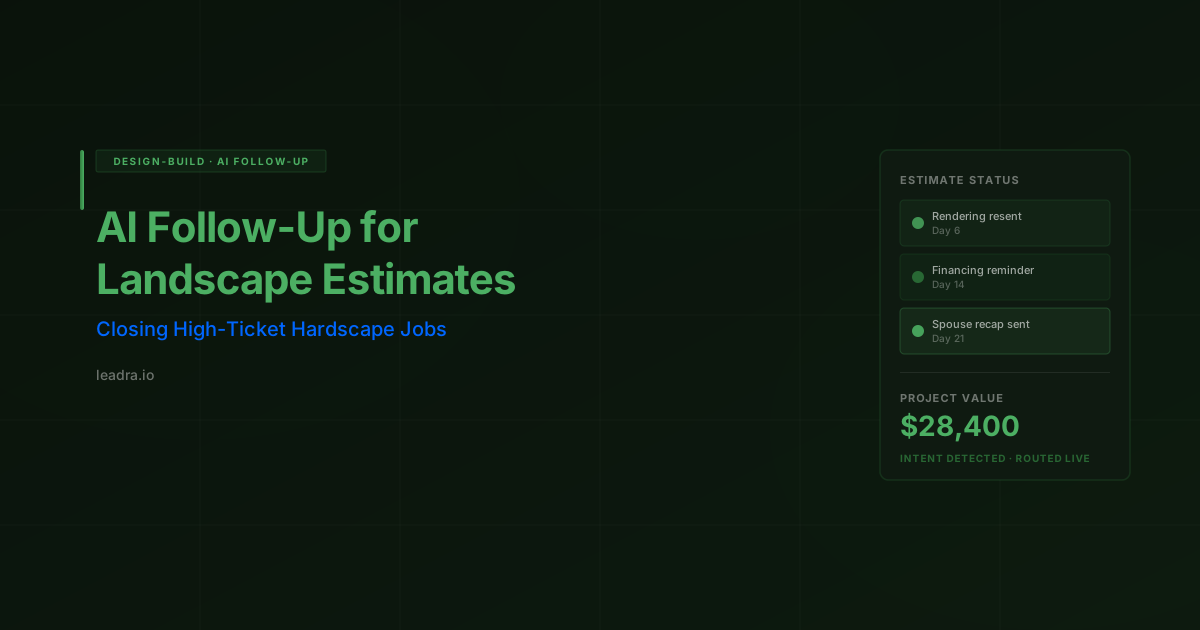
Leadra.io connected the AI follow-up system to their existing estimating software. Every open bid now triggers a scheduled sequence: a rendering resend at day 6, a financing and install-deadline reminder at day 14, a forward-ready recap for a second decision-maker at day 21, and periodic check-ins through day 45. Any reply showing real interest routes immediately to the estimator who quoted the job.
In 90 days, the results:
Close rate
19%
35%
Jobs closed/month
3-4
6-7
Avg. days to close
58
34
Monthly revenue
$91,000
$174,000
System cost: $650/month for full AI estimate follow-up across their monthly bid volume. $174,000 monthly revenue vs $91,000 prior = $83,000 monthly lift, though the owner attributes part of that swing to seasonal timing; the close-rate and days-to-close improvements are the figures they trust most as the direct system effect. ROI on system cost alone: well over 100x even on the conservative read.
The owner's biggest observation wasn't the revenue number — it was that estimates stopped dying silently. Every open bid now has a visible status and a next scheduled touch, instead of living in an estimator's memory until it was too late to matter.
The forward-ready recap also cut a recurring problem: homeowners calling back confused about pricing details their spouse had only heard secondhand. Now both decision-makers see the same clear breakdown from the start.
What AI Estimate Follow-Up Costs for Design-Build Companies (2026 Pricing)
Pricing scales with monthly estimate volume and whether AI voice check-ins are included alongside text and email.
Tier 1 — Text and email follow-up sequence
$400–$600/monthScheduled rendering resends, financing and deadline reminders, forward-ready recaps for a second decision-maker, and intent-based flagging for your estimators. Best for companies running under 20 open estimates a month who want the sequence handled without adding voice outreach.
Tier 2 — Full sequence with AI voice check-ins
$650–$900/monthEverything in Tier 1 plus scheduled AI voice check-ins at key points in the decision window — a friendly call that confirms the homeowner still has the estimate, answers basic questions, and hands off to a live estimator the moment real interest shows. Most common for companies running 20+ estimates a month with project values above $20,000.
To gauge your own ROI: take your current close rate, apply even a 10-percentage-point lift to your monthly estimate volume, and multiply by your average project value. For most design-build companies, that single calculation covers Tier 2 for the rest of the year off of one additional closed job.
See also: AI quote follow-up automation for general landscaping companies and AI lead generation for local service businesses for more on evaluating AI systems across different job sizes.
Frequently Asked Questions
Why do landscape design-build estimates take so long to close?
Design-build and hardscape estimates for patios, retaining walls, and outdoor living projects typically run $18,000-$65,000, which means homeowners rarely decide on the first visit. They collect 3-4 competing bids, discuss the project with a spouse or partner, and often research financing before signing. That decision window usually runs 30-60 days, and the company that stays visible with useful, non-pushy follow-up throughout that window — not just a single callback — is the one that gets the signature.
How does AI follow-up work for high-ticket landscaping estimates?
AI follow-up for design-build estimates runs a scheduled sequence of texts and emails over the full 30-60 day decision window — resending the 3D rendering or design mockup, surfacing financing options before install slots fill up, checking in around key milestones like a spouse conversation, and flagging any reply that shows real buying intent so a sales estimator can jump in personally. It's not a generic drip campaign; the timing and content track the actual sales cycle of a high-ticket outdoor living project.
Will automated follow-up make my design-build estimates feel less personal?
No — done right, it does the opposite. AI follow-up handles the repetitive parts (resending renderings, reminding about seasonal install deadlines, nudging on financing) so your estimator's personal time goes to homeowners who are actually engaging, not chasing everyone equally. Every message references the specific project and design, and any reply that signals real interest routes straight to a live conversation with your team instead of another automated touch.
What does AI estimate follow-up cost for a design-build landscaping company?
AI follow-up systems for design-build and hardscape estimates typically run $400-$900 per month depending on lead volume and whether AI voice check-ins are included. For a company running 15-25 high-ticket estimates a month at a $28,000 average project value, lifting the close rate by even 8-10 percentage points adds one to two closed jobs per month — commission and margin on a single project usually covers the system cost for the rest of the year.
The Bid You Lose Is Rarely the One With the Worse Design
Most design-build companies lose high-ticket bids not because a competitor designed a better patio or beat them on price — but because they stopped showing up during the weeks it actually took the homeowner to decide. That's a follow-up problem, and it's fixable without hiring anyone new.
AI follow-up works for design-build estimates because it matches the actual shape of the sale: a slow, multi-week decision with a second decision-maker and a financing question, not a same-day service call. It keeps every open bid visible and moving instead of quietly going cold in an estimator's inbox.
Leadra.io builds AI follow-up automation for landscape design-build, hardscape, and outdoor living contractors. We connect to whatever estimating software you already use, deploy in days, and back the engagement with a results guarantee — you don't pay if the system doesn't produce a measurable lift in your close rate.
Free Bid Pipeline Review
See How Many Open Estimates Are Going Cold Right Now
30-minute audit. We'll walk your current bid pipeline, estimate the revenue sitting in stalled estimates, and show you the ROI before you commit to anything.
Leadra.io
AI marketing agency — Charlotte, NC · Published August 29, 2026