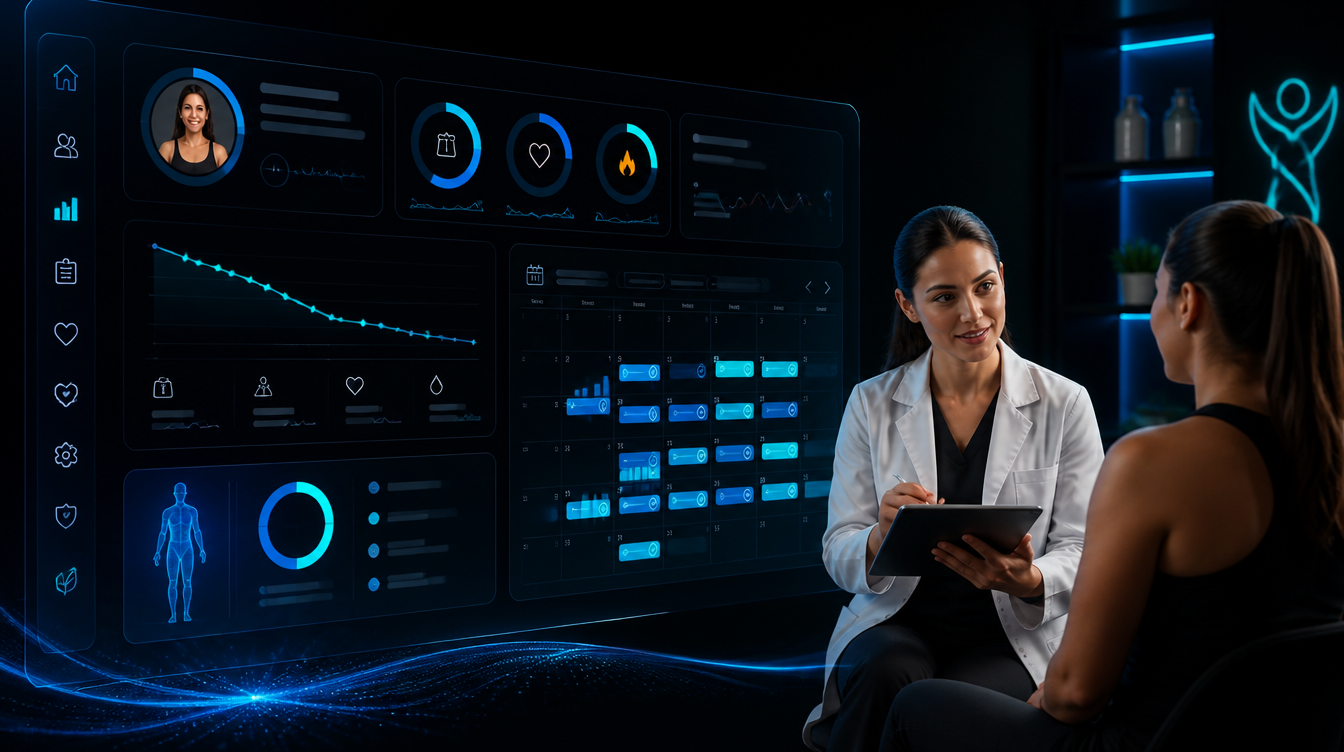
Demand for medical weight loss has never been higher. GLP-1 medications like semaglutide and tirzepatide created a wave of patients actively searching for clinics that can prescribe and supervise their treatment. The problem is that most weight loss clinics are losing more than half of the new patients who try to reach them — not because of competition, but because of operational gaps that AI fixes in days.
According to a 2025 survey by Healthgrades, the average medical weight loss clinic misses 53% of after-hours inbound calls. Of the web inquiries that come in outside business hours, fewer than 15% receive a same-day response. First consultation no-show rates average 32% industry-wide. And inactive patient databases — full of people who started a program and went quiet — sit untouched while clinics spend $300-$500 per new patient on digital ads.
The math is straightforward. A clinic averaging 30 new consultations per month, with a 35% no-show rate and 50% missed-call rate, is losing 10-15 booked consultations and another 15-20 inquiries before a human ever picks up the phone. That's $7,000-$18,000 per month in recoverable revenue — without spending another dollar on advertising.
Weight loss clinic AI patient acquisition systems fix all four failure points simultaneously. This guide covers exactly how the system works, what a Charlotte clinic produced in 90 days, and what implementation looks like from day one.
The 4 Places Weight Loss Clinics Lose New Patients Before the First Appointment
Weight loss is a high-emotion, high-intent decision. When someone calls or fills out a form at a weight loss clinic, they are usually at a peak motivation moment — a doctor visit, a social trigger, or a health scare that finally pushed them to act. Losing that contact means losing a patient who may not try again for months or years.
After-hours and weekend call misses
Weight loss motivation doesn't follow business hours. People decide to take action in the evening after dinner, on Sunday after stepping on a scale, or during a lunch break scrolling before-and-after results. A 2025 analysis of inbound call patterns at medical weight loss clinics showed 47% of new patient calls arrive outside standard office hours. When those calls go to voicemail, 70% of callers hang up without leaving a message — and most call a competitor or start a telehealth intake instead.
Slow web inquiry follow-up
A prospective patient fills out your online form at 8 PM. Your front desk calls back at 9:30 AM — 13 hours later. By then, the person has either booked with a telehealth provider that responded instantly, started a competitor's onboarding flow, or decided to try losing weight on their own first. MIT research found that contacting a lead within 5 minutes makes you 21x more likely to close them versus 30 minutes. At 13 hours, you have less than a 10% chance of even reaching them.
High first-consultation no-show rates
First consultations at weight loss clinics carry a 30-40% no-show rate — the highest of almost any outpatient specialty. The booking decision happens at peak motivation. The appointment arrives 3-10 days later when life has resumed its normal rhythm and the urgency has faded. Without a structured reminder sequence that re-anchors the patient to their original motivation and specific goal, 1 in 3 first appointments is an empty room that cost $0 to fill but $250-$500 to acquire.
Zero inactive patient follow-up
The average weight loss clinic has 300-900 former patients in their system who started a program, made real progress, and then stopped responding. These aren't failed patients — they're warm leads who already trust your clinic, already know the process works, and in many cases are dealing with the exact same patterns that caused them to pause: cost pressure, a life disruption, a medication concern. They are 8-10x cheaper to reactivate than a new patient to acquire, and almost no clinics contact them systematically.
None of these losses require more advertising to fix. They require systems that operate continuously — capturing every inquiry, following up within seconds, preventing no-shows with the right message at the right time, and re-engaging the people who already said yes.
The 5-Component AI Patient Acquisition System for Weight Loss Clinics
Here is the full system Leadra.io deploys for medical weight loss and metabolic health clinics. Each component targets a different failure point in the consultation funnel — most clinics see measurable improvement in the first 30 days of each module going live.
24/7 AI voice agent for consultation inquiries
Weight loss is an emotionally driven decision. When someone calls your clinic — usually after seeing a before-and-after post, hearing about a friend's results, or finally hitting a breaking point — they are ready to act right now. If that call goes to voicemail, 70% of callers will not leave a message. They will call the next clinic on their list or start a telehealth intake form instead. A 24/7 AI voice agent answers every call your front desk misses, gathers the caller's goals, timeline, and insurance information, and books them directly into your consultation calendar using your real-time availability. No missed opportunity. No next-morning callback that arrives 12 hours after the motivation peaked.
60-second web-to-SMS follow-up
The average weight loss clinic takes 4-6 hours to follow up on a web form submission. By then, the person has either filled out a telehealth intake form, booked with a competitor, or lost momentum and decided to try it on their own first. Research from MIT found that responding to a web lead within 5 minutes makes you 21x more likely to qualify that lead than calling back in 30 minutes. At 4-6 hours, your contact rate drops below 10%. An AI web-to-SMS system monitors your contact forms, landing page submissions, and Google Business Profile messages in real time — and fires a personalized text within 60 seconds acknowledging their inquiry, asking a single qualifying question, and offering to book directly from the thread.
Consultation no-show prevention sequence
The average no-show rate for a first weight loss consultation is 30-40%. The patient booked on a high-motivation day. By the time the appointment arrives, doubt, procrastination, or a busy week has made canceling the easier option. An AI no-show prevention system sends three personalized messages: a confirmation SMS at 48 hours that references their stated goal, a motivational reminder at 24 hours that previews what the consultation covers, and a same-day reminder at 2 hours with directions and a brief agenda. Practices running this sequence see first-consultation no-show rates drop from 35% to 10-14% — recovering the revenue from 6-8 previously lost consultations per month at no additional acquisition cost.
GLP-1 and program patient reactivation
Most weight loss clinics have 200-800 former patients in their EMR who started a program, made real progress, and then stopped — due to cost, a life disruption, a medication side effect, or simple inertia. These people already trust your clinic. They already know the results are possible. A targeted AI reactivation sequence reaches them at 90 days, 6 months, and 12 months after going inactive, with messaging that references their specific program and the goal they started with. For GLP-1 patients who paused due to cost, the sequence offers program modifications that fit their current budget. Typical reactivation rates for weight loss clinics are 20-30% over 90 days — at a reactivation cost of $25-$45 per recovered patient versus $250-$500 to acquire a new one.
Local SEO and Google Business Profile automation
When someone searches 'medical weight loss clinic near me' or 'GLP-1 provider Charlotte NC,' the practices in the Google Maps 3-Pack capture 60-70% of the clicks. Getting there requires consistent 5-star reviews, weekly GBP posts targeting weight loss keywords, and fast response to GBP messages. The AI automatically requests reviews via SMS from satisfied patients within 2 hours of a consultation or follow-up visit, responds to incoming GBP reviews within 24 hours, and publishes keyword-targeted weekly posts. Most clinics see a 50-80% increase in GBP call volume within 90 days of running this system.
Integration Note
All five components connect to your EMR and scheduling system — whether you use Practice Fusion, Athenahealth, Jane App, or a custom system. The AI reads your real-time consultation calendar for live booking, pulls patient records to personalize reactivation messages, and writes appointment confirmations back into your system. Setup takes 4-6 days. No technical work required from your team beyond providing access credentials.
Manual vs. AI: What the Numbers Look Like Side by Side
Here is a direct comparison between how most weight loss clinics currently operate and what a fully deployed AI patient acquisition system produces:
| Factor | Without AI | With AI |
|---|---|---|
| After-hours consultation inquiry capture | Voicemail (70% hang up without leaving message) | 100% answered, booked live |
| Web form follow-up time | 4-6 hours average | Under 60 seconds |
| First consultation no-show rate | 30-40% | 10-14% |
| Inactive patient contact | Never or ad hoc | 90d / 6mo / 12mo automated sequences |
| Google review acquisition | Staff asks in-person, inconsistent | Automated SMS post-visit, every patient |
| New consultations per month | 20-30 (average clinic) | 40-65 |
| Staff hours on follow-up tasks | 10-18 hours/week | Under 2 hours (oversight only) |
| GBP message response time | Next business day | Under 30 minutes, 24/7 |
The compounding effect is significant. Fixing the call capture problem alone adds 10-15 new consultations per month for a clinic that was missing 50% of after-hours inquiries. Add no-show prevention and fast web follow-up, and most clinics see 20-30 additional booked consultations per month within 60 days — without increasing their ad spend.
Case Study: Charlotte Weight Loss Clinic Goes from 22 to 58 Consultations Per Month
Client Story — Charlotte, NC
A medical weight loss clinic in Charlotte's SouthPark area came to Leadra.io in February 2026 running a GLP-1 program alongside traditional medically supervised weight loss. The clinic was averaging 22 new consultations per month — solid volume — but owner Dr. Chen knew the practice was losing significant revenue from operational gaps rather than a marketing problem.
A 30-day audit told the full story. Inbound call answer rate outside business hours: 28%. Average web form follow-up time: 5.5 hours. First consultation no-show rate: 34%. Inactive patient database: 487 former patients who had not responded in 90+ days, none of whom had been systematically contacted. The practice was spending $8,200/month on Google Ads and getting 22 booked consultations — an effective cost of $373 per consultation — while losing 15-18 additional consultations per month through operational gaps that had nothing to do with marketing.
Leadra.io deployed all five system components over a 6-day setup window. The AI voice agent went live on day 4. Web-to-SMS follow-up activated on the same day, connecting to the clinic's website contact form, landing pages, and GBP messaging. No-show prevention sequences launched for all upcoming first consultations. A 90-day inactive patient reactivation campaign targeted the 487 dormant records with messages referencing their specific program and original goal. GBP automation began requesting reviews via post-visit SMS within 2 hours of each appointment.
New consultations / month
22
58
No-show rate
34%
11%
Monthly revenue
$94k
$148k
Google reviews
27
89
System cost: $2,800/month · Revenue increase: +$54,000/month · Month-3 ROI: 19.3x. The inactive patient reactivation campaign recovered 94 former patients in 90 days at an average cost of $31 per reactivation versus $373 per new patient acquisition. Google Ads spend remained unchanged — the additional consultations came entirely from operational fixes and reactivations, not increased ad spend.
The fastest impact came from the 60-second web-to-SMS follow-up. Within the first two weeks, the clinic booked 14 consultations from web inquiries that previously would have received a callback hours later. All 14 were people who had submitted forms in the evening or during the lunch hour — the exact window when a next-morning callback has nearly zero conversion rate.
The highest-revenue impact came from the inactive patient reactivation campaign. Of the 487 dormant patients contacted, 94 rebooked a consultation within 90 days. For the GLP-1 segment, many were patients who had paused due to medication cost — the reactivation message offered a program restructure with a lower monthly commitment. Average care plan value per reactivated patient: $1,800-$3,200. Total reactivation revenue: over $180,000 from a database the clinic had never systematically contacted.
What AI Patient Acquisition Costs for Weight Loss Clinics — and What to Expect
Pricing for weight loss clinic AI patient acquisition systems breaks into three tiers based on components included and monthly consultation volume:
Tier 1 — Core capture ($900-$2,000/mo)
24/7 AI voice agent, 60-second web-to-SMS follow-up, first consultation no-show prevention sequence. Best for clinics with 10-25 monthly consultations primarily losing revenue from missed calls and slow response. Typical ROI: 5x-10x within the first 45 days.
Tier 2 — Full acquisition stack ($2,000-$3,500/mo)
Everything in Tier 1, plus inactive patient reactivation campaigns (90d/6mo/12mo), automated review generation via post-visit SMS, and Google Business Profile post automation. Best for established clinics with 200+ inactive patients and a goal of reducing cost per consultation. Typical ROI: 10x-18x by month 3.
Tier 3 — Growth system ($3,500-$4,800/mo)
Everything in Tier 2, plus local SEO content engine publishing 4-8 posts per month targeting weight loss and GLP-1 keywords, competitive GBP analysis, and AI Overview targeting for medical weight loss queries. Best for clinics competing in dense markets or planning multi-location expansion. Typical ROI: 15x-25x by month 4.
How to Get AI Patient Acquisition Running at Your Weight Loss Clinic: 3 Steps
Implementation is faster than most clinic owners expect. Here is the onboarding path Leadra.io runs with new weight loss clinic clients:
Run a consultation revenue leak audit
Before committing to any system, quantify what your clinic is currently losing. Pull 30 days of call data and identify the percentage of unanswered calls. Check your CRM or front desk logs for web inquiry response times. Pull your no-show report for first consultations over the past 90 days. Export your inactive patient list and calculate the revenue value of the average care plan. Most weight loss clinics find $12,000-$35,000 per month in recoverable revenue through this audit — which becomes the baseline ROI projection before any investment is made. Leadra.io provides this audit at no cost as part of onboarding.
Connect your scheduling system and intake channels
Leadra.io integrates with Practice Fusion, Athenahealth, Jane App, and most EMR systems used by medical weight loss clinics. The AI voice agent is configured with your real-time schedule, qualification criteria (BMI requirements, medication candidacy, insurance coverage questions), and blocked time rules. The web-to-SMS system connects to your contact forms, landing pages, and GBP messaging. The inactive patient reactivation campaign is configured with your program history and segmented by treatment type, time since last contact, and stated goal. Full integration typically takes 4-6 business days.
Launch and calibrate in the first 30 days
The first month is a calibration period. You will review call recordings from the AI voice agent to confirm qualification criteria are being applied correctly, check no-show rates against the pre-deployment baseline, and review the first reactivation responses to tune messaging tone. Most weight loss clinics make 2-4 adjustments to qualification questions and reactivation message language in weeks two and three. By day 30, the system operates fully automatically — average clinic teams report spending under 90 minutes per week reviewing AI system outputs by month 2.
See also: AI patient acquisition for chiropractic practices and AI lead generation systems for local service businesses for additional context on how these systems apply across health and service verticals.
Frequently Asked Questions
How does AI patient acquisition work for weight loss clinics?
AI patient acquisition for weight loss clinics operates across four simultaneous systems. A 24/7 AI voice agent answers every call your front desk misses — evenings, weekends, and lunch hours — qualifying the prospective patient and booking them directly into your consultation calendar. A web-to-SMS follow-up system responds to every online inquiry within 60 seconds, before the prospect calls a competitor or a telehealth provider. An automated no-show prevention sequence sends personalized reminders at 48 hours, 24 hours, and 2 hours before every first consultation. A patient reactivation system contacts people who completed an initial program but drifted — typically recovering 20-30% of them within 90 days. All four components run without requiring staff involvement.
What is the average no-show rate for weight loss clinic consultations?
The average no-show rate for initial weight loss consultations is 30-40% — among the highest in outpatient medicine. First consultations carry the most risk because they are often booked impulsively after a social media ad, a friend's referral, or a moment of motivation that fades before the appointment arrives. AI no-show prevention systems that run three personalized SMS reminders — referencing why the patient inquired and what they told the intake form — consistently reduce first-consultation no-show rates to 8-14% in Leadra.io deployments. At an average consultation value of $200-$400, cutting no-shows from 35% to 12% on 30 monthly appointments recovers $1,380-$2,760 in previously lost revenue every month.
How much does AI marketing cost for a medical weight loss clinic?
AI patient acquisition systems for weight loss clinics typically range from $900 to $4,800 per month depending on clinic size and components included. A foundational stack covering 24/7 AI call answering, 60-second web-to-SMS follow-up, and consultation no-show prevention runs $900-$2,000/month and typically pays for itself within the first 30 days for any clinic seeing 15+ new consultations per month. A full growth system adding patient reactivation campaigns, GLP-1 patient lifecycle automation, review generation, and local SEO content runs $3,000-$4,800/month. Most weight loss clinics deploying the full system see month-3 ROI between 10x and 22x.
Does weight loss clinic AI patient acquisition work with GLP-1 and medical weight loss programs?
Yes. AI patient acquisition systems for weight loss clinics are specifically effective for GLP-1 programs (semaglutide, tirzepatide), medically supervised weight loss, metabolic health programs, and combination approaches. The AI voice agent qualifies callers on insurance coverage, BMI requirements, and medication candidacy before booking — filtering out non-qualifiers and ensuring only eligible patients reach the consultation calendar. The patient reactivation system is especially valuable for GLP-1 programs, where patients who paused treatment due to cost or side effects can be reengaged with a personalized outreach sequence targeting common objections. Leadra.io integrates with most EMR systems used by weight loss and metabolic health clinics.
Your Consultation Calendar Has Room. The Patients Are Already Trying to Book It.
Weight loss clinic AI patient acquisition is not about generating more leads. It is about converting the leads your clinic is already generating — the after-hours calls that go to voicemail, the web forms that wait 6 hours for a callback, the first consultations that become no-shows, and the former patients who stopped responding but haven't stopped wanting results.
The GLP-1 market has created more inbound demand for weight loss clinics than any period in the industry's history. The practices that capture it aren't the ones spending the most on ads — they are the ones with systems that answer every call, respond within 60 seconds, prevent every preventable no-show, and systematically re-engage everyone who already said yes.
Leadra.io deploys these systems for medical weight loss and metabolic health clinics with full EMR integration, a 90-day ROI guarantee, and a setup process that takes less than one week. Call +1 (864) 721-8384 or visit the contact page to book a revenue leak audit.
Free Consultation Revenue Audit
Find Out Exactly How Many Consultations Your Clinic Is Losing — and What It's Costing You
30-minute audit. We analyze your call data, web inquiry response times, no-show rate, and inactive patient database — then project the revenue impact of each fix before you commit to anything.
Leadra.io
AI marketing agency — Charlotte, NC · Published June 25, 2026