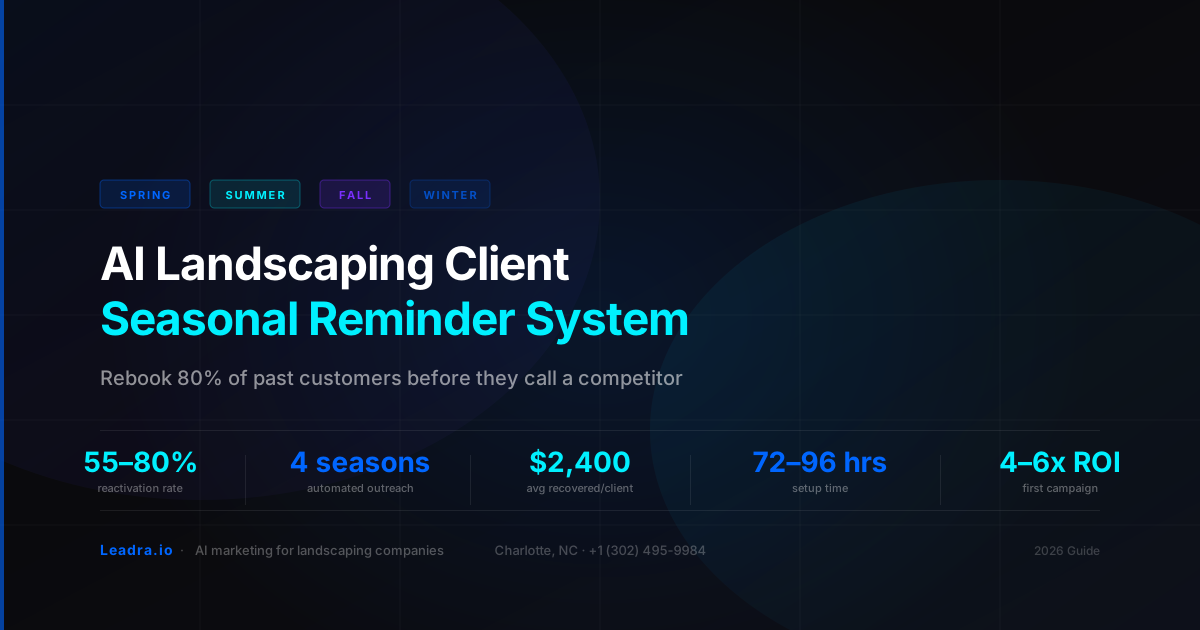
A past client gets their lawn mowed by you all last summer. They were happy — no complaints, no missed visits, good work. Then fall ends, you wrap for the season, and you never hear from them again. By March, they've already booked spring cleanup with a different company. Not because your work was bad. Because the other company sent a text in February and you didn't.
This is the biggest silent revenue leak in the landscaping industry. The average landscaping company retains 48-55% of its clients year-over-year. The other 45-52% don't all cancel because of a bad experience — they drift. Life gets busy, they forget to call back, a yard sign from another company shows up, and the decision gets made by default rather than by preference. The company with a seasonal reminder system captures those clients before the decision is up for grabs.
According to a 2025 Green Industry Pulse survey, 61% of homeowners who switched landscaping companies in the prior year said they would have stayed with their previous provider if the provider had reached out first at the start of the season. That isn't a satisfaction problem. It's a timing problem. An AI seasonal reminder system solves it permanently.
This guide covers how an AI-powered seasonal reminder system works for landscaping companies, what a four-season outreach sequence looks like, and the revenue impact of rebooking lapsed clients before they start shopping alternatives.
Why Landscaping Companies Lose Past Clients (and How AI Reminders Fix It)
Client churn in the landscaping industry is rarely caused by bad service. The National Association of Landscape Professionals estimates that fewer than 20% of clients who switch providers do so because of service quality issues. The rest leave because of price perception, inertia, or simply being approached by a competitor at the right moment. That last category — competitive timing — is something a systematic reminder approach directly addresses.
The seasonal nature of landscaping work creates natural gaps in client communication. From November to February in most U.S. markets, most residential landscaping clients have little or no contact with their provider. That four-month window is when loyalty erodes and competitors recruit. By the time spring arrives and the client is thinking about lawn care again, they're in discovery mode — comparing new options rather than defaulting back to last year's company.
The first company to reach out wins the rebooking
Data from service industry CRM providers shows that 68% of clients rebook with whoever contacts them first at the start of a new season — regardless of whether they were satisfied with last year's provider. The first personalized outreach sets the rebooking anchor. A competitor's text on February 20th is more likely to win the spring contract than your call on March 15th, even if your work was better. Speed and timing beat quality of service when the customer hasn't committed.
Generic outreach converts at a fraction of personalized reminders
A spring blast to your full contact list saying 'Spring is here — book your lawn care today!' converts at 12-20%. A personalized message that references the client's specific address, last year's services, and a booking window for their neighborhood converts at 55-80%. The difference is specificity. Landscaping is a property-specific service. A reminder that acknowledges the client's actual property signals that they're a recognized customer, not a name on a list. AI systems generate that personalization at scale — one message template produces hundreds of unique outreach messages automatically.
Waiting until peak season means competing with three other estimates
Landscaping companies that send reminders in late February and early March secure commitments 4-6 weeks before clients start shopping. Companies that reach out in April — when the season is already open — are competing against two or three estimates the client has already received. The close rate on mid-season outreach to lapsed clients is 30-40% lower than early-season outreach because the prospect is now in comparison mode rather than default-renewal mode. Getting there first isn't optional — it's the entire strategy.
The 4-Season AI Reminder System: What It Sends and When
A complete AI seasonal reminder system runs four primary outreach cycles per year — each timed to the landscaping buying window rather than the calendar season start. Here's what each cycle looks like, using the Charlotte, NC and Southeast U.S. timing as a reference:
Send window: Late February – Early March
Services targeted: Cleanup, mulch refresh, bed edging, lawn care startup
“Hi [Name] — spring cleanup season is booking fast for your area. Last April we did the bed edging and mulch refresh at [Address]. Want to lock in your same slot for this year before the schedule fills?”
Send window: Mid-May
Services targeted: Ongoing lawn care check-in, irrigation startup, weed control
“Hi [Name] — quick check-in on your lawn at [Address]. We're coming up on summer heat season and wanted to see if you'd like to add irrigation monitoring or weed control to your current service.”
Send window: Mid-August – Early September
Services targeted: Aeration, overseeding, leaf removal, fall cleanup
“Hi [Name] — fall aeration and overseeding slots for [Address] are filling for September. This is the best window for overseeding in your lawn type. Want us to put you on the schedule?”
Send window: Early October
Services targeted: Winterization, irrigation blowout, leaf final pass
“Hi [Name] — we're scheduling winter prep services for your area. Irrigation blowout before the first freeze protects your system. We have openings the week of [Date] for [Address] — want to lock that in?”
Each reminder cycle includes a 3-touch sequence: initial outreach (SMS or email), a follow-up 72 hours later for non-responders, and an AI voice call on day 7 for clients who haven't replied to either text message. The goal at each stage is to get a single yes — confirming service continuation — not to sell a new package. The upsell conversation happens after the rebooking is secured.
Timing Note
These send windows shift by 2-4 weeks depending on your market's climate zone. Landscaping companies in Charlotte NC, Raleigh NC, and Atlanta GA run the earliest spring cycles — late February outreach for March-April start dates. Companies in the Northeast and Midwest shift 4-6 weeks later. The AI system calibrates to your specific service area so outreach goes out at the right moment for your clients' buying window — not on a generic national calendar.
What a Complete AI Seasonal Reminder System Includes
Sending a text message is not a seasonal reminder system. The message is one part of a connected workflow that runs from client database to confirmed booking — here's what a complete system built on Leadra.io's platform includes:
Past client database import and segmentation
The system imports your past client list from Jobber, LMN, Service Autopilot, HouseCall Pro, or a manual spreadsheet. It segments by service type (recurring lawn care vs. one-time installs vs. seasonal-only clients), last service date, average annual spend, and geographic zone within your service area. Segmentation drives the reminder logic: a client who had weekly lawn care in 2025 gets a different sequence than a client who booked a one-time fall leaf removal. Personalization starts at the segment level before it gets specific to the individual property.
Personalized multi-channel outreach (SMS + email + voice)
For each seasonal cycle, the AI generates a personalized message for every past client in the active segment — pulling the client's name, property address, last services performed, and scheduling availability in your service area. The primary message goes via SMS (68% open rate within 5 minutes). Email follows if there's no reply in 24 hours. An AI voice call goes out on day 7 for non-responders — it references the client by name, mentions the specific property address, and offers to connect them with the scheduling team. Clients who respond to any channel get routed directly into booking.
Automated booking confirmation and calendar sync
When a lapsed client replies to confirm service, the AI handles the rebooking flow end to end: it confirms the service scope, quotes pricing based on your rate card (with optional price-lock incentive for early booking), and creates the job in your scheduling software. No manual entry. The confirmation message goes back to the client with the scheduled first visit date and your service agreement terms. Clients who requested service and didn't respond to booking confirmation get a 48-hour follow-up — recovering a significant portion of soft yes responses that would otherwise fall through the cracks.
Upsell trigger after rebooking confirmation
Once the base service is confirmed, the AI fires a timed upsell sequence 24 hours after rebooking. For a returning lawn care client, the upsell offer might be mulch refresh and bed edging as a spring startup package. For a returning mowing client, it might be an aeration and overseeding add-on for fall. These are services with 40-55% margins that require no additional lead generation cost — the client is already committed to the base service. Landscaping companies using post-rebooking upsell sequences see 18-25% attach rates on add-on services, adding $150-$400 per rebooked account in the first season.
The Revenue Math: What Seasonal Reminder Automation Is Actually Worth
The numbers on a seasonal reminder system aren't complicated, but they're significant. Most landscaping companies don't think of lapsed clients as recoverable revenue — they mentally write them off. Here's what the math actually looks like:
| Metric | Benchmark | Context |
|---|---|---|
| Industry avg client retention | 48-55% | without systematic reminders |
| Retention with AI reminders | 78-85% | personalized, timed outreach |
| Reactivation rate on lapsed clients | 55-80% | within 30 days of reminder |
| Average annual contract value | $2,100-$3,600 | recurring residential accounts |
| Revenue per reactivated client | $2,400/year | before upsell revenue |
| Time to ROI on reminder system | 2-4 weeks | first seasonal campaign |
Example Calculation — 80-Client Database
The calculation above only includes recovered lapsed clients — it doesn't account for the base retention improvement on clients who would have stayed anyway. Landscaping companies using AI reminders consistently raise their baseline retention rate from 48-55% to 78-85% across their entire client base, not just with lapsed accounts. That compounding effect — fewer clients leaving to begin with — reduces the new lead volume you need to maintain or grow revenue. A company that retains 85% of clients needs to replace 15% through new leads. A company at 48% retention needs to replace 52% — that's 3.5x the marketing cost just to stay flat.
What Happens When a Charlotte Landscaping Company Runs Its First Seasonal Campaign
Client Story — Charlotte, NC
A residential landscaping company operating in the Lake Norman and Cornelius, NC market came to Leadra.io in January 2026. They had 73 clients from the previous season and expected roughly 60% to rebook based on past patterns. The owner estimated the other 29 clients were just "gone" — moved on, found someone else, or out of service area. He wanted to focus on new lead generation to fill the gap.
Instead of paid ads, Leadra.io built and launched a spring seasonal reminder campaign targeting all 73 clients. We imported the client list from Jobber, segmented by service type and last service date, and built personalized outreach messages for each segment referencing their specific address and prior services. Campaign launch went out February 22 — six weeks before the expected spring season open.
Of the 73 clients, 58 responded within 14 days — 79% response rate. Of those, 54 confirmed rebooking. That included 21 clients the owner had expected to lose, several of whom explicitly said they were glad he reached out because they had already started looking at competitors but hadn't booked anything yet. Three of those 21 added a spring mulch refresh package to their recurring service — $840 in first-visit upsell revenue.
Clients in database
73 total
54 rebooked
Expected rebooking
44 (60%)
54 (74%)
Lapsed clients recovered
0 expected
21 recovered
First-season added revenue
—
$50,400 ARR
System cost: $1,100/month · 21 recovered clients at $2,400 avg = $50,400 ARR · Upsell attach (3 packages at $280): $840. Total first-season return vs. system cost: 38x.
The owner's framing shift was the key insight. He thought of lapsed clients as lost revenue and wanted to spend on new lead acquisition to replace them. What the campaign showed is that most of those clients weren't lost — they were dormant. They needed a reason to confirm, and a timely, personalized message was enough. The cost to reactivate a lapsed client is a fraction of the cost to acquire a new one because there's no discovery, no competitive bidding, and no trust-building from scratch.
How to Set Up Your AI Seasonal Reminder System: 3 Steps
Setup is faster than most landscaping company owners expect — no changes to your current crew operations or field management software required.
Export and clean your past client list
Pull your client history from Jobber, LMN, Service Autopilot, or whatever software you use. You need: client name, property address, services performed, last service date, and contact info (phone and email). If you're working from a spreadsheet or a paper records system, the import still works — we've set up seasonal reminder systems from handwritten service logs. Completeness matters more than the source. A list of 50 well-documented clients generates more revenue from a reminder campaign than a list of 200 contacts with missing service history, because personalization requires knowing what they actually had done.
Set reminder timing and message tone for your market
Leadra.io calibrates the send windows to your specific service area and climate zone. For Charlotte NC, that means spring outreach in late February, fall outreach in mid-August, and winter prep in October. You review and approve the message templates before anything goes live — the tone, the specific services mentioned, and any seasonal pricing or package offers you want to include. Most landscaping companies choose a friendly-direct tone: personal enough to feel like a real message from the owner, clear enough to prompt an immediate yes or question. The AI generates all individual messages from your approved templates — you don't write 70 separate messages.
Launch and monitor via weekly activity report
Once the database is loaded and templates approved, the system runs the campaign automatically. You receive a weekly activity report showing how many outreach messages went out, response rates by channel, confirmed rebookings, and any conversations that need human follow-up (edge cases like pricing disputes, service area questions, or special requests). Most landscaping companies set up in 72-96 hours and see first campaign results within two weeks of launch. We recommend running your first campaign four to six weeks before your season opens — that timing window is the single biggest variable in first-campaign conversion rate.
For landscaping companies also looking to improve how they capture and convert new inbound leads — not just reactivate past clients — see AI quote follow-up automation for landscaping companies and how pool service companies use AI seasonal automation for recurring revenue.
Frequently Asked Questions
How does an AI seasonal reminder system work for landscaping companies?
An AI seasonal reminder system for landscaping companies works by pulling your past client list from your CRM or field service software — Jobber, LMN, Service Autopilot, or HouseCall Pro — and automatically sending personalized outreach 4-6 weeks before each season's key service window opens. The AI personalizes each message with the client's name, property address, services they received last year, and a specific rebooking offer or schedule availability window. When a client responds, the AI qualifies the service scope, confirms pricing, and routes the confirmed job directly into your scheduling calendar. The system runs for spring cleanups, summer lawn care, fall aeration and leaf removal, and winter prep services — covering your full annual calendar automatically.
What percentage of lapsed landscaping clients can AI reminders rebook?
Landscaping companies using personalized AI seasonal reminders typically rebook 55-80% of clients who did not proactively renew their service. Generic mass-text reminders convert at 15-25%. AI-personalized reminders that reference the client's specific property, prior services, and seasonal timing convert at 55-80%. The biggest driver is personalization: a message that says 'Hi Sarah — it's time for your annual spring cleanup at 412 Fairview Road, including the bed edging and mulch refresh we did last April' converts at 3-4x the rate of a generic 'Spring is here, book now' blast.
When should landscaping companies send seasonal reminder messages to past clients?
Landscaping companies should send seasonal reminders 4-6 weeks before each service window opens — not when the season starts. For spring cleanups and lawn care startups in the Southeast and Mid-Atlantic, that means late February or early March outreach for April start dates. For fall aeration and overseeding, reach out in mid-August for September scheduling. For leaf removal, contact clients in late September before October leaf drop. For winter prep services, send reminders in early October. The goal is to secure commitments before clients start shopping alternatives. Once a homeowner receives a single estimate from a competitor, your conversion rate drops by 40-60% even if your price is lower — the competitor is already running their follow-up sequence.
How much revenue does a seasonal reminder system add for a typical landscaping company?
A landscaping company with 80 past clients in their database that currently retains 50% year-over-year loses about 40 accounts per year to inactivity. At $2,400 average annual contract value, that's $96,000 in lost recurring revenue annually. A seasonal reminder system that reactivates 65% of those lapsed clients — 26 accounts — at $2,400 each adds $62,400 in annual recurring revenue. At a system cost of $800-$1,500 per month, the math pays out in the first 2-3 reactivated accounts per season. Most landscaping companies with a database of 60+ past clients see full ROI within the first seasonal campaign they run.
The Revenue Is Already There — Your Past Clients Just Haven't Heard from You Yet
Most landscaping companies spend money on new leads every spring when 30-40% of their revenue loss is sitting in a client list they already paid to build. Past clients know your work. They don't need to be sold. They need to be reminded — at the right time, with enough personalization to feel like a real message rather than a marketing blast.
An AI seasonal reminder system turns that dormant list into predictable recurring revenue — automatically, four times a year, without your office manager manually calling 80 people every February. It finds the clients who were still on the fence before choosing a competitor, reaches them first, and moves them from dormant to booked without any human effort on your end until the schedule confirmation arrives.
Leadra.io builds and manages AI seasonal reminder systems for landscaping companies across the Carolinas and the U.S. See how landscaping companies use full growth automation systems to double revenue — or contact us directly to see what your current client database is worth if properly activated.
Free Client List Audit
Find Out What Your Lapsed Client Database Is Worth
30-minute call. We'll review your past client list, estimate the reactivation revenue potential, and show you exactly what a seasonal reminder campaign would look like for your company before you commit to anything.
Leadra.io
AI marketing agency — Charlotte, NC · Published July 1, 2026