A hail storm rolled through Concord, NC on a Tuesday at 8:43 PM last spring. By 9:15 PM, 212 homeowners had filed damage reports with their insurance carriers. By 10 PM, the same 212 people were calling roofing contractors — every number that appeared in Google Maps for "roofing company near me."
One roofing company in that market had an AI voice agent running. The other 34 contractors in the area had voicemail.
That one company booked 71 inspections overnight. The 34 competitors combined booked fewer than 20 — most of those came from callbacks the next morning when two-thirds of the callers had already scheduled with someone else.
This article covers why after-hours storm calls represent the highest-value opportunity in roofing, how an AI voice agent captures that window, and what the math looks like when you stop bleeding leads to voicemail every time a storm rolls through.
Why Storms Hit When Nobody Is Answering
National Weather Service data shows that 58% of hail-producing thunderstorms in the US occur between 4 PM and midnight local time. That window overlaps almost perfectly with the hours when roofing company offices are closed and calls go to voicemail.
The call pattern after a storm is predictable. Homeowners don't call during the storm. They call when it stops — usually 30-90 minutes after. They walk outside, see dented gutters, find shingles in the yard, or spot a wet ceiling. Then they Google roofing companies and start calling down the list.
The first contractor who picks up gets the appointment. The others get voicemail callbacks — but most homeowners won't wait. They keep calling until someone answers. That means the first company to answer captures 40-60% of the total lead pool from a single storm event.
Before AI, the only solutions were: (1) hire an answering service that reads from a script and can't actually book appointments, (2) pay a manager to be on-call during storm season, or (3) hope your voicemail was compelling enough that people called back in the morning. None of those worked well.
What an AI Voice Agent Actually Does at Midnight
An AI voice agent for roofing companies is not a phone tree. It answers every call within 1-2 rings, sounds like a trained office staff member, and conducts a real qualification conversation. Here is exactly what happens when someone calls at midnight after a storm:
Step 1 — Immediate Answer and Acknowledgment
The AI picks up fast and introduces the company. It acknowledges the storm immediately — "I understand there was some significant weather tonight" — which signals to the caller that they've reached someone who knows why they're calling. This reduces the friction of explaining the situation from scratch and keeps the caller on the line.
Step 2 — Damage Qualification
The AI asks a structured set of damage questions. Not random questions — the specific information your crew needs to prioritize the inspection schedule:
- Address and neighborhood (cross-referenced against the storm path)
- Visible exterior damage: dented gutters, missing shingles, damaged siding
- Hail size estimate if the caller noticed
- Any interior damage: water stains, ceiling drips, skylight leaks
- Whether the home is currently occupied or vacant
Interior damage (active leaks) flags the job as urgent and books it in the next available morning slot. Exterior-only damage gets booked in a standard inspection window. This triage happens automatically — no crew dispatch manager required.
Step 3 — Insurance Intake
Once damage is qualified, the AI captures insurance information: carrier name, policy holder name, and whether the homeowner wants help filing the claim. This data goes directly into your CRM before the call ends. When your estimator shows up for the inspection, they already know the carrier and can start the claim conversation immediately instead of asking for it at the door.
Step 4 — Calendar Booking
The AI books the inspection in real time from your live calendar. The homeowner picks a time. The AI confirms it, sends a text confirmation within 60 seconds with the inspector's name and the appointment time, and adds a calendar event with the damage notes attached. No manual data entry the next morning.
Step 5 — Automated Follow-Up
Calls that don't convert to a booked inspection — because the caller hung up, said they need to check with their spouse, or just wanted a callback — trigger an automated SMS follow-up sequence. The first message goes out within 2 hours. A second goes at 8 AM the next morning. A third goes at 24 hours. Most conversions from this sequence happen in the first two messages.
After-Hours Coverage: Voicemail vs. Answering Service vs. AI Voice Agent
| Metric | Voicemail | Answering Service | AI Voice Agent |
|---|---|---|---|
| Answers within 2 rings | Never | Sometimes | Always |
| Qualifies damage on call | No | Rarely | Yes, every call |
| Books inspection in real time | No | No | Yes |
| Captures insurance carrier | No | No | Yes |
| Sends confirmation text | No | No | Yes, <60 sec |
| Follows up missed calls | No | No | Automated SMS |
| Handles 50 simultaneous calls | Yes (voicemail) | No | Yes |
| Cost per storm event | $0 | $300-$800 | $700-$1,500/mo |
| Inspection book rate | 5-15% | 15-25% | 55-75% |
Real Numbers: One Storm, One Night, $347,000 in Booked Pipeline
A roofing contractor based in the NE Charlotte corridor — primarily serving Concord, Harrisburg, and Kannapolis — implemented Leadra.io's AI voice agent in April 2026, two weeks before the first major hail season storm.
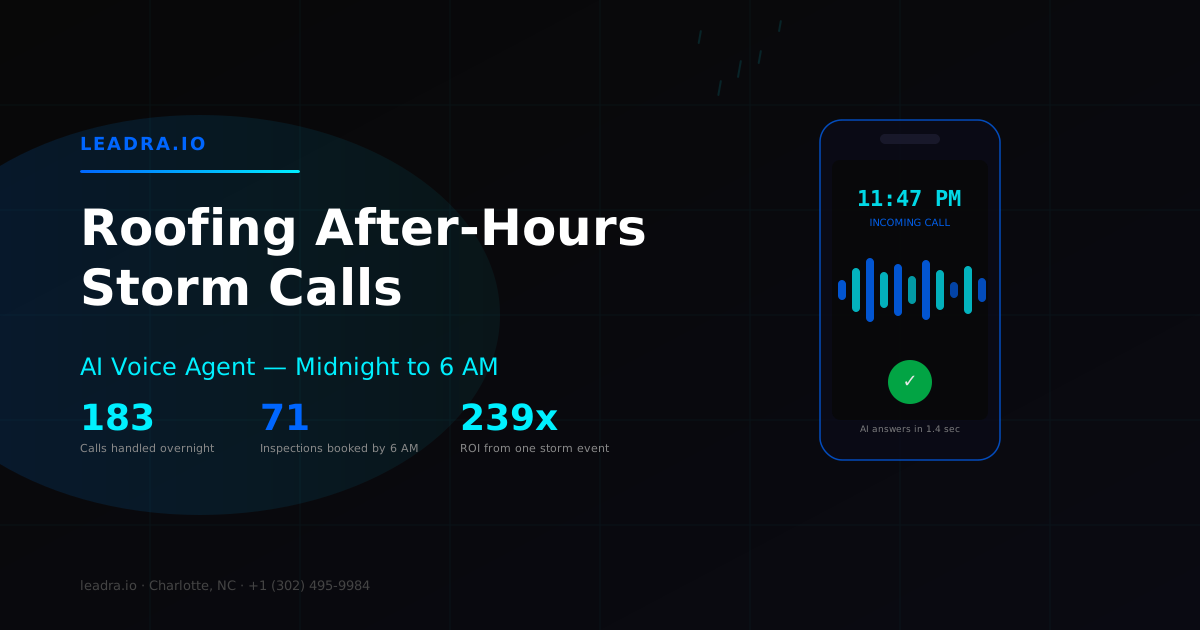
On May 6, 2026, a storm cell dropped 1.5-inch hail across a 12-mile corridor starting at 7:18 PM. The storm ended at 8:51 PM. Between 9:00 PM and 2:30 AM, the company's AI voice agent handled 183 inbound calls.
Overnight Storm Results (May 6-7, 2026)
Prior year (same storm corridor, voicemail-only): 14 inspections booked, 8 via morning callbacks. Pipeline: $89,000.
The AI handled 183 calls in roughly 5.5 hours — an average of 33 calls per hour during peak surge. No hold time. No missed calls. The company's office manager arrived the next morning to a calendar with 71 inspections pre-loaded into ServiceTitan with damage notes and insurance carrier data already attached to each job.
Total cost for the month: $1,200. Revenue from that single storm event: $287,000 (closed jobs). ROI: 239x on the monthly subscription from one storm.
How to Set Up After-Hours Storm Call Capture Before Next Season
Most roofing companies set up an AI voice agent in 5-7 business days. Here is the pre-season setup checklist:
1. Configure Your Storm Qualification Script
The AI needs a roofing-specific call script — not a generic home services script. It should know your service area zip codes, be trained on insurance terminology (ACV vs. RCV policies, depreciation, supplements), and know which damage types trigger urgent vs. standard inspection priority. This takes 2-3 hours of configuration with your sales process.
2. Connect to Your Live Calendar
The AI must connect to whatever scheduling system you use — ServiceTitan, JobNimbus, Acculynx, or Google Calendar. It needs real-time availability to book slots without double-booking. The integration setup typically takes one business day.
3. Set Your Storm-Mode Triggers
Configure the AI to shift into "storm mode" automatically when call volume spikes. Storm mode adjusts the call script to open with storm acknowledgment language, prioritizes damage qualification over all other call types, and temporarily blocks inbound calls for non-storm topics (no maintenance quote calls during a surge).
4. Build Your Follow-Up Sequences
Set up SMS follow-up sequences before storm season starts. You need at minimum: a 2-hour follow-up, an 8 AM next-day follow-up, and a 24-hour re-engagement. Each message should reference the storm specifically ("You called us last night after the hail storm in Concord — we still have inspection slots available").
5. Test With Simulated Call Volume
Before storm season, run a volume test. Call your own AI number 20-30 times in 10 minutes with different damage scenarios. Verify: all calls answered, damage qualification flows correctly, calendar booking works, confirmation texts send. Fix any gaps before the real surge.
What After-Hours AI Call Capture Costs vs. What It Returns
The math is straightforward once you know your average job value and your current after-hours answer rate.
| Setup Type | Monthly Cost | Best For |
|---|---|---|
| Starter AI Voice Agent | $700/mo | Solo operators, 1-2 crews, <50 calls/storm event |
| Growth System | $1,200/mo | 5-10 crew companies, full CRM integration, SMS follow-up included |
| Storm Season Package | $2,500/mo | Multi-crew, high-volume markets, custom insurance intake, priority setup |
For a roofing company with a $12,000 average insurance job and a 40% close rate, a single storm event that generates 10 additional inspections (from the after-hours window) produces $48,000 in revenue. That is a 40-68x return on a single month of the AI subscription.
The payback period for roofing AI systems is the shortest in the home services industry — typically 14-30 days — because one storm event covers months of cost. The question isn't whether it pays for itself. The question is how many storms you want to miss before you set it up.
Frequently Asked Questions
Can an AI voice agent handle roofing calls at 2 AM after a storm?
Yes. An AI voice agent runs 24/7 with no hold time, no voicemail, and no degradation in quality at 2 AM vs. 2 PM. For roofing companies, this matters because the highest-intent storm leads call within 90 minutes of the storm passing — which often means 10 PM to 1 AM. The AI answers in 1-2 rings, qualifies the damage, captures the insurance carrier, and books the inspection on your calendar. When your crew arrives in the morning, the schedule is already full.
How many roofing leads are lost to voicemail during a storm?
Industry data shows that 60-80% of inbound calls to home service businesses after 6 PM go unanswered or hit voicemail. During a storm surge, this is especially costly because storms peak between 4 PM and midnight and homeowners call within 60-90 minutes of visible damage. A roofing company fielding 150 storm calls with no after-hours coverage loses 90-120 potential leads overnight — each worth $8,000 to $25,000 in insurance work.
What does a roofing AI voice agent say to someone who calls at midnight?
It introduces the company, acknowledges the storm, and immediately moves into damage qualification: hail size estimate, visible gutter damage, interior leaks, and whether the homeowner has contacted their insurance carrier. It captures the address and a preferred inspection window, books the appointment in real time, and sends a confirmation text within 60 seconds. The call sounds like a knowledgeable office staff member working the late shift.
How much revenue does after-hours storm call capture add?
For a mid-size roofing company handling one major storm event per season, after-hours AI call capture typically adds 40-60 additional booked inspections per event. At a 35-45% close rate and a $12,000 average insurance job, that adds $168,000 to $324,000 in revenue per storm. Roofing companies using Leadra.io's AI voice system report a 3.2x increase in inspections booked per storm event compared to voicemail-only after-hours coverage.
Set Up After-Hours Storm Call Capture Before Next Season
Leadra.io installs and configures AI voice agents for roofing companies in 5-7 business days. We build your storm qualification script, connect to your calendar, and set up your SMS follow-up sequences. You handle the roofs. We handle the phones — at midnight, on weekends, and during every surge.
Related Resources
- AI Voice Agent for Roofing Companies: The Full Storm Response Playbook — covers the complete 72-hour lead window strategy
- Insurance Claim Lead Qualifier for Roofing Contractors — how to filter high-value jobs from low-margin repair calls
- HVAC After-Hours AI Voice Agent — same overnight call capture system applied to emergency HVAC calls
- AI Implementation Cost for Charlotte NC Service Businesses — full breakdown of what AI systems cost by business type and size