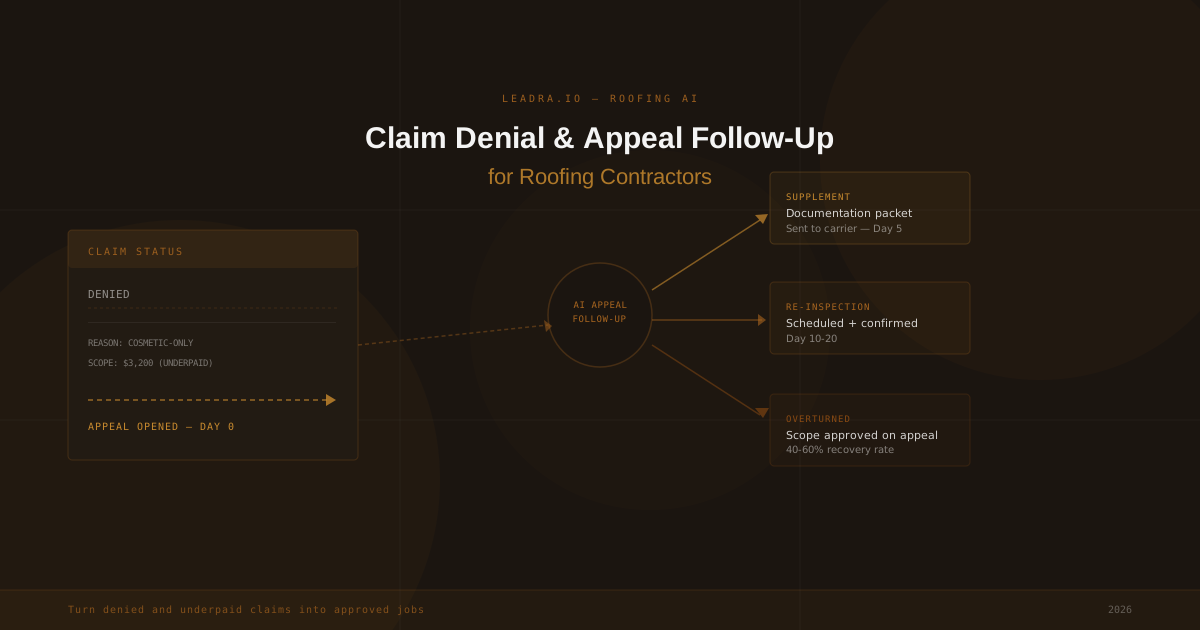
A roofing contractor gets the adjuster's letter back: claim denied, or worse, approved for a $3,200 repair when the actual damage calls for a $16,000 replacement. The homeowner is disappointed. The contractor moves on to the next lead. Six weeks later, that same homeowner's roof is still damaged, the carrier has closed the file, and the job that should have paid $14,000 in replacement revenue is gone — not because the damage wasn't real, but because nobody filed the appeal.
This happens constantly in roofing. Initial denials and lowball approvals are the norm, not the exception — carriers use the first review as a negotiating position, expecting a well-documented supplement to follow. Contractors who don't run a consistent appeal process are leaving approved-on-appeal revenue on the table every single storm season. An AI claim denial and appeal follow-up system exists to close that gap automatically.
This guide covers why denied and underpaid claims get abandoned, what an AI appeal follow-up system actually automates, the five-stage recovery sequence it runs, and what Charlotte-area roofing contractors are seeing in recovered revenue in 2026.
Why Denied and Underpaid Roofing Claims Almost Never Get Appealed
When an adjuster denies a claim or approves a scope far below the actual repair cost, most homeowners assume the decision is final. They don't know that supplements and appeals are a normal, expected part of the insurance claims process — carriers file thousands of them every storm season. Without a contractor actively managing that process, the homeowner has no path forward and the job dies in the file cabinet.
The problem compounds on the contractor side. Appeals require specific, time-sensitive work: pulling the adjuster's full scope sheet, documenting the discrepancy with photos and comparable estimates, requesting a re-inspection, and following up repeatedly because carriers rarely move fast on their own. Most roofing offices don't have a dedicated staff member tracking every open claim's appeal deadline — so denials pile up, deadlines pass, and the file closes permanently. See how AI lead qualification scores claim viability before the inspection even happens.
The Abandoned Appeal Problem
Claims initially denied/underpaid
45-55%
First adjuster review
Overturned with a filed supplement
40-60%
When appeal is properly documented
Denied claims that get appealed
<15%
Without a dedicated follow-up system
What an AI Appeal Follow-Up System Actually Automates
An AI claim denial and appeal follow-up system doesn't file the appeal for you — it makes sure every denied or underpaid claim gets the documentation and follow-up cadence it needs, without relying on someone in the office remembering to chase it:
Denial and underpayment detection.
The system tracks claim status by integrating with your CRM's claim stage field or by monitoring homeowner-reported adjuster outcomes captured on follow-up calls. The moment a claim is marked denied or approved-below-estimate, it automatically opens an appeal workflow instead of letting the file sit in a closed or stalled status.
Denial reason classification.
Not all denials are the same. The AI classifies the stated denial reason — pre-existing damage, wear and tear, cosmetic-only damage, material mismatch, or insufficient documentation — because each reason requires a different supplement strategy. A 'cosmetic damage' denial needs functional damage photo evidence; a 'material mismatch' denial needs manufacturer spec sheets showing the original material is no longer produced.
Supplement documentation compilation.
The AI generates a checklist specific to the denial reason and sends it to your estimator: additional close-up photos, a comparable-estimate breakdown showing the cost delta between the adjuster's scope and the actual repair scope, and any supporting evidence like matching manufacturer documentation. This turns a vague 'we need to appeal this' into a concrete, trackable task list with a deadline attached.
Re-inspection scheduling and adjuster coordination.
Most successful appeals require a second adjuster visit or a desk review with new evidence. The AI handles the scheduling logistics — proposing times to the carrier's re-inspection line or the assigned adjuster, confirming with the homeowner, and sending reminder texts so the second inspection doesn't get missed the way the appeal itself would have been missed without a system.
Homeowner communication throughout the appeal.
Appeals can take 2-6 weeks. Homeowners who hear nothing during that window assume the claim is dead and start calling other contractors or give up entirely. The AI sends scheduled status updates — 'supplement submitted,' 're-inspection scheduled for Thursday,' 'carrier response expected by [date]' — so the homeowner stays engaged and the job stays yours through the entire appeal window.
The Appeal Follow-Up Timeline, Stage by Stage
A denial or underpayment doesn't get resolved in one phone call. It's a multi-week process with specific checkpoints — and the AI's job is to make sure none of them get missed:
Day 0 — Denial received, appeal workflow opens
The claim status changes and the AI immediately opens the appeal file, classifies the denial reason, and sends the estimator the documentation checklist. No lag between the bad news and the recovery process starting.
Day 1-4 — Supplement packet assembled
The estimator uploads additional photos and comparable estimate data. The AI compiles it into a supplement submission packet formatted the way the carrier expects, and flags any missing documentation before submission rather than after a second rejection.
Day 5 — Supplement submitted to carrier
The packet is submitted through the carrier's supplement portal or emailed to the adjuster with a formal re-review request. The homeowner gets a status update confirming the appeal is officially in motion.
Day 10-20 — Re-inspection scheduled and completed
Most carriers require a second physical inspection before overturning a denial. The AI proposes and confirms scheduling, sends the homeowner and contractor reminders, and logs the re-inspection outcome the moment it's reported.
Day 20-35 — Carrier decision and next-step routing
If the appeal is approved, the claim routes straight into your standard closing follow-up sequence. If it's denied again, the AI flags it for a second-tier appeal or public adjuster referral rather than letting the file quietly close a second time.
Manual Appeal Handling vs. AI Denial Follow-Up
Most roofing offices treat a denial as the end of the conversation rather than the start of a second process. Here's what that costs compared to running appeals systematically:
| Metric | Manual / No System | AI Appeal Follow-Up |
|---|---|---|
| Denied claims actually appealed | Under 15% — most abandoned | 90%+ — every denial opens a workflow |
| Time from denial to supplement submission | 2-4 weeks, if it happens at all | 5 days on average |
| Supplement documentation quality | Inconsistent — depends who handles it | Checklist-driven per denial reason |
| Homeowner engagement during appeal | Silent — homeowner assumes it's dead | Scheduled status updates every stage |
| Re-inspection scheduling | Manual calls, often missed windows | Automated proposal + confirmation |
| Second-denial handling | File closes permanently | Flagged for second-tier escalation |
The gap between "under 15% appealed" and "90%+ appealed" is the entire point. Every unappealed denial is real, verified storm damage that a competitor with a better follow-up system will eventually pick up when the homeowner shops around after their roof keeps leaking. See how AI follow-up closes already-approved claims faster.
Case Study: Charlotte Contractor Recovers 11 Denied Claims in One Storm Season
Client Story
A 4-crew roofing company in the Charlotte metro ran a solid inspection pipeline but had no formal process for handling denials. When an adjuster came back with a denial or a partial approval, the estimator would mention it to the homeowner and move on to the next job. Over one storm season, they logged 34 denied or underpaid claims. Before working with Leadra.io, they had appealed exactly 3 of them.
Leadra.io deployed an AI denial and appeal follow-up system integrated with their existing claim qualification pipeline and JobNimbus CRM. Every denial or underpayment automatically opened an appeal workflow with a denial-reason-specific documentation checklist, automated re-inspection scheduling, and a homeowner status update cadence running in the background.
Over the following storm season, the same 4-crew operation logged 29 denied or underpaid claims. The AI opened appeal workflows on all 29. Twenty-two supplement packets were submitted with complete documentation, 17 went to re-inspection, and 11 were overturned in whole or in part — recovering an average of $9,400 in additional approved scope per successful appeal.
Denied claims appealed
Appeals overturned
Appeal rate
Recovered revenue
The owner's note: "We used to write off a denial the same day we got it. Now every denied claim gets a real second shot, and the system tracks it so nothing falls through. Eleven of those roofs would still be damaged today if we hadn't put this in place."
What AI Denial and Appeal Follow-Up Costs for Roofing Contractors in 2026
Pricing scales with claim volume and whether the system runs as a standalone appeal layer or as part of a full insurance-claim pipeline alongside qualification and closing follow-up:
- —Automated denial and underpayment detection from CRM claim status
- —Denial-reason classification and documentation checklist
- —Homeowner status updates through the appeal window
- —Re-inspection scheduling and reminders
Best for: Contractors with an existing claim qualification or CRM system who need appeal tracking added on
- —Everything in the Appeal Follow-Up Layer
- —AI-generated supplement documentation packets
- —Comparable estimate comparison formatting
- —Adjuster coordination for re-inspections
- —CRM sync (JobNimbus, AccuLynx, Jobber)
Best for: 3-8 crew operations with 20+ denied or underpaid claims per storm season
- —Lead qualification, closing follow-up, and denial appeal automation combined
- —Second-tier escalation and public adjuster referral flagging
- —Carrier-specific appeal strategy notes
- —Monthly recovered-revenue reporting
Best for: Multi-crew operations running insurance replacement as their primary revenue model
At an average of $9,000-$14,000 per insurance replacement job, recovering a single denied claim through a properly documented appeal covers the system's cost for the entire year. Most contractors recover the first appeal within 30-45 days of going live. See the full AI implementation cost breakdown for service businesses.
How to Set Up AI Appeal Follow-Up Before It's Needed
The system needs to be ready before the first denial letter arrives, since appeal windows are time-sensitive. Here's the setup sequence:
1. Map your common denial reasons.
Pull your last 12 months of denied or underpaid claims and categorize the stated reasons — pre-existing wear, cosmetic-only, material mismatch, insufficient documentation. This becomes the classification logic the AI uses to trigger the right supplement checklist for each new denial.
2. Build your supplement documentation templates.
For each denial reason category, define exactly what evidence overturns it — comparable material cost sheets for mismatch denials, functional damage close-ups for cosmetic-only denials. Your estimator provides this once; the AI reuses it on every matching future denial.
3. Connect claim status tracking to your CRM.
The AI needs to see when a claim status changes to denied or partially approved. This connects through your existing CRM's claim stage field (JobNimbus, AccuLynx, Jobber) or through structured intake on homeowner follow-up calls if you don't track claim status digitally yet.
4. Set your homeowner communication cadence.
Define the update schedule homeowners receive during an open appeal — typically an update at submission, at re-inspection scheduling, and at carrier decision. This keeps the homeowner engaged and prevents them from assuming the job is dead and calling a competitor.
5. Run 5 test denials through the workflow.
Simulate 5 denial scenarios across your most common denial reasons and verify the checklist, re-inspection scheduling, and homeowner updates all trigger correctly before the system handles a real claim.
Full setup takes 7-10 business days. Charlotte roofing contractors should have appeal automation live before spring and fall storm seasons, since claims from those events will start generating denials within 2-4 weeks of the first inspections. Pair appeal automation with AI lead qualification for full claim pipeline coverage.
Frequently Asked Questions
What happens when a roofing insurance claim gets denied or underpaid?
When a carrier denies a claim or approves it at a lower scope than the actual damage, the homeowner can appeal by submitting a supplement — additional documentation and a re-inspection request that challenges the adjuster's original findings. Most homeowners don't know this process exists, and most contractors don't run it consistently, so the majority of denied and underpaid claims are simply abandoned even when the damage is real.
How does AI automate the roofing insurance claim appeal process?
AI automates appeals by detecting a denial or underpayment from claim status tracking, classifying the denial reason, compiling a supplement documentation packet, scheduling a re-inspection with the carrier, and sending scheduled status updates to the homeowner and office throughout the appeal window so nothing gets missed or forgotten.
What percentage of denied roofing insurance claims can be won on appeal?
When a properly documented supplement is filed with photo evidence and comparable estimate data, roughly 40-60% of initially denied or underpaid roofing claims are overturned in whole or in part. Most contractors lose this revenue not because the appeal would fail, but because it was never filed at all.
How much does AI claim denial and appeal automation cost for roofing contractors?
AI claim denial and appeal follow-up automation costs $400-$700/month as an add-on to an existing system, $900-$1,500/month for a full appeal and supplement pipeline, or $1,500-$2,200/month combined with qualification and closing follow-up. At $9,000-$14,000 average revenue per insurance replacement job, one recovered claim covers the cost many times over.
A denial letter isn't the end of a roofing claim — it's the start of a second process that most contractors never run. An AI denial and appeal follow-up system makes sure every underpaid or rejected claim gets a documented, deadline-driven second shot instead of quietly disappearing from the pipeline.
At Leadra.io, we build AI denial and appeal follow-up systems for roofing contractors in Charlotte and across the Carolinas. Setup is 7-10 business days, and it runs on your existing CRM and claim data.
Built for Roofing Contractors
Stop Letting Denied Claims Die in the File Cabinet
We'll set up your AI denial and appeal follow-up system so every underpaid or rejected claim gets a real second shot — documented, scheduled, and tracked until the carrier responds.