Physical therapy clinics have a marketing problem that looks nothing like a typical small business. New patients come from two very different places: physician referrals that arrive by fax or EHR and direct-access patients who find you on Google. Both channels leak volume constantly. Referring offices forget you exist between cases. Patients who could search and book directly never see your clinic in results. And patients who do start treatment often stop before finishing the plan of care, which hurts both outcomes and revenue.
Marketing automation fixes all three leaks without adding front-desk hours. This guide covers a five-component system built specifically for outpatient physical therapy: referral relationships, direct-access acquisition, insurance and scheduling, plan-of-care completion, and post-discharge reactivation. It covers what to automate, how it works with your EHR and billing system, and what results to expect at 30, 60, and 90 days.
This is not a list of software. It is a buildable system your clinic can stand up in two weeks and run with minimal ongoing effort from clinical staff.
Why Physical Therapy Marketing Stays Broken Without Automation
Most clinics do not lack patient demand in their market. They lack a system that captures the demand already there. Three specific structural problems create the gap:
Marketing automation addresses all three at once. Referral nurture runs on autopilot regardless of how busy the front desk is. Organic content captures direct-access demand around the clock. And a structured follow-up sequence catches patients before they fall off the schedule. Here is how to build the full system.
The 5-Component Physical Therapy Marketing Automation System
Build these components in order. Each one feeds volume or retention into the next.
Component 1: AI Local SEO Content Engine
Direct-access patients are the fastest-growing new patient channel for most clinics, and they start with a Google search. An AI content engine publishes 4-8 posts per month targeting condition- and location-specific queries: "physical therapist for lower back pain [city]," "post-ACL surgery rehab near me," "do I need a referral for physical therapy in [state]," "sports injury clinic [city]." Each post runs 1,500-2,000 words, is structured for Google AI Overviews, and includes an FAQ section targeting People Also Ask queries.
90-Day Content Engine Output
24-32
Posts published
45-75 days
First organic leads
30-50%
Inquiry increase
$0
Paid ad spend
Component 2: Referral Source Nurture Automation
Physician referrals are the backbone of most orthopedic PT caseloads, and they run on relationship, not just clinical quality. An automated nurture sequence tracks every referring provider in your EHR and triggers a same-day thank-you note plus an initial evaluation summary to the referring office after each new patient exam. When treatment ends, an automated discharge summary with outcome measures goes back to the referring provider the same day.
A quarterly automated newsletter to your full referral list — highlighting outcome data, new service lines, and provider availability — keeps the clinic top of mind between cases. Clinics that automate this loop consistently report referral volume growing 25-40% from existing relationships alone, without adding a single new referral source.
Component 3: AI Voice Receptionist and Insurance Verification
When content and referrals start driving calls, someone has to answer them, verify insurance, and get the patient scheduled — without pulling a therapist off the treatment floor. An AI voice receptionist answers every call in under two seconds, collects insurance information, explains direct-access eligibility in your state, and books the initial evaluation directly into your scheduling system.
This component typically recovers 30-50% of calls that were previously going to voicemail during treatment hours — calls that would otherwise book with the next clinic on the search results page instead of yours.
Component 4: Plan-of-Care Completion Automation
This is the component unique to physical therapy, and the highest-leverage one. Patients drop out most often between visits 4 and 8 — after acute pain eases but before the plan of care is complete. An automated sequence targets exactly this window:
Standard appointment reminders 48 and 24 hours before each visit, with a one-tap confirm or reschedule link.
A progress recap message from the treating therapist summarizing gains so far and visits remaining in the plan of care — reinforcing why finishing matters, not just showing up.
Same-day automated outreach: "We want to make sure your recovery stays on track — let's get you rescheduled." Recovers a meaningful share of patients who would otherwise silently self-discharge.
A discharge-prep message covering home exercise program access and a maintenance or wellness membership option for patients who want to continue strength work after formal discharge.
Component 5: Discharge Review and Reactivation
Google reviews and repeat visits both come from the same moment: discharge. An automated sequence requests a Google review within a few days of a patient's final visit, when satisfaction with the outcome is highest. A separate reactivation sequence checks in with discharged patients at 90 and 180 days — useful both for re-injury capture and for promoting maintenance or wellness programs.
Clinics running this component consistently build 3-5x more Google reviews per year than clinics relying on staff to ask manually, and recapture a portion of discharged patients who need care again for a new or recurring issue.
Manual Marketing vs. Automated Marketing for Physical Therapy Clinics
| Activity | Manual | Automated |
|---|---|---|
| New patient calls | Miss 30-50% during treatment hours | Answer 100% — AI responds in 2 seconds |
| Direct-access lead generation | 0 posts/month — no time | 4-8 posts/month — AI-generated, SEO-optimized |
| Referring physician follow-up | Ad hoc, easy to forget | Same-day eval summary and discharge report, every case |
| Plan-of-care completion outreach | Front desk chases as time allows | Automated recap and recovery outreach at visits 4-8 |
| Missed visit recovery | Inconsistent — depends on staff bandwidth | Same-day automated outreach, higher rebook rate |
| Discharge review requests | 0-2 reviews/month | 4-12 reviews/month — automated at discharge |
| Reporting | Unknown — no tracking in place | Monthly dashboard: calls, referrals, completion rate, ROI |
Case Study: Charlotte NC Ortho-Focused PT Clinic Raises Completion Rate and Referral Volume in 84 Days
A two-location outpatient orthopedic PT clinic in Charlotte's South End and Ballantyne areas came to Leadra.io with a familiar pattern: steady referrals from three orthopedic surgeon offices, but a schedule that never quite filled, and a plan-of-care completion rate the clinic owner suspected was low but had never measured. The starting point:
Leadra.io deployed all five components across both locations over 12 days. Results at 84 days:
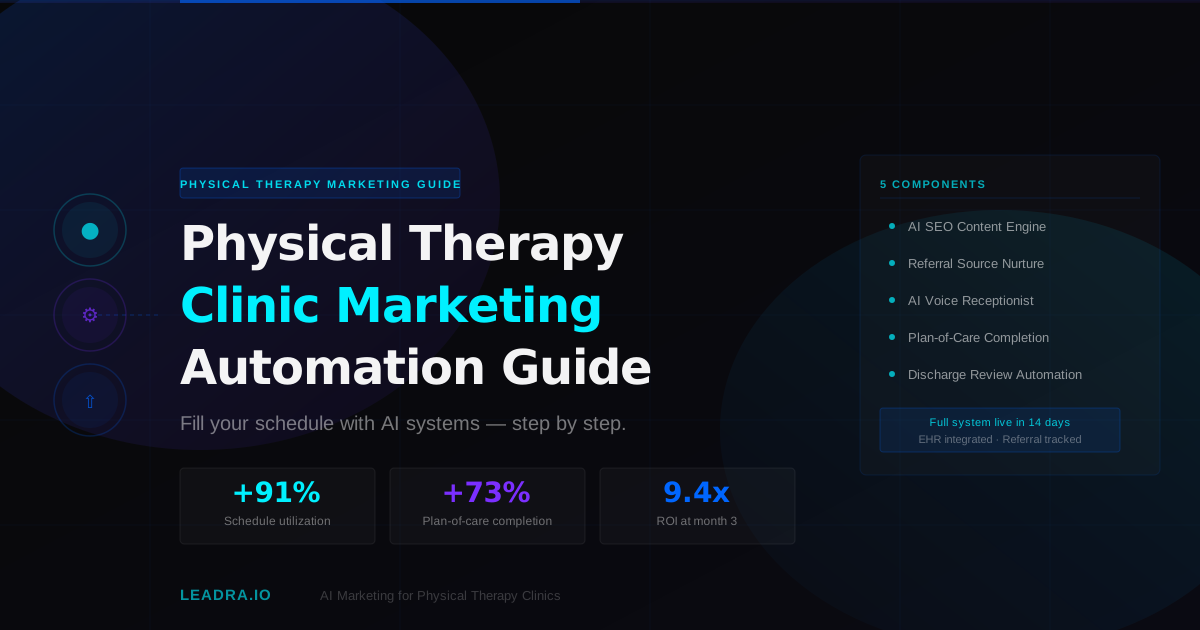
68% → 91%
Schedule utilization
54% → 73%
Plan-of-care completion
21 → 58
Google reviews
9.4x
ROI at month 3
The biggest surprise for the clinic owner: referral volume from the three existing surgeon offices grew 32% once discharge summaries and outcome updates started going back automatically. Two of the three offices told the front desk directly that the consistent communication was the reason they started sending more of their post-surgical caseload to this clinic instead of splitting it with a competitor.
The plan-of-care completion sequence recovered 41 patients over 84 days who had missed a visit between weeks 3 and 5 of treatment — patients who, based on the clinic's prior data, would likely have self-discharged without the automated outreach.
How to Implement in 2 Weeks
Frequently Asked Questions
What marketing automation tools work best for physical therapy clinics?
The most effective stack combines an AI local SEO content engine for direct-access acquisition, a referral source nurture sequence for physician relationships, an AI voice receptionist for call handling and insurance verification, a plan-of-care completion sequence, and automated discharge review and reactivation campaigns. These five components cover new patient acquisition, referral retention, and clinical follow-through in one connected system.
How does marketing automation improve plan-of-care completion for physical therapy patients?
Automated progress recaps and missed-visit recovery messages target the specific window — usually visits 4 through 8 — where patients typically self-discharge once acute pain resolves. A structured SMS sequence sent after each missed visit, paired with a recap of progress made, recovers a meaningful share of patients who would otherwise stop treatment early. Clinics that automate this typically see completion rates rise by double digits within 90 days.
How do you market to physician referral sources with automation?
Referral automation tracks every referring provider in your EHR and triggers a same-day thank-you and evaluation summary after each new patient, plus a discharge report with outcome data when treatment ends. A quarterly newsletter with outcome metrics and service updates keeps the clinic top of mind. Consistent, fast communication is what keeps referral sources sending patients to your clinic instead of a competitor.
What ROI can a physical therapy clinic expect from marketing automation?
Typical 90-day results include a 30-50% increase in organic new patient inquiries, a 20-35% reduction in no-shows, a 10-20 percentage point increase in plan-of-care completion, and a 25-40% increase in referrals from existing physician relationships. With an average episode of care worth $1,200-$2,500 per patient, recovering early-dropout patients and adding new referral volume typically delivers 6x-12x ROI by month three.
Ready to Build Your Clinic's Marketing Engine?
Leadra.io builds and manages complete marketing automation systems for physical therapy clinics. We handle EHR integration, referral nurture, content production, and ongoing optimization — so your clinic fills its schedule while your team stays focused on patient care.