AI Plumbing Estimate Follow-Up: Close 40% More Jobs After Every Emergency Call (2026)
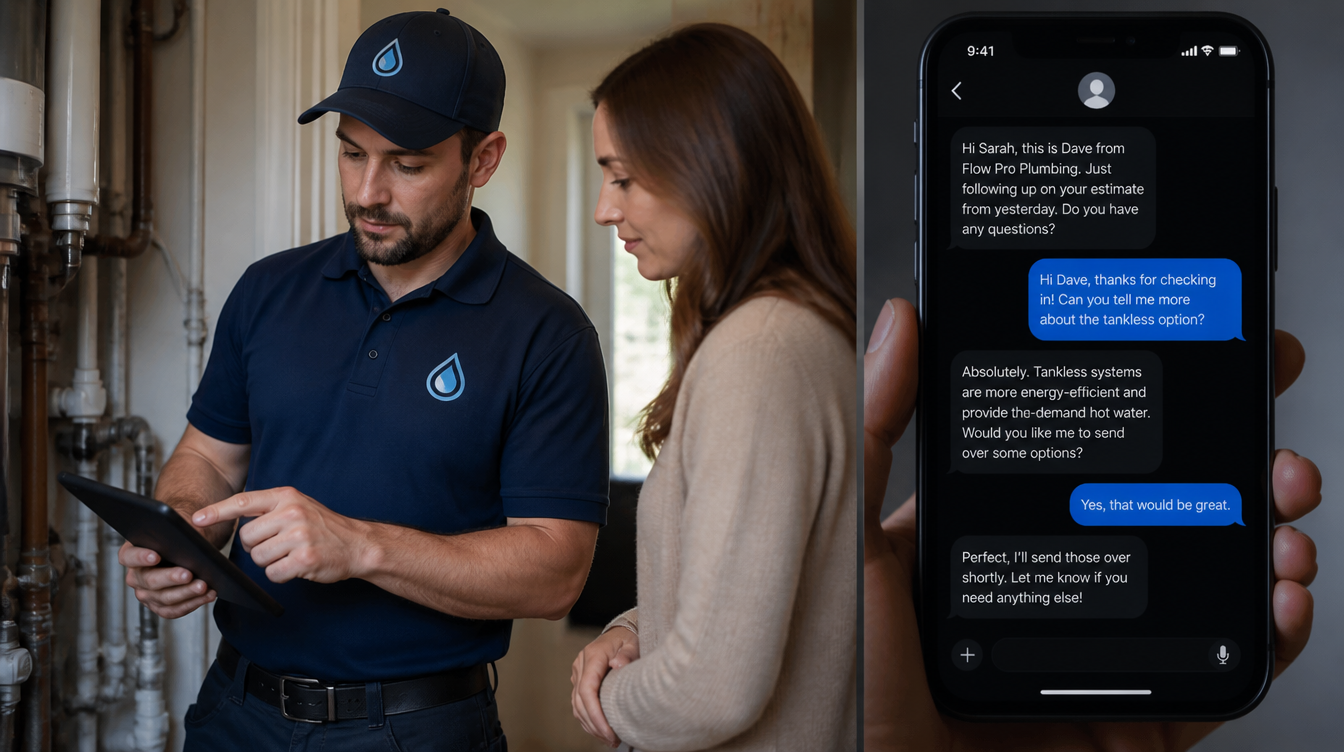
You answered the call. You drove out at 11 PM. You triaged the leak, confirmed the damage, and gave an honest estimate. Then the homeowner said three words that cost your plumbing company thousands every month: "Let me think about it."
That job is almost certainly gone — unless you follow up fast and smart. For most plumbing companies, 30-40% of emergency call estimates never convert. Not because the price was wrong. Not because the homeowner found someone better. Because no one sent a follow-up message while that quote was still fresh.
AI plumbing estimate follow-up systems run an automatic, multi-step sequence the moment your tech leaves the job site — sending the estimate, the booking link, and the right message at the right time — without your plumber making a single extra phone call. At Leadra.io, we deploy this for plumbing companies across the US and routinely see 25-40% recovery rates on cold quotes. This guide shows you exactly how it works.
Why Emergency Call Estimates Go Cold
Emergency plumbing calls are the highest-intent leads you will ever get. Someone's pipe burst. The crawlspace is flooding. The water heater is leaking on the floor. They called you at 2 AM because they had no other choice.
But once the immediate crisis is contained — the shutoff valve is closed, the water is mopped up, the immediate danger is gone — urgency drops fast. The homeowner shifts from panic mode to consumer mode. They start thinking about price. They text a neighbor to ask for another recommendation. They Google "plumber estimates [city]" to see if your quote is fair.
According to data from field service management platforms, quotes that receive a follow-up within the first hour close at 3-4x the rate of quotes that wait 24 hours or more. For emergency plumbing specifically, the comparison window is even shorter — many homeowners make a final decision within 4-6 hours of getting an estimate.
Your plumber doesn't follow up for the same reasons every time:
- They're already on the next call before they reach the truck
- There's no reminder system — the estimate is in the app but no one triggers outreach
- Manual follow-up feels awkward and sales-y after an emergency visit
- Different techs have different habits — inconsistent follow-up across your team
The result: a job that cost you fuel, labor, and an after-hours dispatch fee goes to whoever sent a text message first. Often that's a national chain like Roto-Rooter or ARS that runs automated follow-up as standard practice.
The fix isn't training your plumbers to sell harder. It's automating the outreach so the right message goes out the moment they leave.
The 5-Step AI Estimate Follow-Up System for Plumbing Companies
A properly configured AI estimate follow-up system for plumbing doesn't send one generic "just checking in" text. It runs a sequenced cadence tied to the estimate amount, the job type, and whether the homeowner has responded.
Step 1 — Immediate Post-Visit SMS (within 10 minutes)
The moment your tech marks the job "estimate sent" in your field software — ServiceTitan, Housecall Pro, Jobber — the AI triggers a personalized SMS to the homeowner. This message: confirms the visit, names the problem found, restates the price, and includes a direct link to approve and book. No sales pressure. Just a clean, professional summary while the homeowner is still thinking about the job.
Step 2 — Estimate PDF Delivery with a Booking Link
The system attaches the estimate PDF or sends a mobile-optimized estimate view with a single-tap "approve this estimate" button. Homeowners who click and approve are automatically scheduled — deposit collected, confirmation sent, tech notified. No phone tag, no back-and-forth.
Step 3 — 4-Hour Follow-Up (if no response)
If the homeowner hasn't clicked or responded, the system sends a second message at the 4-hour mark. This one adds context — why the repair matters now rather than later (water damage risk, mold timeline, code compliance for older pipes). It's not pushy. It's educational. Homeowners respond to "here's what happens if you wait" far better than "did you see our quote."
Step 4 — 24-Hour Follow-Up with Social Proof
At 24 hours, the system sends a third message with a brief customer review snippet — ideally a recent Google review from a similar job in the same neighborhood. "We just finished a water heater replacement in Huntersville — here's what the homeowner said." This builds trust at the exact moment the homeowner is comparing you to a competitor.
Step 5 — 48-Hour Final Follow-Up with Payment Options
The final message offers a payment plan or financing option for estimates over $800-$1,000. A $3,200 repipe estimate that a homeowner was ready to decline at full price often converts when they see a $160/month payment option. This message closes the sequence and routes non-responders to a low-priority follow-up queue for your office staff.
| Touch | Timing | Message Focus | Avg. Close Rate |
|---|---|---|---|
| 1 | 10 min post-visit | Estimate + booking link | 48-55% |
| 2 | 4 hours | Urgency / risk of waiting | 18-24% |
| 3 | 24 hours | Social proof / neighbor review | 12-16% |
| 4 | 48 hours | Payment plan / financing offer | 8-12% |
| 5 | 7 days (high-ticket only) | Price-hold expiration | 4-8% |
Case Study: Charlotte 4-Tech Plumbing Company Adds $10,500/Month from Estimate Recovery
A 4-technician plumbing company operating in Huntersville and Cornelius, NC came to Leadra.io with a common problem: their immediate close rate on emergency calls was solid at 64%, but every estimate that didn't close on the spot — roughly 36% of all visits — converted at only 9%. No follow-up system. No reminder. Techs would occasionally call back, but inconsistently.
We deployed an AI estimate follow-up system integrated with their Housecall Pro account. The 5-step sequence launched automatically when a tech marked an estimate as sent. Templates were customized with plumbing-specific language — burst pipe urgency messaging, water heater replacement financing, repipe warranty details.
Results after 60 days:
| Metric | Before | After |
|---|---|---|
| Cold estimate close rate | 9% | 41% |
| Average monthly estimates sent | 58 | 61 |
| Jobs recovered from cold quotes | ~5/month | 22/month |
| Average job value (recovered) | — | $480 |
| Added monthly revenue | — | $10,560 |
| System cost | — | $900/month |
| ROI | — | 11.7x |
| Time to first results | — | 22 days |
The biggest surprise: the 24-hour social proof message outperformed every other touch. Sending a recent Google review from a job in the same zip code — "We just finished a pipe repair in Huntersville for a homeowner with the same issue" — converted 16% of previously cold estimates into booked jobs on its own.
What to Look For in an AI Follow-Up System for Your Plumbing Company
Not every follow-up tool is built for field service businesses. Generic CRM email sequences won't cut it for plumbing companies operating on emergency timelines. Here's what matters:
Plumbing-Specific Templates
The system needs to speak plumbing. Generic "thank you for your business" messages underperform. Templates that reference the specific job type — burst pipe, water heater failure, sewer backup, repiping — perform significantly better because they match the homeowner's mental context. Your AI follow-up vendor should offer trade-specific template libraries, not one-size-fits-all messaging.
Field Software Integration
The trigger for the follow-up sequence must come from your dispatch software — ServiceTitan, Housecall Pro, or Jobber. If your tech has to manually start the sequence after every visit, it won't happen consistently. The best systems watch for an "estimate sent" or "job status: estimate" trigger in your field software and fire automatically, no human input required.
Estimate Size Routing
A $180 drain clearing estimate needs a different follow-up than a $4,800 whole-home repipe. Your system should route high-ticket estimates to a longer cadence that includes financing information and a more detailed urgency sequence. Low-ticket estimates get a shorter, faster sequence optimized for same-day booking.
Opt-Out and Escalation Logic
Homeowners who reply "not interested" or "went with someone else" should immediately exit the sequence. Homeowners who reply "can you match a lower quote?" should trigger a human escalation alert to your office — that's a buying signal that needs a live response, not another automated message.
Why Charlotte Plumbers Need AI Follow-Up More Than Almost Anyone
Charlotte is one of the fastest-growing metro areas in the US, which means two things for local plumbing companies: more emergency calls from newer homes with builder-grade fixtures, and more competition from national chains that already run automated follow-up at scale.
Roto-Rooter, ARS, and Mr. Rooter all operate in the Charlotte market. They have in-house CRM systems that auto-send estimates, follow-up sequences, and financing offers within minutes of a tech leaving a job. When you compete without that infrastructure, you're giving them a 4-6 hour head start on every unclosed quote.
Neighborhoods like Huntersville, Cornelius, Ballantyne, and Mint Hill have high concentrations of 10-15 year old homes — prime candidates for water heater replacements, pressure regulator failures, and early-stage repipe projects discovered during emergency calls. These are $1,500-$5,000+ jobs. Losing them to a chain because you didn't send a follow-up text is expensive.
The solution is deploying the same automated system the national players use — at local-company pricing. Leadra.io builds and manages this for Charlotte plumbing companies starting at $900/month. Most clients recover that cost within the first 2-3 jobs closed from the follow-up sequence.
How to Implement AI Estimate Follow-Up in 3 Steps
You do not need to rebuild your tech stack. If you already use ServiceTitan, Housecall Pro, or Jobber, you can have a working AI estimate follow-up system running in under two weeks.
- Connect your field software. The AI system needs read access to your open estimates and the ability to trigger SMS via your existing phone number. No new number, no confusing setup for your customers.
- Customize your templates. Work with your vendor to build 3-4 message templates matched to your most common job types — emergency water leak, water heater replacement, drain issue, and full repipe. Add your brand voice, your company name, and a link to your Google reviews page.
- Run a 10-estimate test. Before going live across all your techs, send the first 10 estimates through the new sequence manually and review the messages. Confirm the timing feels right and the opt-out logic works. Then flip it to automatic and let it run.
Ready to recover the jobs you're currently leaving on the table? Talk to Leadra.io about building your plumbing estimate follow-up system or call us at +1 (864) 721-8384.
Frequently Asked Questions
How quickly should a plumber follow up after giving an emergency estimate?
Within 10 minutes of leaving the job site. Quotes followed up within the first hour close at 3-4x the rate of quotes that wait 24 hours or more. Emergency plumbing urgency drops fast once the immediate crisis is contained — you need to reach the homeowner before they start shopping. AI follow-up sends this first message automatically, so no tech has to remember to do it.
What should an AI follow-up message say after a plumbing estimate?
The first message should confirm the visit, name the problem found, restate the price, and include a direct link to approve and book — nothing pushy, just a clean professional summary. Later messages add urgency context (what happens if you wait), social proof (a recent review from a similar nearby job), and for high-ticket jobs, a payment plan option. The system should never send a generic "just following up" message — every touch needs a specific value point.
Does AI estimate follow-up work for large plumbing jobs like repiping or water heater replacement?
It works especially well for high-ticket jobs. Homeowners considering a $3,000-$5,000 repipe or $1,800 water heater replacement are more likely to pause and compare quotes than someone approving a $250 emergency repair. AI follow-up sequences for larger jobs run a longer cadence — up to 7 days — and include financing information, manufacturer warranty details, and review links. Plumbing companies using AI follow-up on high-ticket estimates typically see 20-35% conversion on jobs they previously lost after a single unanswered quote.
Can a small plumbing company compete with Roto-Rooter and national chains using AI follow-up?
Yes. National chains like Roto-Rooter and ARS already run automated estimate follow-up as standard practice — they have for years. Small and mid-size plumbing companies using AI follow-up now run the same system at a fraction of the enterprise cost. The local advantage is real: homeowners prefer a local plumber when they get a prompt, professional response. AI follow-up lets you deliver that response without hiring a sales coordinator or office dispatcher.
Stop Leaving Emergency Jobs on the Table
The best AI for plumbing companies emergency calls isn't just about answering the phone at 2 AM. It's about closing the job. An AI voice agent captures the emergency call, but the estimate follow-up system converts it into revenue. Most plumbing companies are investing in one and missing the other.
The 4-tech Charlotte operation in this case study added $10,500 in monthly revenue — not from more marketing spend, not from more calls, but from recovering jobs they were already generating and losing. Your estimate pipeline has the same unrealized revenue sitting in it right now.
Leadra.io builds and manages AI estimate follow-up systems for plumbing companies in Charlotte NC and across the US. Setup takes under two weeks. Most clients break even within the first month. Contact us here or call +1 (864) 721-8384 to get started.
Also see: Plumbing AI Dispatch Automation · Plumber After-Hours AI Call Answering · AI Lead Generation for Local Service Businesses
Last updated: July 1, 2026 | Leadra.io, AI Implementation Agency, Charlotte NC